Best Neck Pillows for Long Flights
Compare the best neck pillows for long flights by support, packability, adjustability, and comfort so you can choose the right one for your next travel day.
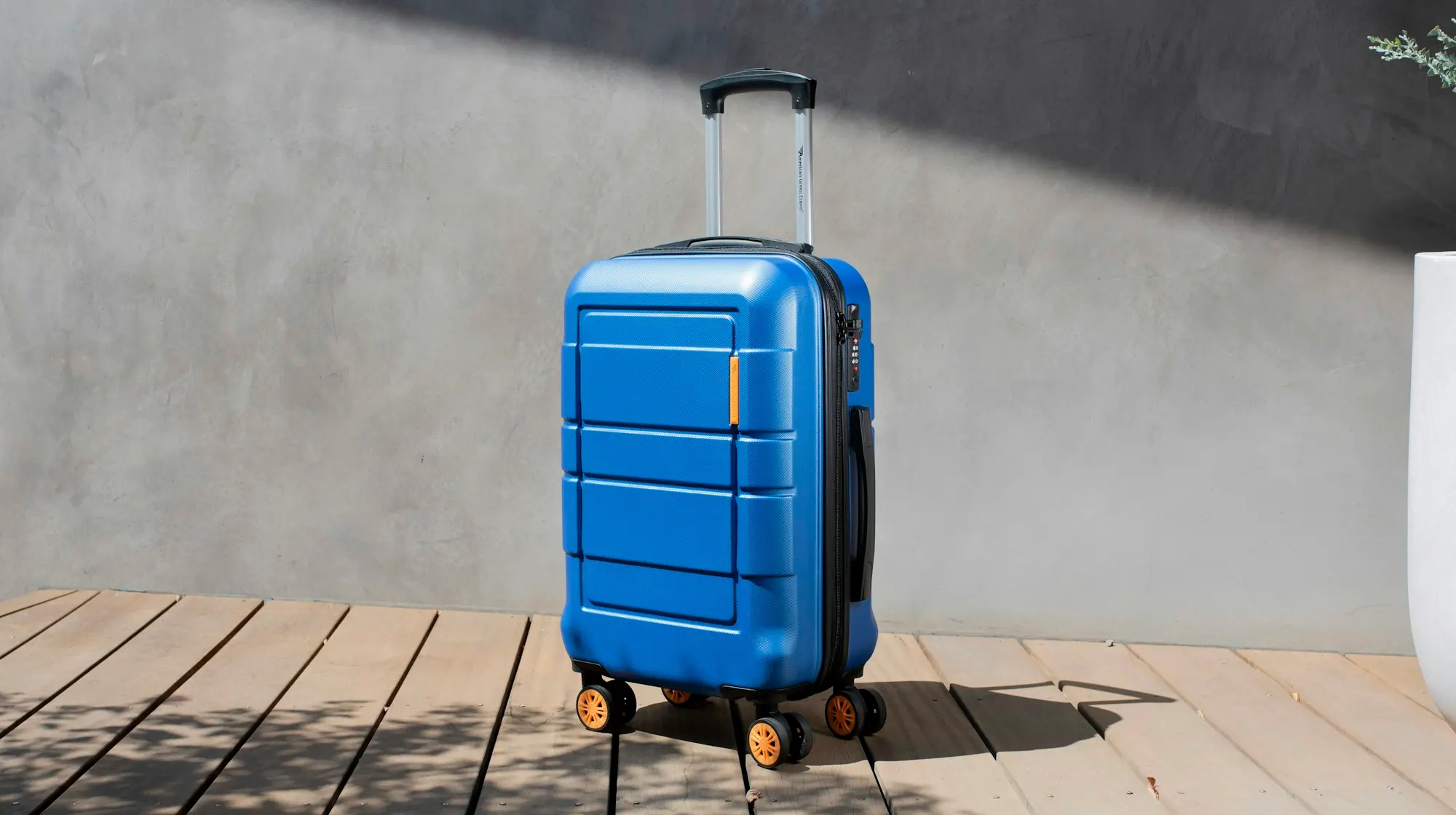
Buy the Traveler’s Choice Archer Carry-On. For about 130 dollars you get a polycarbonate shell, YKK zippers, a built-in TSA lock, and an expandable design, which is a feature list the premium hardsides in this guide charge more than twice as much for. The rest of this guide is for the people that answer does not fit, because the best carry-on depends on how you actually travel, and my top pick has real trade-offs you should know before you buy.
I spent a decade buying travel accessories for airport shops, which means I read the returns reports as well as the marketing. For this guide I also went back through the current tested rankings and the recommendation threads where frequent travelers argue about bags, so the picks below are not just my taste. They are the bags that hold up in testing and that owners actually keep.
Some links here are affiliate links, which means Intastravel may earn a commission if you buy through them. It does not change which bags we pick or what we say about them.
I care about four things, and none of them is the color.
The wheels come first. A carry-on lives or dies on its wheels, because that is the part that fails and the part you cannot repair at a gate. I look for smooth double spinner wheels that track straight when the bag is full.
The handle comes second. A telescoping handle that wobbles or rattles on day one will only get worse. This is the single most common complaint I see on budget bags, and it is worth paying up to avoid.
Weight comes third, and it matters more than people think. Every ounce the empty bag weighs is an ounce you cannot pack, and it is the ounce you feel when you lift a full bag into the bin at the end of a long flight.
The warranty comes last, but it breaks ties. A brand that repairs handling damage for free is a brand that expects its bag to survive years of it.
One thing I do not do here is quote you exact dimensions or tell you a bag clears a specific airline sizer. That is a precise question with a precise answer, and getting it wrong costs you a gate-check fee. I will point you to where that answer lives at the end.
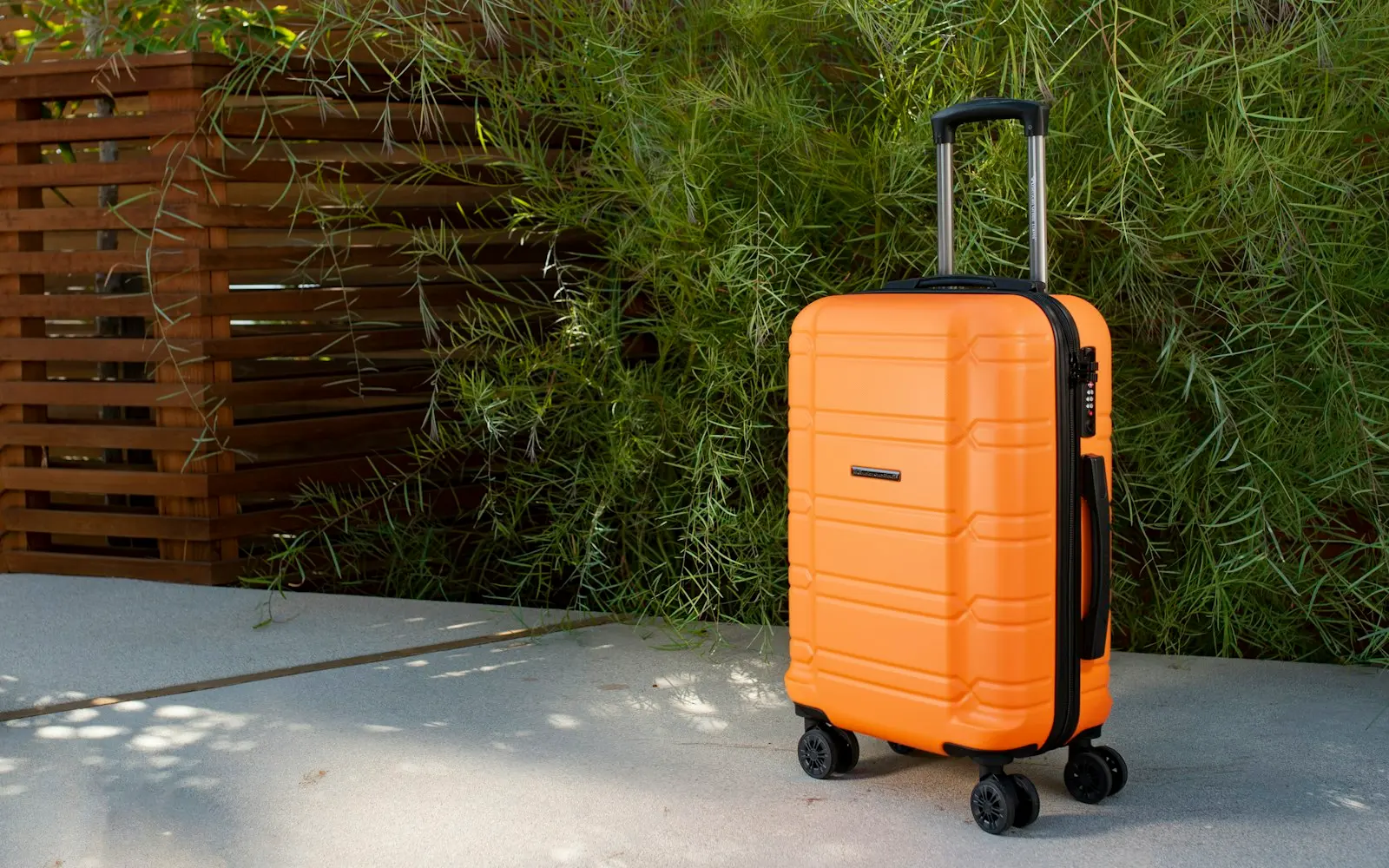
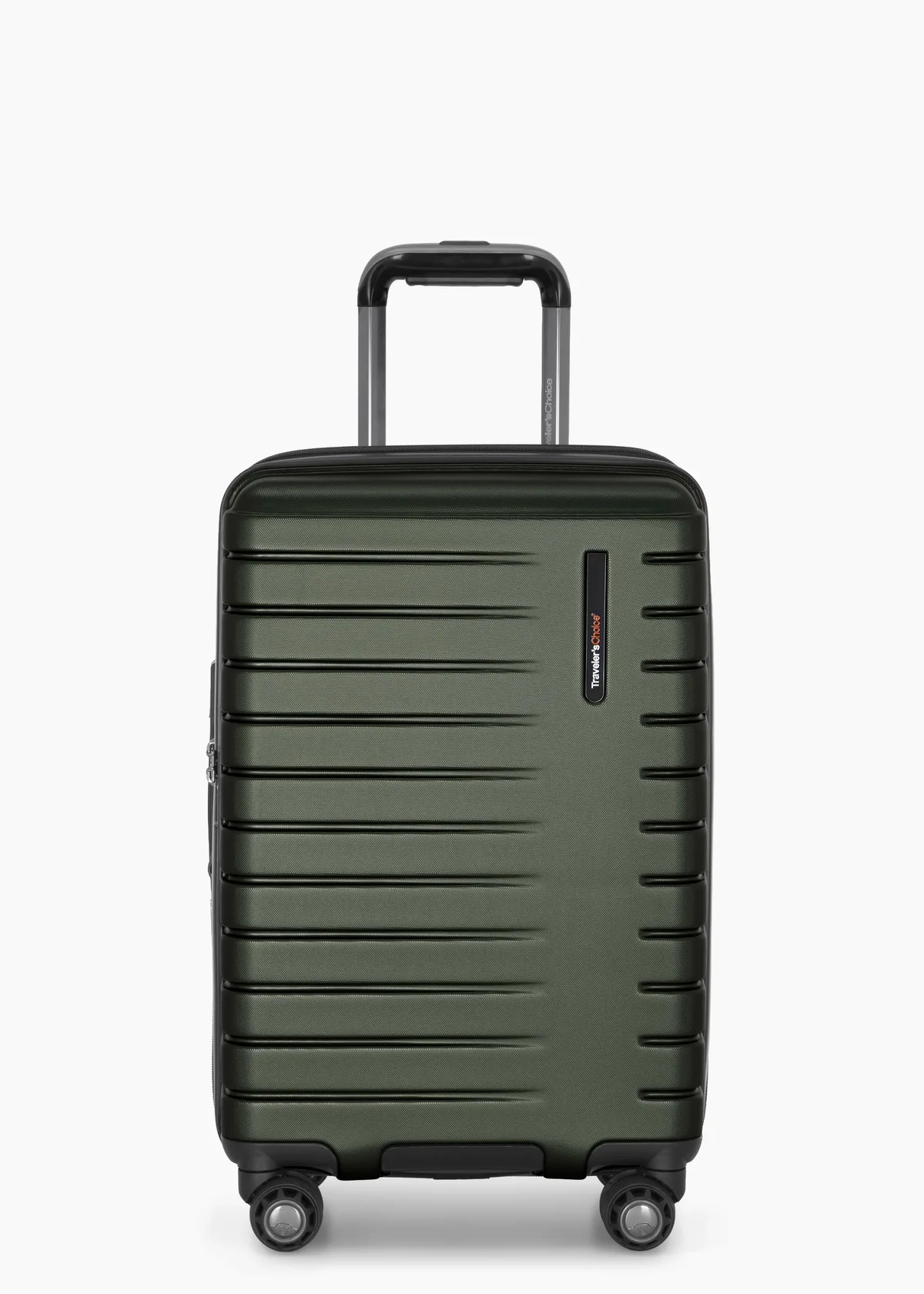
Photo: Traveler's Choice
This is the bag I recommend to most people, because the parts that fail on cheap luggage are the parts this one gets right. The zippers are YKK, which is the specific name frequent travelers look for, because zipper failure is how most bags die. The combination lock is built in and TSA compliant. The telescoping handle locks solidly, the wheels are a full 360-degree spinner set, and the shell is textured polycarbonate, the material that flexes on impact rather than cracking. There is even a USB pass-through port for charging at the gate, though you supply your own power bank.
The measured spec is 21.5 by 14 by 9.25 inches with a two-inch expansion gusset, at 7.5 pounds. That weight is mid-pack for a hardside. And Traveler’s Choice is the largest airline replacement-luggage partner in the US, which means its bags get stress-tested by the people who handle broken luggage for a living.
Here are the honest trade-offs. That 9.25-inch depth runs a quarter inch over the strictest nine-inch airline limits before you even touch the expansion zipper, so check your airline before you buy. The interior is organized but plain next to the premium brands. And the brand does not carry the decades-long cachet of a Briggs and Riley, so you are trusting the spec sheet rather than the badge.
Buy this if you want the most bag for the least money. If your priorities are different, the rest of the list is for you.
Check price at Traveler’s Choice
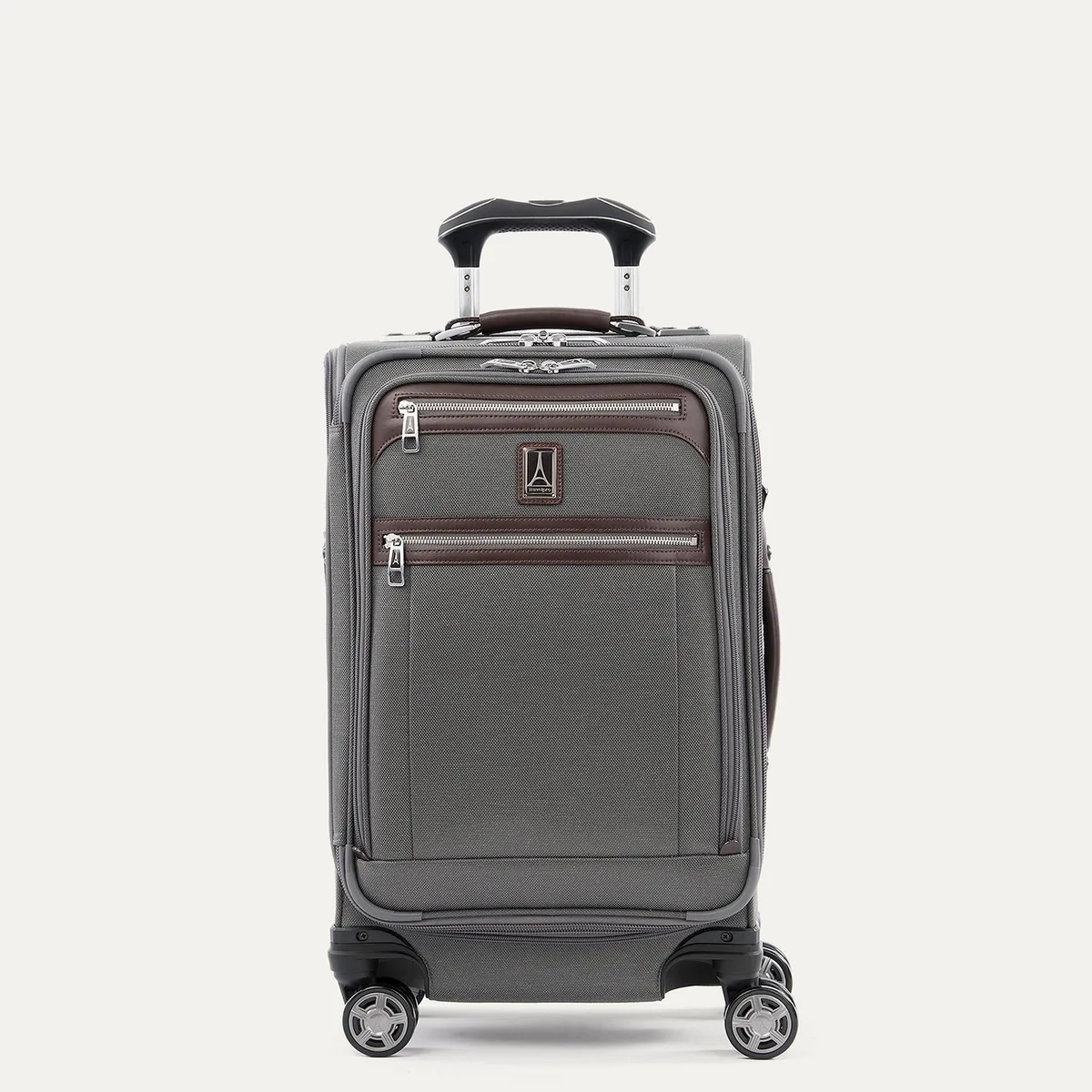
Photo: Travelpro
If you want a softside bag, this is the one flight crews have rolled through terminals for years. Independent testers still rank it best overall, and the reason is the build. The wheels self-align and stay smooth, the organization is genuinely useful, and it expands when you need the extra room.
Here are the two honest trade-offs, because they are real. It is not light, at around eight pounds empty, so it eats into your packing weight more than a minimalist bag. And its dimensions run slightly over the strictest airline limits, which matters if you fly carriers that measure. There are also occasional zipper complaints from long-term owners, though they are the minority.
Buy this if you fly often on mainstream carriers and you want a workhorse that lasts. If you fly strict budget airlines or you count every ounce, read on.
Away is the bag everyone already knows, and it earns its place. The polycarbonate shell resists scratches, the built-in compression flap actually helps you close a full bag, the wheels roll smooth, and it comes with a laundry bag inside.
Here is where I break from the hype. Owners consistently report two things: the shell scuffs more than the marketing suggests, and the classic model does not expand, so a full bag stays full with nowhere to go on the way home. The grab handles are also on the small side.
Buy it if you want a clean hardside bag with a real compression system and you value the look. Skip it if you routinely pack to the limit, because a non-expanding shell gives you no forgiveness.
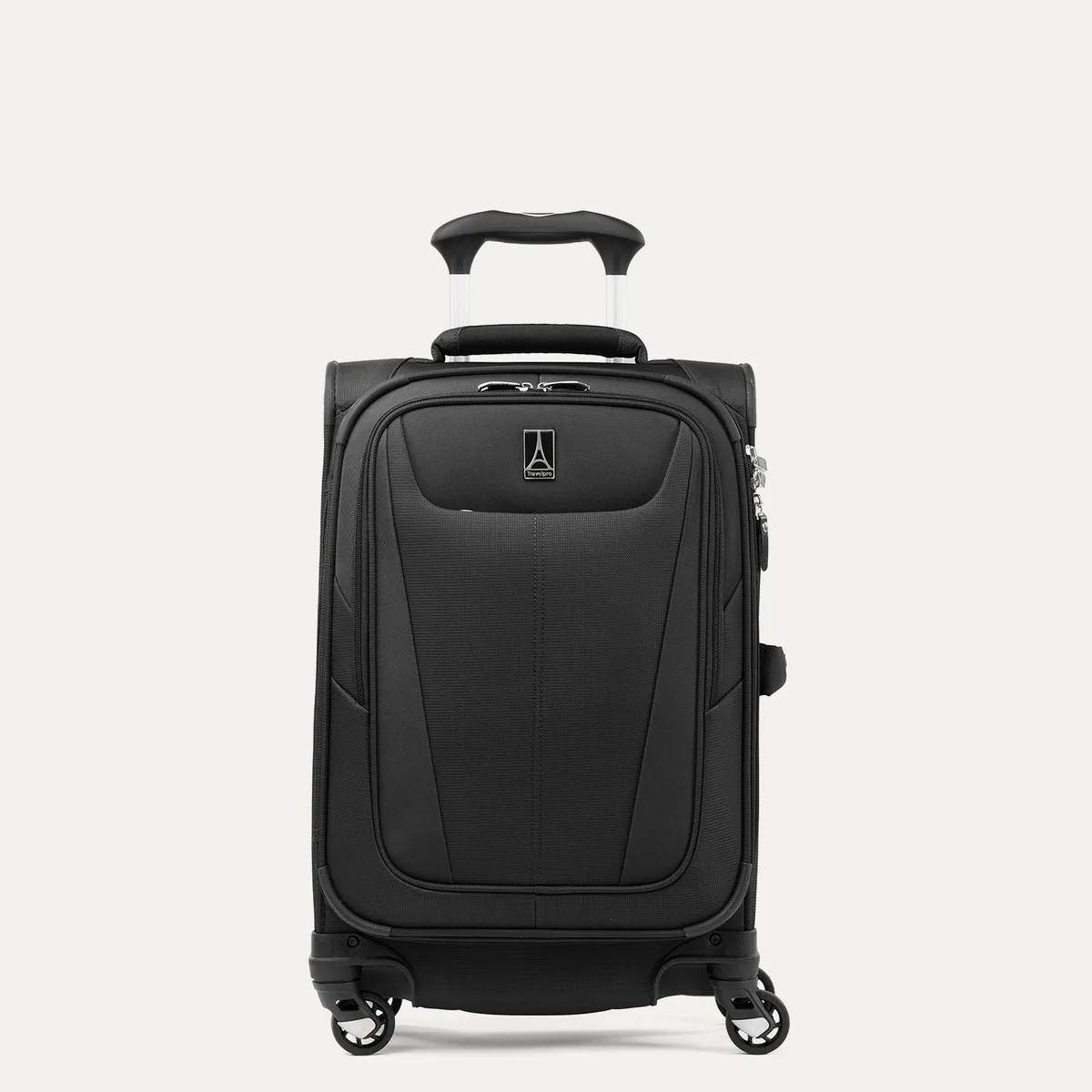
Photo: Travelpro
You do not have to spend a lot to get a bag that lasts a few years, and this is the one I point budget travelers toward. It is light, it rolls better than its price suggests, and it comes from the same maker as my overall pick. It is also one of the most recommended bags among frequent flyers, who like that it comes in a compact international size.
The trade-off is in the details. The wheels and handle are not built to the standard of the pricier Platinum Elite, so they will show wear sooner under heavy use. For a handful of trips a year, that is a fair deal. For weekly flying, spend up.
This is the bag for the person who is tired of replacing carry-ons. The Baseline carries the strongest promise in the category. Briggs and Riley’s guarantee repairs any functional damage for life, free of charge, no proof of purchase, and it applies even when an airline is the one that broke your bag. The compression system is built into the frame, and the handle sits on the outside so the interior stays flat.
The honest negatives are price and weight. This is by far the most expensive bag here, and in testing it was the heaviest, at around ten pounds, with less packing capacity than lighter rivals. Buy it if you travel constantly and you want to stop thinking about luggage for a decade. Skip it if you fly twice a year, because you will not travel enough to earn back the weight and the cost.
Check price at Briggs and Riley
If you want a hard shell without the premium price, this is the value pick testers keep returning to. It holds a lot, the pliable shell takes knocks without cracking, and it expands.
The honest catch is in the parts that wear. The trolley handle is the weak point, and owners report it feels less solid than the rest of the bag, while the shell scratches easily. For occasional travel at this price, that is a reasonable compromise. For heavy use, the handle is where it will let you down first.
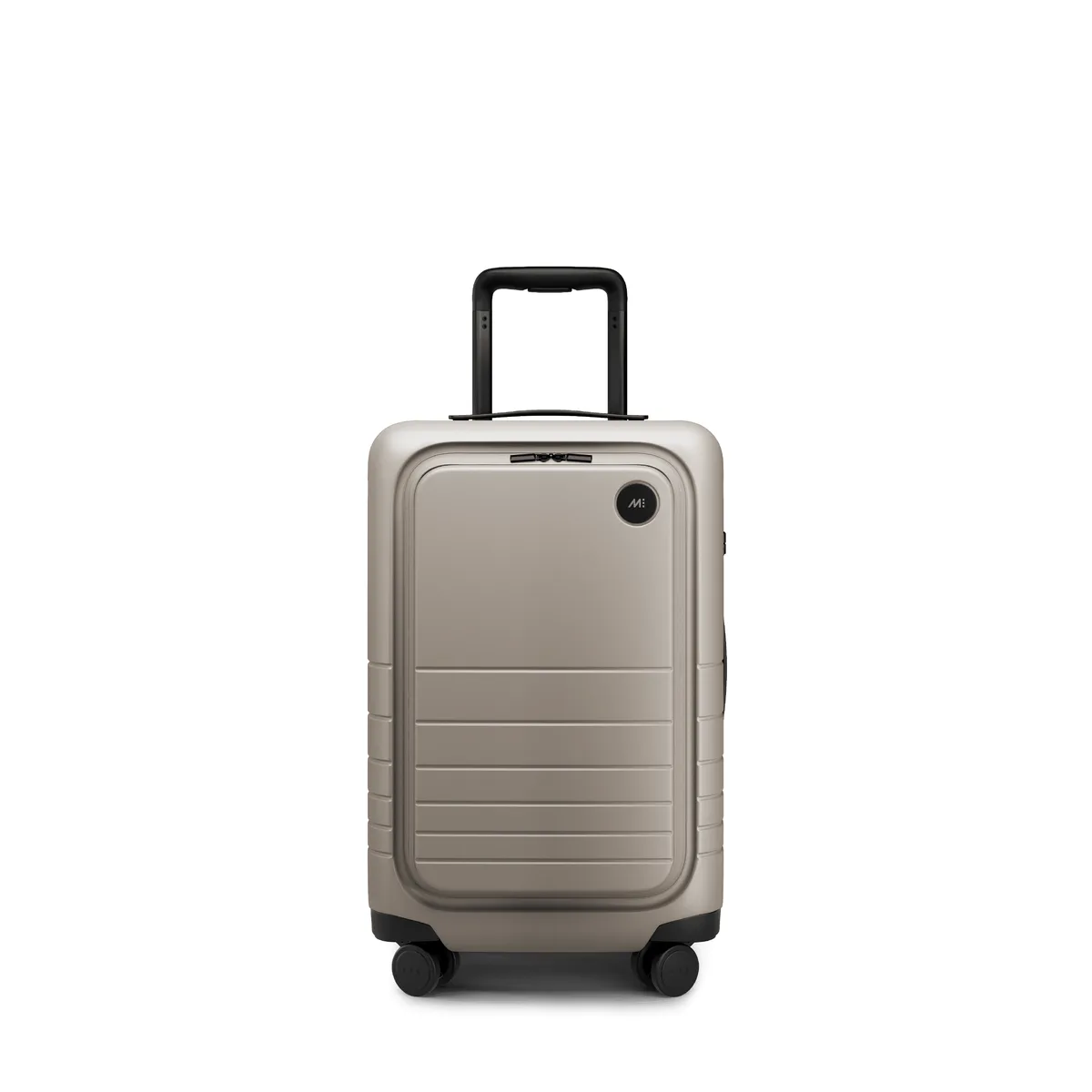
Photo: Monos
Some people want to reach a laptop without opening the whole bag at security. The Monos Carry-On Pro solves that with an exterior zippered laptop compartment, and it rolls smoothly with a built-in compression system.
The trade-offs are space and scuffs. That exterior pocket eats into the main compartment, which is already on the smaller side, and the bag does not expand. Like most hardsides in this finish, it also scuffs with use. Buy it if quick laptop access is worth a little packing space to you. Skip it if you need every liter inside.
| Bag | Best for | The honest catch |
|---|---|---|
| Traveler’s Choice Archer | Most travelers: the most features for the money | 9.25 inch depth runs over the strictest limits |
| Travelpro Platinum Elite | Softside fans and weekly flyers | Heavy, runs slightly over strict size limits |
| Away The Carry-On | A clean hardside with compression | Scuffs, does not expand |
| Travelpro Maxlite 5 | Budget and a few trips a year | Wheels and handle wear sooner |
| Briggs and Riley Baseline | Constant travelers who want it for life | Expensive and the heaviest here |
| Samsonite Freeform | A cheap hard shell with room | Weak trolley handle, scratches |
| Monos Carry-On Pro | Travelers who want fast laptop access | Smaller inside, does not expand |
The Traveler’s Choice Archer is the most bag for the money, but it is not right for everyone.
Skip it if you fly airlines that enforce a strict nine-inch depth. The Archer measures 9.25 inches deep before you touch the expansion zipper, and the Travelpro Maxlite 5 in its international size is the safer choice for tight sizers.
Skip it if you want a softside bag with outside pockets you can reach at security. The Travelpro Platinum Elite is the better tool, and it is the bag flight crews actually carry.
Skip it if you fly constantly and never want to buy another bag. The Briggs and Riley costs far more and weighs more, but the lifetime guarantee earns it back if you use it hard for years.
That is curation, not hedging. The point of a pick is knowing when it is wrong for you.
Here is the part I will not fake for you. Whether a specific bag clears your airline’s sizer is a precise question, the answer changes by airline and sometimes by fare, and my top pick is one of the bags that runs close to the line. I am not going to quote you a number I have not measured myself, because a wrong number here costs you a gate-check fee.
A site called NewCarryOn does exactly this. It holds verified dimensions for hundreds of carry-ons, cross-referenced against airline policies, and it will tell you pass or fail for the airline you are flying. Pick the bag you like here, then confirm it fits your airline there before you buy. That two-minute check has saved me a fee more than once.
Once you have the bag, the rest of the kit is what turns a carry-on into a system you can pack in ten minutes. The cubes, the toiletry bag that hangs, the cord organizer. That is a guide of its own, and it is the part I enjoy most.
For most travelers, the Traveler’s Choice Archer Carry-On is the bag I recommend. It pairs a polycarbonate shell with YKK zippers, a built-in TSA lock, and an expandable design for about 130 dollars, which is the strongest feature list per dollar in this guide. If you prefer a softside bag or you fly weekly, the Travelpro Platinum Elite is the flight-crew favorite, and testers still rank it best overall on build quality.
Neither wins outright. A hard shell protects fragile items and wipes clean, but the popular ones scuff and often do not expand. A softside bag gives you outside pockets and a little stretch when you overpack. Pick hardside if you carry anything breakable, and softside if you value quick access and forgiveness on a full bag.
Sometimes. A bag like the Briggs and Riley Baseline earns its price if you travel constantly, because its guarantee repairs functional damage for life at no charge, even airline damage, so you stop replacing bags. If you fly a few times a year, the Travelpro Maxlite 5 does the job for a fraction of the cost.
That depends on your airline, and I will not guess at it, especially since some of these bags run close to the limit. Choose a bag here for how it is built, then check the exact dimensions and airline fit on NewCarryOn before you order. They verify the numbers so you do not get surprised at the gate.
Compare the best neck pillows for long flights by support, packability, adjustability, and comfort so you can choose the right one for your next travel day.
Find the best carry on backpacks for women with airline fit checks, comfort tests, capacity advice, and honest trade-offs for one-bag travel.
Find the best hard shell carry on luggage for business trips, international flights, and frequent travel with an honest, practical buying guide.