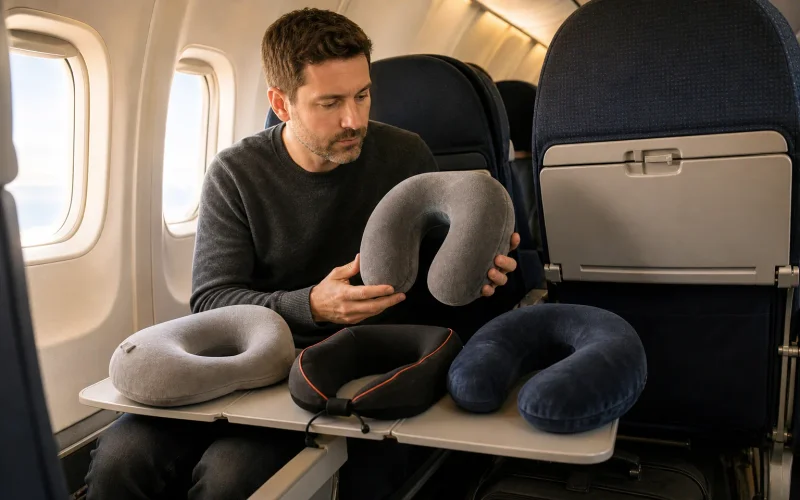
Best Neck Pillows for Long Flights
Compare the best neck pillows for long flights by support, packability, adjustability, and comfort so you can choose the right one for your next travel day.
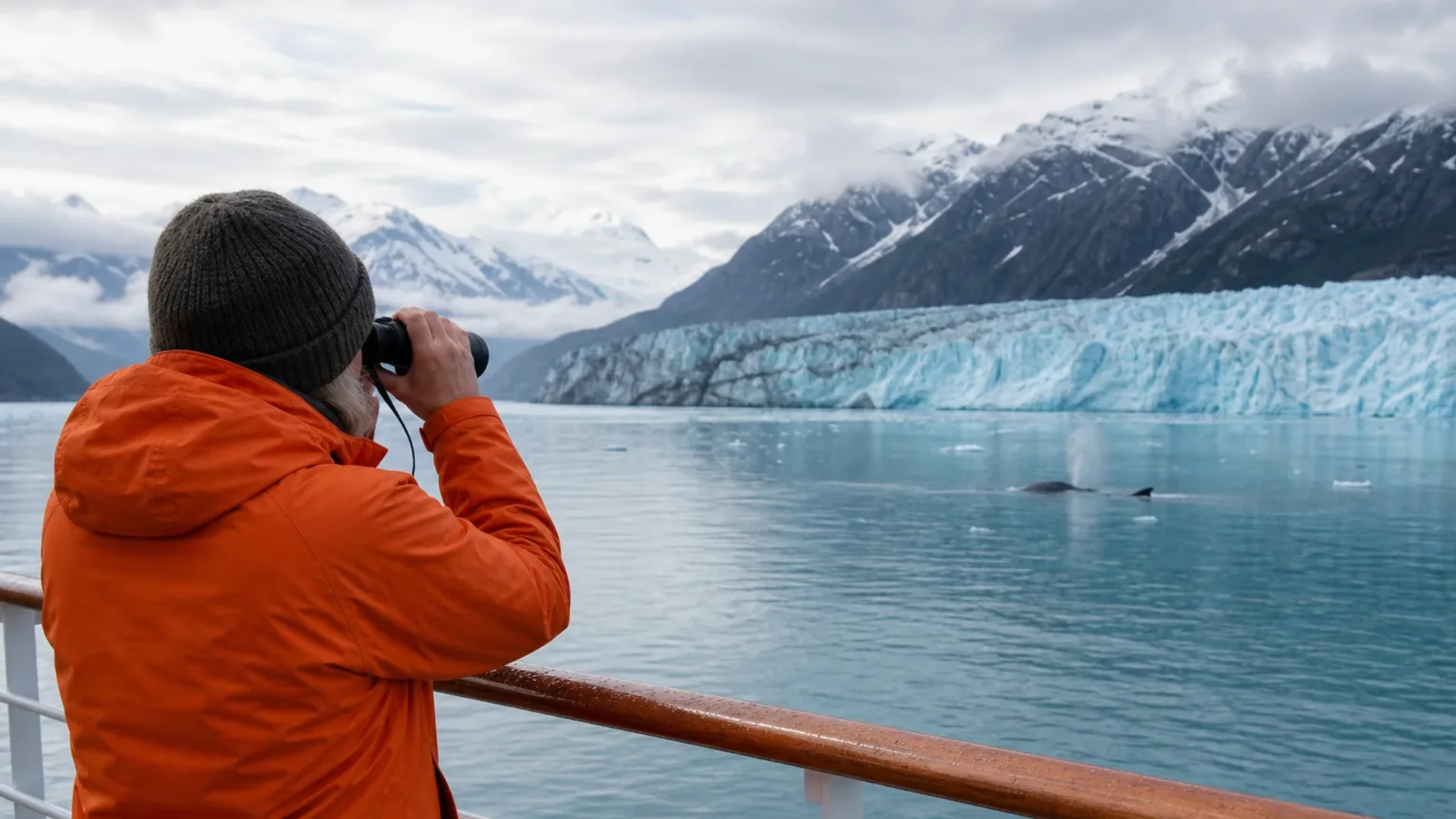
High magnification sounds like the answer for whale watching. On a moving cruise deck, it can make wildlife harder to find because the view gets tight and hand shake grows. For most Alaska cruise days, we’d start with 8x to 10x magnification and a 30mm to 42mm objective lens, then choose based on how you’ll watch.
The guides won’t always say that. Here’s how to make the call.
Choosing magnification is the key decision for binoculars on an Alaska cruise. The number before the multiplication sign tells you how much larger a distant subject appears.
Start with 8x if you’ll watch from a ship, zodiac-style boat, or any place that moves. The lower power gives you a wider view and makes hand shake less obvious. That matters when a whale surfaces, rolls, and disappears before you’ve found it.
The research repeatedly grouped 8x32 models with the same use case: a balance of size, power, and shaking during an Alaskan boating excursion. That group included Vortex Diamondback HD 8x32, Celestron TrailSeeker 8x32, Opticron Discovery WP PC 8x32, Vortex Optics Crossfire 8x32, and NIKON PROSTAFF P3 8x30.
Move to 10x when you expect more shore time or calmer viewing. Bushnell 10x42 is also listed with a field of view of 341 feet at 1,000 yards.
That extra power can help you inspect a distant bird or whale. It also makes it easier to lose the subject while you scan. Hold the binoculars with both hands and brace your elbows when you can.
Reserve 15x for a supported setup. Vortex Diamondback 15x56 has a listed field of view of 230 feet at 1,000 yards, and it has no image stabilization. Compared with the listed 10x42 field of view at 341 feet, that is 111 feet less coverage at the same distance.
Think about it this way. A whale is a moving target. More reach helps only after you’ve found it and kept it in the frame.
You can learn the basic parts of binoculars in a general binoculars reference, including how the two optical paths work together. We use that basic distinction when comparing size labels, since 8x32 and 10x42 describe two different parts of the viewing experience.
Key Takeaway: Choose 8x for a moving deck, 10x for mixed cruise and shore use, and 15x only when you can add support.
One warning: don’t assume a bigger number means a clearer view. It means more magnification. Clarity also depends on light, glass, focus, and how still you can hold the pair.
Image stabilization can be worth the extra cost when your hands move more than your eyes can tolerate. It helps steady the view after you raise the binoculars, which can make a difference on a ship deck.
Image stabilization is an optional feature, and Canon IS 10x30 is one named example.
That makes stabilization an optional feature, not a standard cruise requirement. We’d consider it when you want 10x magnification but worry that hand movement will cancel out the extra detail.
There is a trade-off. Stabilized binoculars can need batteries or another power source, depending on the design. They may also cost more than a similar non-stabilized pair.
Watch the clip below with one question in mind: does the view stay steady enough for your hands? You don’t need a perfect technical test. You need to know if you can hold the pair for several minutes without fatigue.
Image stabilization also won’t fix every problem. It can’t widen a narrow field of view. It can’t brighten a dim lens. It can’t replace a waterproof rating, which you still need to check for marine use.
Try this decision rule:
We’d skip 15x handheld use on a moving boat, even if stabilization sounds attractive. The research specifically ties the high-power option to stargazing with a tripod, not fast wildlife spotting from a rolling deck.
Field of view tells you how much ground or water you can see at once. For the best binoculars for Alaska cruise wildlife, this number may matter more than an extra few points of magnification.
The 15x56 lists 230 feet at 1,000 yards. The 10x42 lists 341 feet at that distance. The difference is 111 feet of coverage.
That gap changes how you search. With a narrow view, you may scan past a whale before it enters the frame. With a wider view, you can find the splash first, then bring the subject into focus.
For a moving deck, start with 8x. Eight-power binoculars usually make it easier to track birds in flight or a seal near the wake. The cited 8x32 group was repeatedly tied to this balance.
Next, look at the objective lens. The number after the multiplication sign is the front lens diameter in millimeters. A 42mm objective can gather more light than a 30mm or 32mm lens, but it usually adds size and weight.
Low light shows up during early glacier viewing, late whale watches, rain, and cloud cover. An 8x42 or 10x42 pair may give you a brighter view than a compact 8x30 or 10x30 pair under the same conditions.
Compact glass still has a place. A smaller pair is easier to keep in a coat pocket and less tiring during a long shore day. On bright summer afternoons, that convenience may beat the extra light of a larger lens.
We’d make the choice by asking when you’ll watch most. If you plan dawn starts and long outdoor waits, favor 42mm. If you expect short bursts of viewing between meals and port stops, 30mm to 32mm may be enough.
Pro Tip: Test your binoculars against a dark, distant object before the trip. If the view feels dim or hard to focus at home, it won’t feel better in rain and sea mist.
One research gap deserves attention. Waterproof ratings were absent from every entry. That does not mean the models are not waterproof. It means the sample did not record the detail, so verify the manufacturer’s current rating before taking any pair near salt spray.
Fit decides whether your binoculars leave the cabin. For an Alaska cruise, test the pair before you pack it and treat comfort as a daily-use feature.
Hold the binoculars at eye level for five minutes. Keep your shoulders relaxed. Can you reach the focus wheel without shifting your grip? Can you see the full image without black crescents at the edges?
Then test your real travel clothes. Wear the rain shell or fleece you plan to use on deck. A strap that feels fine over a T-shirt may press into your neck over layers.
Use the focus wheel while looking at something near and something far. Wildlife can appear close to the ship, then vanish toward a cliff or shoreline. A focus control that feels stiff will slow you down.
Pack the binoculars where you can reach them. A padded case inside the bottom of your bag defeats the point. Keep them near the top, but protect the lenses from keys, grit, and loose sunscreen caps.
Don’t leave the binoculars aimed at the sun. Don’t wipe salt spray with a shirt sleeve. Rinse advice varies by design, so follow the maker’s care instructions rather than guessing.
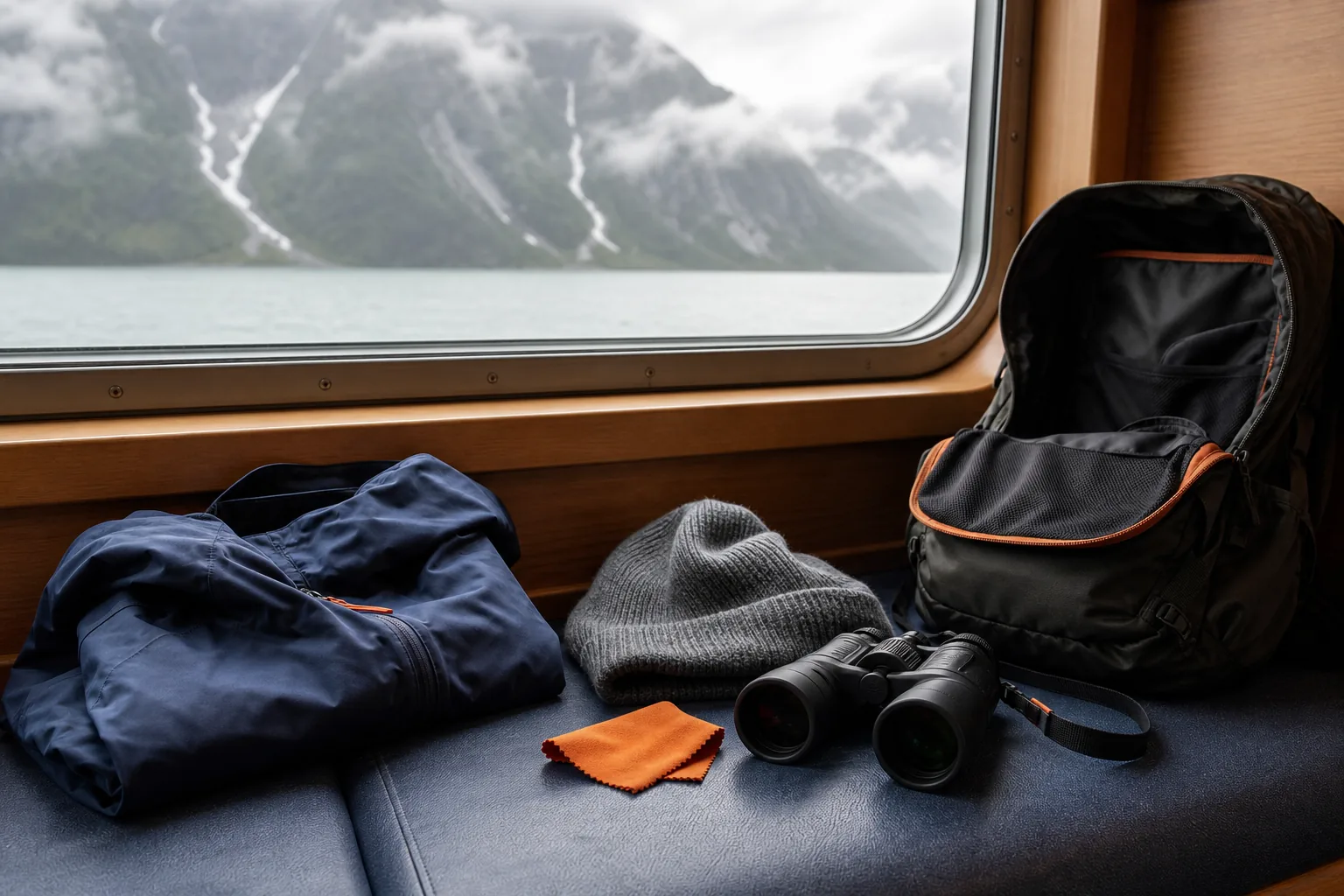
The best view is the one you’re ready to use when someone points toward the water.
Yes, binoculars are worth taking if you want to watch wildlife from the ship or during shore stops. They can help you spot whales, birds, seals, and distant shoreline detail. A compact 8x32 pair is often easier to use than a heavy high-power model. If you already own binoculars, test their comfort and field of view before buying another pair.
Eight-power magnification is the easiest starting point for a moving cruise deck. Ten-power can show more detail when you have steady hands or stand on shore. Fifteen-power binoculars are harder to hold and give a narrower view, so they make more sense with a tripod than during handheld whale watching.
No, 10x42 binoculars are not too strong for every cruise passenger. They can work well when you want more detail and can brace your arms. The trade-off is extra size and more visible hand shake than 8x models. If your main viewing spot is a moving deck, compare them with an 8x32 pair first.
No, you don’t need image stabilization for an Alaska cruise, but it can help if your hands shake at 10x power. Check battery needs, weight, and weather protection before paying more for it.
Yes, waterproof protection is a sensible requirement for cruise binoculars because rain, mist, and sea spray are common. Our reviewed entries did not include waterproof-rating data, so don’t assume the feature from a product name alone. Check the current manufacturer specification before your trip, then keep the lenses covered when weather turns.
For most passengers, we’d choose a comfortable 8x32 or 10x42 pair with a wide view and verified weather protection. Pick 8x if you’ll watch from a moving deck. Pick 10x if shore viewing matters more. Before you buy, hold the pair for five minutes and check the maker’s current waterproof details. Then pack it where you can reach it.
Compare the best neck pillows for long flights by support, packability, adjustability, and comfort so you can choose the right one for your next travel day.
Find the best carry on backpacks for women with airline fit checks, comfort tests, capacity advice, and honest trade-offs for one-bag travel.
Find the best hard shell carry on luggage for business trips, international flights, and frequent travel with an honest, practical buying guide.