Travel Blanket: Three Worth Packing, and a Cheap Trick That Works
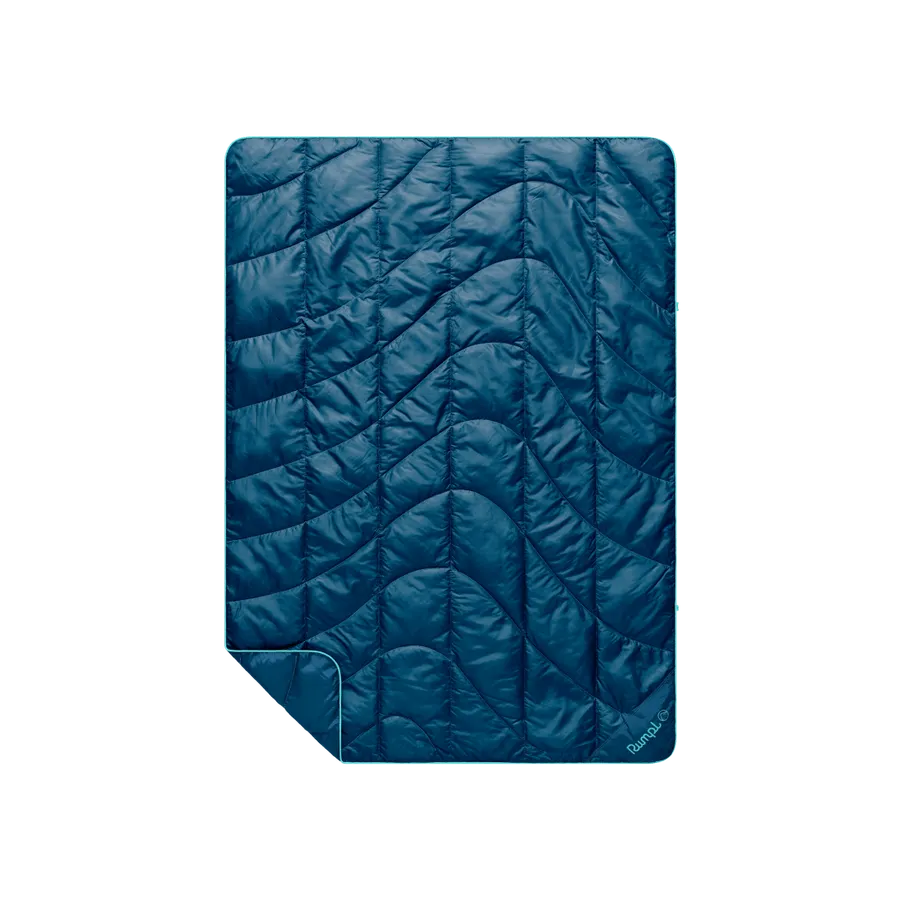
Verdict:The Rumpl Travel Puffy ($89.95, 0.79 lb, packs to 4 by 10 inches, 3-year warranty) is the best travel blanket for most people. Cocoon's COOLMAX blanket ($49.95) is the cheaper, lighter-feeling pick, and Cocoon's merino and silk blanket ($149.95) is the one for the coldest cabins.
A travel blanket is the one comfort item that solves the problem you actually have on a plane, which is being cold. The trouble is that most of what gets sold is either bulky, hard to wash, or a gift set priced like a jewelry box.
This guide draws on Condé Nast Traveler’s travel blanket roundup, a long thread on the Rick Steves Travel Forum, and the product pages for Rumpl and Cocoon, all checked on 2026-10-17.
Some links in this review are affiliate links. Intastravel may earn a small commission at no extra cost to you. It does not change which products we pick.
The short answer
Buy the Rumpl Travel Puffy. It weighs 0.79 pounds, packs to about the size of a water bottle, and Rumpl backs it with a 3-year warranty.
If you want to spend less, take the Cocoon COOLMAX. If your cabin is always freezing, take the Cocoon merino and silk blanket.
What makes a travel blanket worth carrying
Condé Nast Traveler says to look for a blanket that is lightweight, machine washable, and packs down into a pouch. That is the whole checklist.
Material decides the feel. Condé Nast Traveler notes that fleece is soft and warm, cashmere regulates temperature, cotton breathes, and lightweight nylon packs small. Pick the trait you care about most, because no single fabric wins all four.
Packed size matters more than it sounds. A blanket you leave at home does nothing. If it will not fit beside your packing cubes, it will not travel.
Washability is not optional. A blanket touches seats, floors, and your face. Rumpl lists its blanket as machine washable. Cocoon’s collection page does not list care instructions, so check before you buy.
This is the blanket I would hand a friend who gets cold on planes. It is insulated like a lightweight puffy jacket, so it traps heat at a fraction of the bulk of a fleece throw.
A poster on the Rick Steves Travel Forum recommends Rumpl for the same reason, calling it a blanket made of the same kind of material as a higher-end sleeping bag. That poster also says it is expensive but much better than fleece, and the price is the real downside here.
Rumpl lists the Travel Puffy as machine washable on a cold gentle cycle in a front-loading machine. It should be hung to dry or tumbled with no heat.
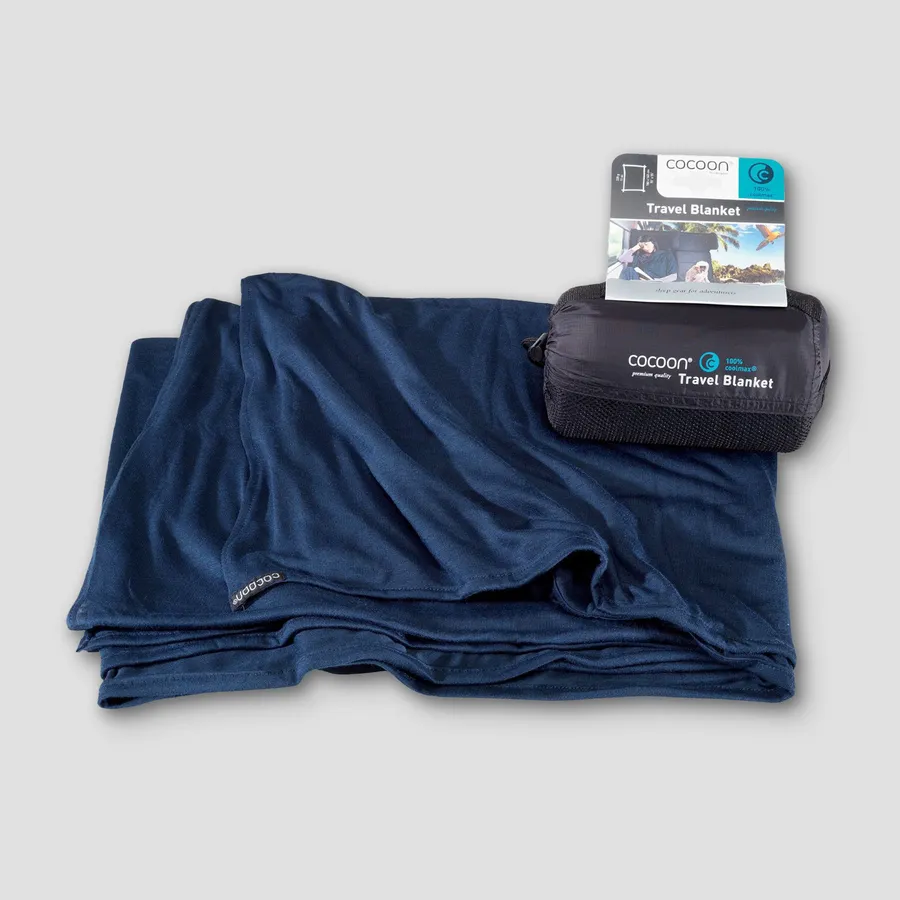
Cocoon’s COOLMAX blanket is a thin, soft throw that folds into a stuff sack Cocoon describes as roughly the size of a loaf of bread. It costs $40 less than the Rumpl.
Cocoon does not list the blanket’s weight or dimensions on the product page, so check the size before you buy if you are tall. We have not tested it, and Cocoon’s page gives no warmth rating, so treat it as a light layer.
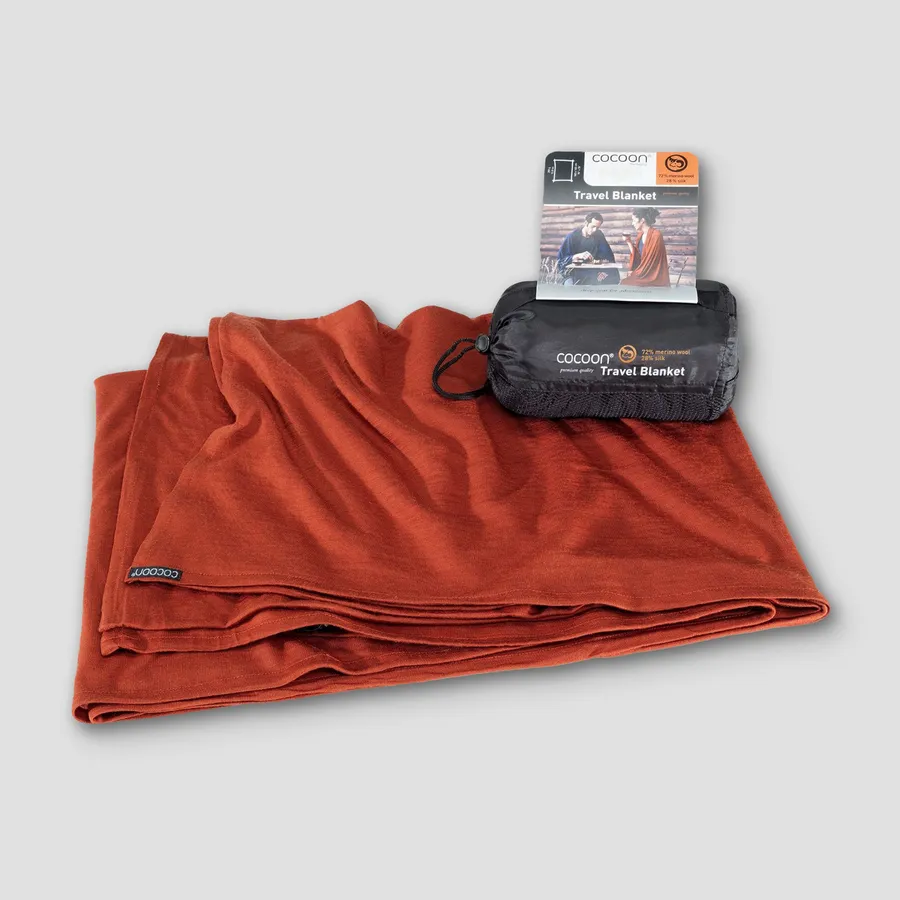
This one is a blend of merino wool and silk, and the label in Cocoon’s product photo reads 72 percent merino and 28 percent silk. It packs into the same loaf-of-bread stuff sack as the COOLMAX.
Wool is a familiar choice for cold weather, but Cocoon gives no warmth rating, so we cannot say how it compares to the Rumpl. The price is the catch, since it costs about $60 more. Read the care instructions on the product page before you buy.
The cheap trick: skip the blanket and pack a big scarf
The Rick Steves Travel Forum thread on this exact question is full of people who do not carry a blanket at all. The most common answer is a large scarf, pashmina, or ruana that works as a wrap on the plane and as a layer everywhere else.
One poster uses a heavy Lululemon scarf as a blanket, a pillow, and a layer in hotel rooms. Another uses a 28 by 80 inch cashmere scarf and says they never travel without it.
A budget answer also appears in that thread. One poster bought a fleece remnant for $5 to $6, folded and seamed the edges, and still had it after three trips.
If you already pack light, this is the better path. It adds almost no weight, and a scarf does not look like luggage when you wear it through the terminal.
Other blankets editors like
Condé Nast Traveler also lists a few blankets that are not in our top three. We have not tested these, and the details below come from that roundup.
E Marie travel blanket and eye mask set, $98. It measures 81 by 36 inches and doubles as a scarf, shawl, or pillow.
EverSnug Premium travel blanket pillow, $35. The microplush blanket measures 68 by 42 inches, and its carrying case works as a pillow.
Bearaby Travel Napper, $209. This is a 10-pound weighted blanket, and Condé Nast Traveler says it may not make sense on shorter flights.
Who should buy which
Buy the Rumpl if you fly often and want one blanket that packs small and lasts. Buy the Cocoon COOLMAX if you want something simple under $50.
Buy the merino and silk blanket if you run cold and plan to use it for years. Pack a scarf if you would rather not carry a dedicated blanket.
For most people it is the Rumpl Travel Puffy, which weighs 0.79 pounds and packs to 4 by 10 inches. It is warm for its size and covered by a 3-year warranty.
What should I look for in a travel blanket?
Condé Nast Traveler recommends a blanket that is lightweight, machine washable, and packs down easily. Extras such as a pouch or matching eye mask are a bonus.
What is the best material for a travel blanket?
It depends on what you want. Condé Nast Traveler says fleece is soft and warm, cashmere regulates temperature, cotton is breathable, and lightweight nylon packs small.
Is a scarf a good substitute for a travel blanket?
Many travelers on the Rick Steves Travel Forum say yes. A large scarf, pashmina, or ruana works as a wrap, a blanket, and a pillow, and it packs smaller than most blankets.
Will a travel blanket fit in my carry-on?
A packable one fits in a carry-on, since the Rumpl packs to 4 by 10 inches. For exact bag dimensions on your airline, check a spec resource such as NewCarryOn.
The best earplugs for flying depend on your problem. Loop Quiet 2 for noise and sleep, Mack's Flightguard or Alpine FlyFit for ear pressure.
Verdict: Loop Quiet 2 ($24.95) is the best earplug for flying if cabin noise and sleep are your problem. Mack's Flightguard ($11.99) and Alpine FlyFit ($16.95) are the picks if your ears hurt on descent, because they are built with pressure-regulating filters.
The best luggage scale for most travelers is the $10.99 Etekcity EL11. Five scales compared on capacity, price, battery, and who should skip each.
Verdict: The Etekcity EL11 ($10.99, 110 lb capacity, 4.8 oz, 2-year warranty) is the best luggage scale for most travelers. Freetoo is the lighter runner-up, Samsonite is the pick if you want a built-in tape measure, and the battery-free Travelon is for people who never want to replace a battery.
A Monos luggage review built from Monos's own product pages, owner reports, and lab tests: five models compared on price, weight, warranty, and scuffs.
Verdict: For most people, the Monos Carry-On (list price $275, often $233.75 in select colors) is the Monos worth buying: polycarbonate shell, 6.6 pounds, the full lifetime warranty on wheels, handle, and lock. Pick the Carry-On Pro ($295) only if you carry a laptop in the front pocket, and skip the aluminum and hybrid models unless the finish is the point.