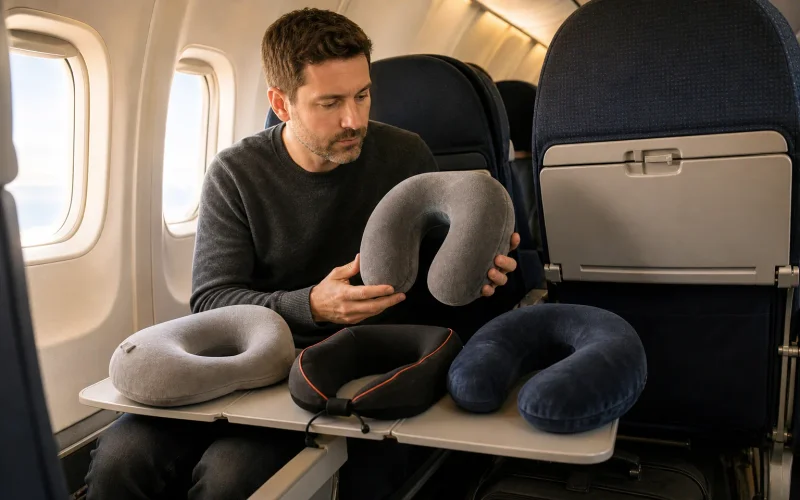
Best Neck Pillows for Long Flights
Compare the best neck pillows for long flights by support, packability, adjustability, and comfort so you can choose the right one for your next travel day.
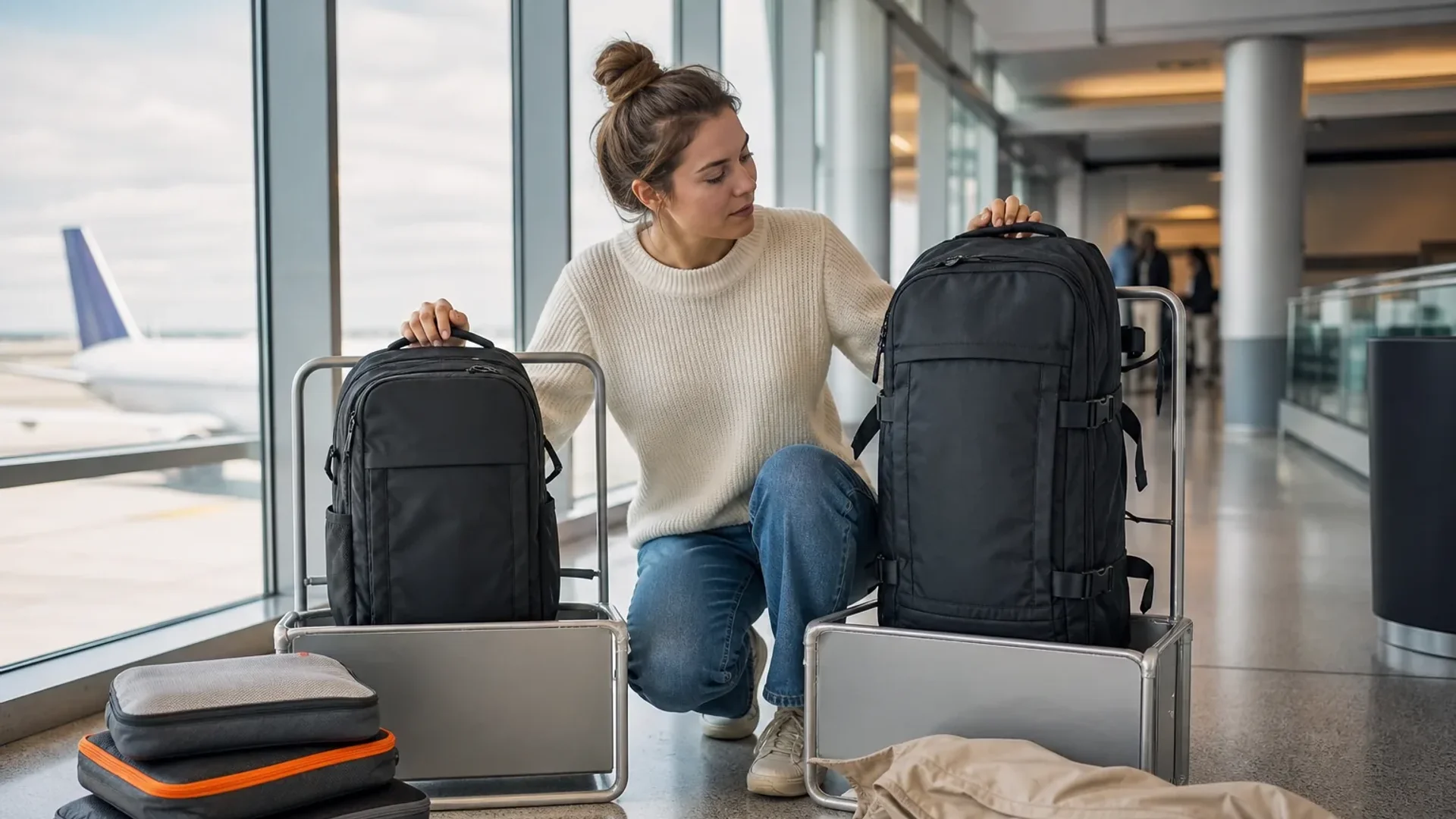
The biggest carry-on backpacks for women often have the fewest pockets. Meanwhile, a budget bag under $30 can pack in 19 of them. Capacity, weight, fit, access, and airline dimensions all matter when you pick a bag for your actual travel day, not a glossy product photo.
Capacity is a starting point for the best carry on backpacks for women, not a promise that the bag fits an airline or feels good on your back.
Start with the longest stretch you’ll carry the pack. If that means a 20-minute walk to a metro stop, a 35L bag may be enough. If you expect stairs, rough pavement, and several hours on foot, empty weight becomes much more important.
The Osprey Sojourn 45L holds 45L and meets the common 22-inch height limit, but it weighs 7.9 pounds empty. The Osprey Fairview 40 weighs just over 3 pounds. A lighter bag gives you more room for clothes before the load becomes unpleasant.
Here is a useful capacity guide:
A clamshell opening, which lets the bag open like a book, makes cube-based packing easier. A top-loader can feel less bulky for daily use. Neither design wins every trip.
Airline rules add another wrinkle. Carry-on luggage means different things across airlines, while a personal item usually has a smaller allowance. Check the carrier’s current limits before you buy. As a plain definition, carry-on luggage refers to bags passengers bring into an aircraft cabin, but the permitted size still comes from the airline.
Don’t judge capacity by liters alone. Two 30L bags can have very different heights, depths, and shapes. Measure the full outside dimensions, including pockets when they stick out.
By now you should have a target capacity, a maximum empty weight, and the airline rule you need to meet.
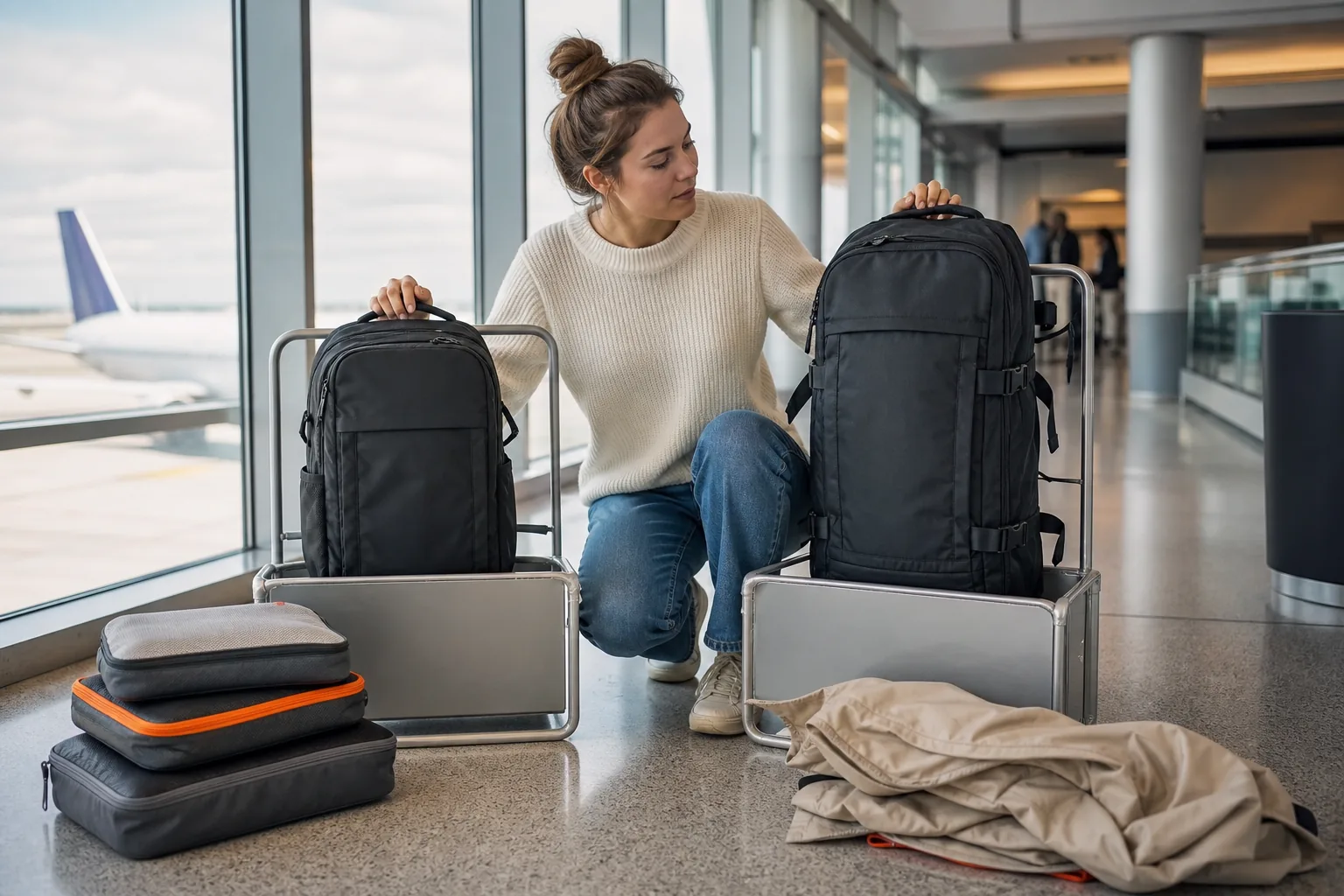
The strongest options for women travelers split into clear use cases. Pocket count, support, price, and size pull in different directions, so we won’t pretend one bag works for everyone.
For a women-specific fit: The Osprey Fairview 40 has a women-specific design, an adjustable torso fit, a stowaway use, and a hip belt. It holds 40L and weighs just over 3 pounds empty. The trade-off is organization. Research lists a laptop sleeve and toiletry pocket, not a wall of small compartments.
For a large, supported load: The Osprey Farpoint 40 has padded shoulder straps, load lifters, a hip belt, and a curved back panel. Its clamshell opening helps with packing, while internal and external compression straps help hold the load in place. Its 22-inch height meets the common carry-on limit, but its outer design has fewer quick-access pockets.
For maximum space: The Osprey Sojourn 45L gives you the largest listed capacity in this group. It also has padding across the shoulder straps, back panel, and hip belt. That comfort work has a cost: at 7.9 pounds empty, it can eat into your airline weight allowance before you pack a shirt.
For low-cost organization: The BAGSMART Travel Backpack lists 19 pockets, a pass-through strap, padded shoulder straps, and a laptop sleeve sized for a 15-inch MacBook. Its starting price is under $30 in the research. That pocket count sounds useful until every small item has its own hiding place. We suggest assigning each pocket a job before your first trip.
For included packing aids: The LOVEVOOK 40L Travel Backpack has 18 pockets, a 180-degree opening, included packing cubes, and a wet compartment. Still, airline rules can change, and you should check the current sizer dimensions.
For a smaller personal item: The Cotopaxi Allpa 28L has a full-wrap suitcase opening, a padded sleeve for a 15-inch laptop, lockable zippers, a tuckable waist belt, and a luggage pass-through strap. At 28L, it makes more sense for a short trip or as a second bag than as a cold-weather one-bag pack. You should still compare the exact model’s dimensions before flying.
| Use case | Option to inspect | What stands out | Trade-off |
|---|---|---|---|
| Women-specific fit | Osprey Fairview 40 | Adjustable torso and hip belt | Limited listed pocket layout |
| Long walks with a load | Osprey Farpoint 40 | Load lifters and padded suspension | Few quick-access pockets |
| Maximum capacity | Osprey Sojourn 45L | 45L interior and padded support | 7.9-pound empty weight |
| Low-cost organization | BAGSMART Travel Backpack | 19 pockets and luggage pass-through | May feel busy to pack |
| Short trips | Cotopaxi Allpa 28L | Compact clamshell layout | Too small for heavy packing |
Our main finding is simple: price does not predict organization. The low-cost BAGSMART entry lists more pockets than the premium Fairview. More pockets also don’t guarantee comfort. Pick the feature that solves your biggest problem first.
Fit decides whether a backpack feels useful or becomes the thing you resent by lunch. Women’s carry-on backpacks should sit close to your back without pressing into your neck or underarms.
Load the bag with what you really carry. Use a laptop, shoes, a jacket, toiletries, and a full water bottle. A test with an empty bag tells you almost nothing.
Then adjust it in this order:
Walk around the room. Sit down. Climb stairs if the shop allows it. Reach into the laptop sleeve while wearing the bag. Look for pressure at the collarbone, rubbing under the arms, or a bag body that extends far below your waist.
The Osprey Fairview can fit shorter users once its use is set lower, but its suspended back panel and strap edges may rub delicate clothing. A backpack with a softer back panel and rounded sides may feel comfortable, yet a pack without a hip belt and load lifters offers less support. Those are useful differences, not minor details.
Access matters just as much. Put your passport in the pocket you can reach while standing. Keep your charger near the top. If you need to unpack half the bag at security, the pocket plan has failed.
There is no universal women’s fit. A well-adjusted unisex pack can work better than a women-specific bag that has the wrong torso length.
The final test for the best carry on backpacks for women is a full travel-day rehearsal. Pack the bag before you decide it belongs on your next flight.
Use this test load:
Wear it for at least 30 minutes. Walk at your normal pace. Keep the bag beside you while you sit at a gate or wait for a train. A backpack that feels fine for five minutes may feel very different after an hour.
Check the outside again once packed. Compression straps can help a soft bag fit a sizer. They cannot fix a pack that is too tall or too deep. We also check whether the laptop sleeve is easy to reach without exposing the rest of the contents.
Watch this travel backpack fit demonstration before you repeat the test at home:
Choose the smaller pack if you carry a tablet and one change of clothes. Choose the 35L to 40L range when you pack for several days. Choose 45L only when the added room solves a real problem.
If the loaded backpack hurts during this test, stop forcing a one-bag plan. A rolling carry-on plus a small personal item may suit your body better. For flight planning, our guide to the best time to fly to Bali shows why trip length and weather should shape what you bring.
Verdict: buy the bag that feels calm when full. The guides won’t always say that, but your shoulders will.
A 35L to 40L backpack suits many carry-on trips because it leaves room for clothes without pushing toward the weight of a 45L pack. Smaller 20L to 28L bags work for light packers or short trips. Always compare the bag’s full outside dimensions with your airline’s current rule.
Women-specific backpacks can be worth it when the torso length, use shape, and hip belt match your body. They aren’t automatically more comfortable. The best carry on backpacks for women are the ones that sit well when loaded, regardless of the label.
A 40L backpack can work as a carry-on when its outside dimensions meet the airline’s limit. Capacity alone doesn’t decide compliance.
Empty weight matters more when you walk for long periods or pack heavy items. Pocket space matters more when you need quick access to tech and travel documents. A light bag with poor access can frustrate you, while a pocket-heavy bag can become hard to pack. Choose based on the task you repeat most.
A backpack can be a personal item if its full dimensions fit under that airline’s seat allowance. A 40L bag may be too large, even when it fits another carrier’s overhead limit. Measure it while packed, because bulging pockets and overfilled panels can change the result.
We recommend starting with the Osprey Fairview 40 if you want a women-specific fit and a supported one-bag setup. Choose a smaller or lighter option when your trip has little clothing and lots of walking. Before you buy, pack the bag fully, wear it for 30 minutes, and check your airline’s current dimensions. That test will tell you more than a product photo ever can.
Compare the best neck pillows for long flights by support, packability, adjustability, and comfort so you can choose the right one for your next travel day.
Find the best hard shell carry on luggage for business trips, international flights, and frequent travel with an honest, practical buying guide.
Luggage straps keep bags closed and add a security layer. Top picks, what to look for, and how to use them effectively for checked and carry-on bags.