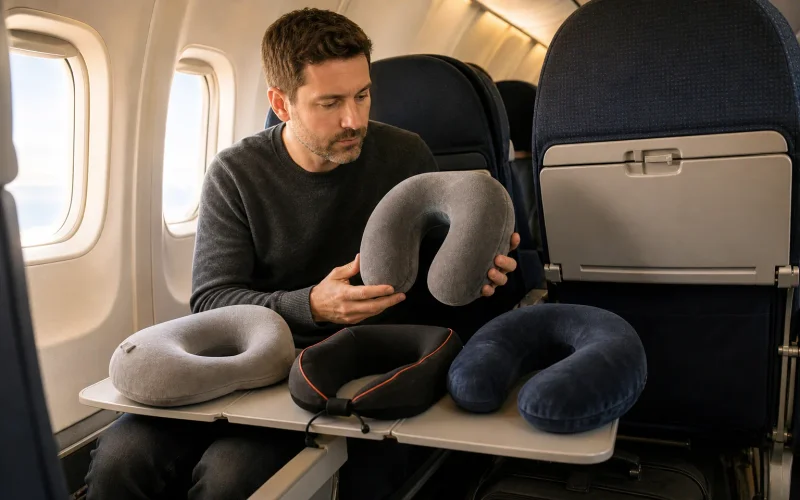
Best Neck Pillows for Long Flights
Compare the best neck pillows for long flights by support, packability, adjustability, and comfort so you can choose the right one for your next travel day.
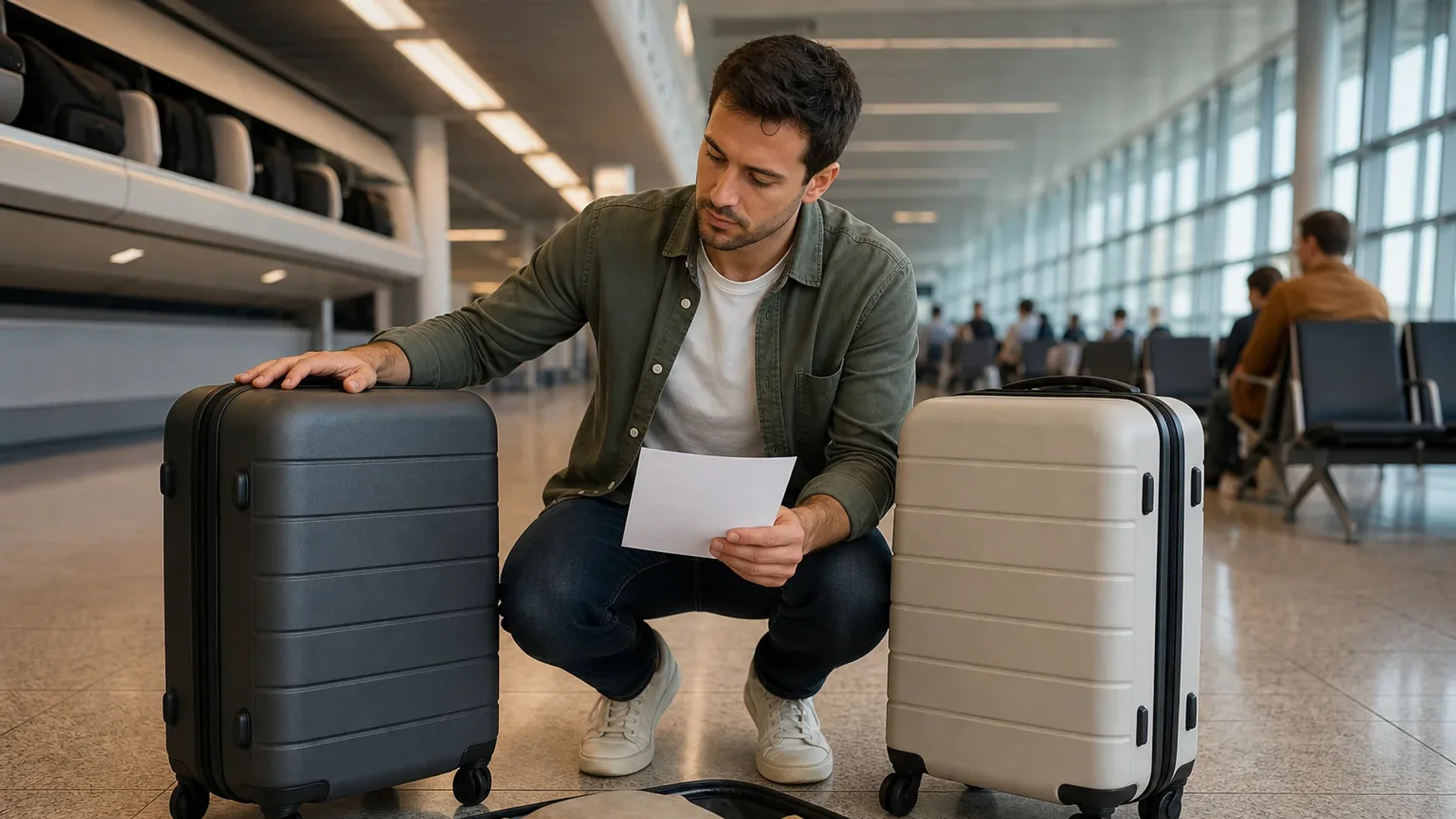
The lightest hard-shell carry-on weighs 4.2 pounds. The heaviest weighs 9.5 pounds. That gap can decide whether your packed bag stays under an airline limit. We use five checks to sort the best hard shell carry on luggage for your trip, starting with the kind of travel you actually do.
Check the expansion measurement before you rely on the claim.
For hard shell carry-on luggage, outside dimensions matter more than the words “carry-on approved.” Measure the full case, including wheels and the stowed handle.
Start with the airline you use most. Then check the carrier for your next international trip. Rules can differ, and a bag that fits one aircraft may face a gate check on another. Consumer Reports notes that the strict U.S. domestic reference size is often 22 by 14 by 9 inches, but not every bag sold as a carry-on stays within that limit.
International flights leave less room. Consumer Reports advises keeping the bag below 21.7 inches in height, including wheels and the handle. Its luggage testing also covered 31 checks for areas such as impact resistance, handle use, construction, and safety. s luggage testing details for the full test scope.
Now inspect how the brand lists dimensions. Some pages show interior size. Others show only the shell. Those numbers aren’t interchangeable. A thick shell, recessed wheels, or a telescoping handle can reduce usable space while increasing the outside measurement.
Be careful with larger carry-ons. The Away The Bigger Carry-On is described as fitting most major U.S. airline bins, yet smaller aircraft and some international carriers may still require a gate check. That extra room can help on a domestic trip, but it isn’t free. You accept more risk at the boarding door.
Measure your own current bag as a quick reality check. Place it upright on a flat floor. Measure height from the floor to the highest fixed point. Then measure width and depth. Add any front pocket bulge if the bag has one.
Don’t assume expansion helps. The 22 entries with expansion data listed none. If extra space matters, confirm the actual measurement before you pay more for the claim.
Decision rule: If the airline’s limit and the suitcase’s full outside size don’t match, trust the airline. A roomy case is less useful when it spends the trip in the hold.
The best hard shell carry on luggage should feel easy to move before you fill it. Weight is the first screen, but wheels, handles, and packing layout decide how the bag behaves.
Only 12 of the 30 models in our dataset listed an empty weight. Their average was 7.53 pounds, with a median of 7.43 pounds. The Samsonite Cosmolite was the lightest at 4.2 pounds. The Rimowa Original Cabin was the heaviest listed at 9.5 pounds. A higher price did not guarantee a lighter case.
That trade-off matters most on routes with strict weight limits. A heavy shell leaves less room for shoes, gifts, or a second jacket. A very light case may give up some warranty coverage or interior structure. The Cosmolite is a strong example of the weight advantage, but it doesn’t carry the lifetime warranty listed for several heavier models.
Next, test the wheels. Spinner wheels should roll straight when you pull at walking speed. They should also turn without forcing your wrist to twist. A smooth airport floor hides weak wheels. Check them on tile, carpet, and a curb edge if a store allows it.
The handle needs the same test. Raise it fully, then push the case beside you. Look for side-to-side wobble. Check the grip height if you’re tall. The Samsonite Virtuosa is aimed at height-conscious travelers, while the Samsonite Freeform is listed at 6.6 pounds and has a simpler design.
Interior layout comes down to your packing habits. A clamshell case opens in two halves, so it works well on a hotel bed. Compression panels keep clothes in place, but they can eat into room for bulky items. A front laptop compartment gives quick access, though it may reduce the main compartment’s usable volume.
The Monos Carry-On Pro shows that trade-off clearly. Its laptop pocket takes space from the main compartment, which leaves about 29.8 liters for clothing and shoes. That can suit a two to four day work trip. It won’t suit someone who packs wide shoes or a thick coat.
Hard shells also show marks. Polycarbonate can flex and still pick up scratches. Aluminum frames add structure but usually add weight. The clean look may fade faster than you expect, especially if you check the bag.
Pack a mock load before you decide. Put in your laptop, shoes, toiletry kit, and one bulky layer. Close the case without forcing the zip. If the case only works when every item is placed perfectly, skip it.
A warranty can change the value of hard shell carry-on luggage, but only if you read what it covers. “Lifetime” does not automatically mean airline damage, cosmetic wear, or free replacement.
Our dataset had warranty details for 16 of 30 models. Numeric warranties ranged from one to ten years, with an average of six years and a median of five. Away, Rimowa, and Travelpro listed lifetime coverage in the research, but those terms may use different rules.
Read four lines before you compare prices:
The answer changes the value of a bag. A five-year defect warranty may help with a broken handle caused by a manufacturing fault. It may not help after a baggage handler cracks the shell. Cosmetic scuffs usually sit outside warranty terms as well.
It also lists two inches of expansion. That combination makes it worth closer inspection for a traveler who wants room without starting with a heavy case. We still wouldn’t treat the warranty as a promise of automatic replacement.
TUMI 19 Degree lists a five-year warranty and is aimed at business travelers. That may fit someone who values brand service and carries the same case for work trips. The limitation is clear: five years is not lifetime coverage, so compare the actual term with your expected use.
Warranty value also depends on how often you travel. If you fly once a year, a lower-cost case with a one-year warranty may be enough. If you travel every month, repairs can affect your next work trip. Keep your receipt, registration details, and photos of the case before its first flight.
We recommend judging the warranty after you judge the bag’s fit. A long warranty can’t fix a suitcase that fails your airline’s size rule. It can, however, make a heavier premium case easier to justify when you plan to keep it for years.
Build your shortlist for hard shell carry-on luggage with a simple scorecard. Give each case a pass or fail for your airline, trip length, empty weight, warranty, and packing layout.
Don’t compare ten bags at once. Pick three that fit your use case. For example, a frequent flyer might compare a light case against a warranty-focused model and a roomier case. A budget traveler might compare the Travelpro Maxlite Air V2 with the Samsonite Freeform or Amazon Basics 21-Inch Hardside. Prices vary by seller and sale period, so we won’t invent a number that the research doesn’t verify.
| Traveler need | Data point to favor | Trade-off to check |
|---|---|---|
| Low packed weight | Samsonite Cosmolite, 4.2 lb empty | Warranty coverage isn’t listed as lifetime |
| Extra room on the return trip | Travelpro Maxlite Air V2, 2-inch expansion | Expansion can push the case past airline limits |
| Long-term coverage | Models listing lifetime warranty terms | Read exclusions and damage rules |
| International travel | Stay below the carrier’s full outside limit | Smaller cases hold less |
| Occasional travel | Simple case with a lower purchase cost | Basic handles and wheels may wear sooner |
Skip a case when its headline feature doesn’t solve your problem. A laptop pocket isn’t useful if you don’t carry a laptop. A larger carry-on isn’t useful if your airline weighs every cabin bag. A lifetime warranty isn’t useful if the terms exclude the damage you expect.
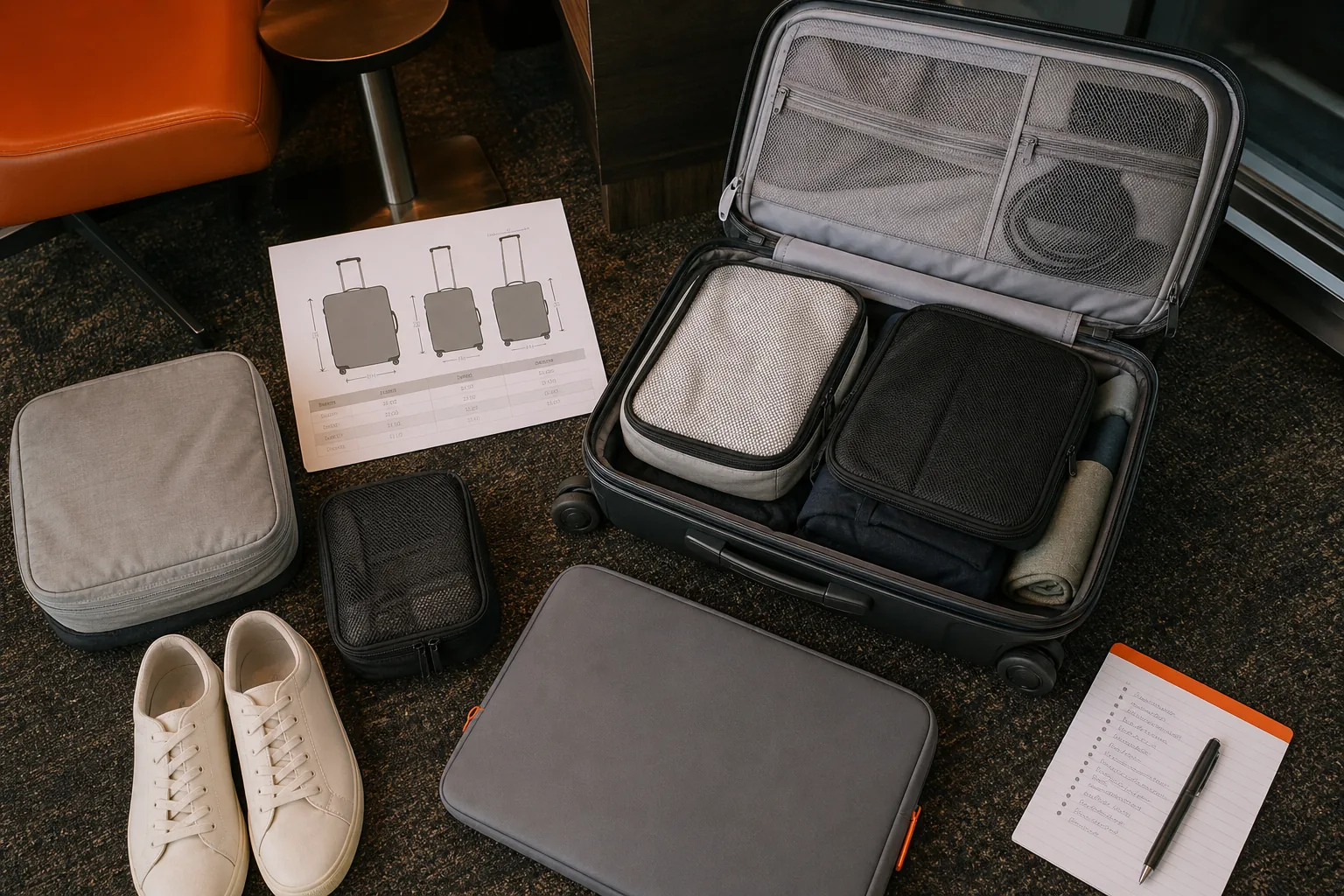
We also tell readers to skip the expansion myth. Most models in our dataset did not list any actual expansion. If you need souvenirs on the way home, plan for a foldable tote or choose the one model with a stated two-inch increase. Don’t pay for vague wording.
Use your shortlist during a real packing test. Place the items you carry most often inside. Roll the case over a rough surface. Lift it into a car trunk. Open it on a narrow hotel floor. Those small tests expose problems that a product page won’t.
Final check: Buy the case that passes your airline test, fits your normal load, and has warranty terms you understand. If it fails one of those three checks, leave it behind.
The Samsonite Cosmolite is the lightest listed model at 4.2 pounds empty. That makes it useful when your airline has a tight cabin weight limit. Check its current size and warranty terms before buying, because low weight alone doesn’t tell you how well the case fits your route.
Most models in our dataset did not list real expansion. The Travelpro Maxlite Air V2 was the only model with a stated increase, at two inches. Treat “expandable” as an unconfirmed claim until you find the added measurement. Remember that expanded depth may push the bag beyond your airline’s cabin limit.
Hard shell luggage can work well for international travel when its full outside dimensions fit the airline. It protects the shape of your belongings and wipes clean with little fuss. The trade-off is less flexibility in tight bins. Measure the case with wheels and the handle included before you book.
A lifetime warranty can be worth it for frequent travelers, but the terms matter more than the label. Check exclusions for airline damage, cosmetic marks, shipping, and repairs. A shorter warranty may be enough for occasional trips. Keep proof of purchase and inspect the claim process before you rely on the coverage.
Skip any case that fails your airline’s size rule or only fits your load when overpacked. We also suggest skipping vague expansion claims and heavy shells when you face strict weight limits. The right choice is the case that works during your actual travel day, not the one with the longest feature list.
We recommend starting with airline size, then checking empty weight and warranty terms. For a first shortlist, compare the Samsonite Cosmolite, Travelpro Maxlite Air V2, and one warranty-focused model that fits your route. Pack that test load before you buy, and check the carrier’s current cabin rules on the same day.
Compare the best neck pillows for long flights by support, packability, adjustability, and comfort so you can choose the right one for your next travel day.
Find the best carry on backpacks for women with airline fit checks, comfort tests, capacity advice, and honest trade-offs for one-bag travel.
Luggage straps keep bags closed and add a security layer. Top picks, what to look for, and how to use them effectively for checked and carry-on bags.