The lightest carry-on weighs 2.1 kg. The heaviest weighs 4.3 kg, even though it carries a premium name. That gap can decide whether you lift your bag into an overhead bin or pay to check it.
We want the case that leaves room for your trip, not the case with the loudest label.
Step 2: Compare the lightest hardside cases by usable trade-off
Lightweight hardside luggage for international travel starts at 2.1 kg. That sounds like a clear win, but usable size matters just as much as the number on the scale.
Samsonite Proxis weighs 2.1 kg and measures 22 x 14 x 9 inches. July Carry On Light Exp. also weighs 2.1 kg and measures 21 x 14 x 9 inches. July Carry On Light drops to 1.8 kg, with dimensions of 21 x 14 x 8 inches. Those figures make the July Carry On Light especially useful when an airline has a strict weight rule.
Price does not settle the question. The listed starting prices are $245 for July Carry On Light, $275 for July Carry On Light Exp., and $500 for Samsonite Proxis. Two of the three lightest models sit at very different price points. A higher price may buy a different shell, warranty, or finish, but it doesn’t guarantee a lower empty weight.
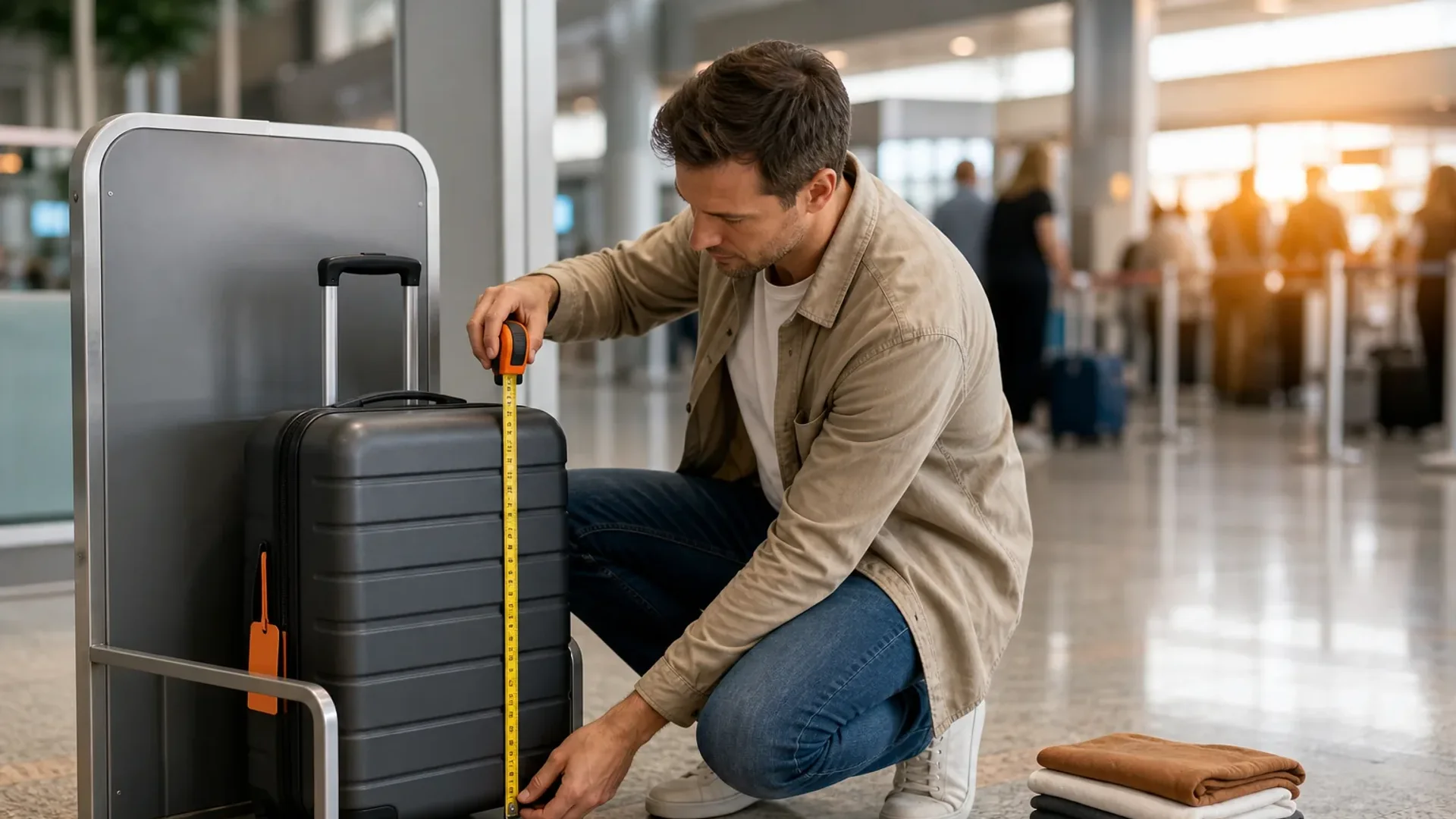
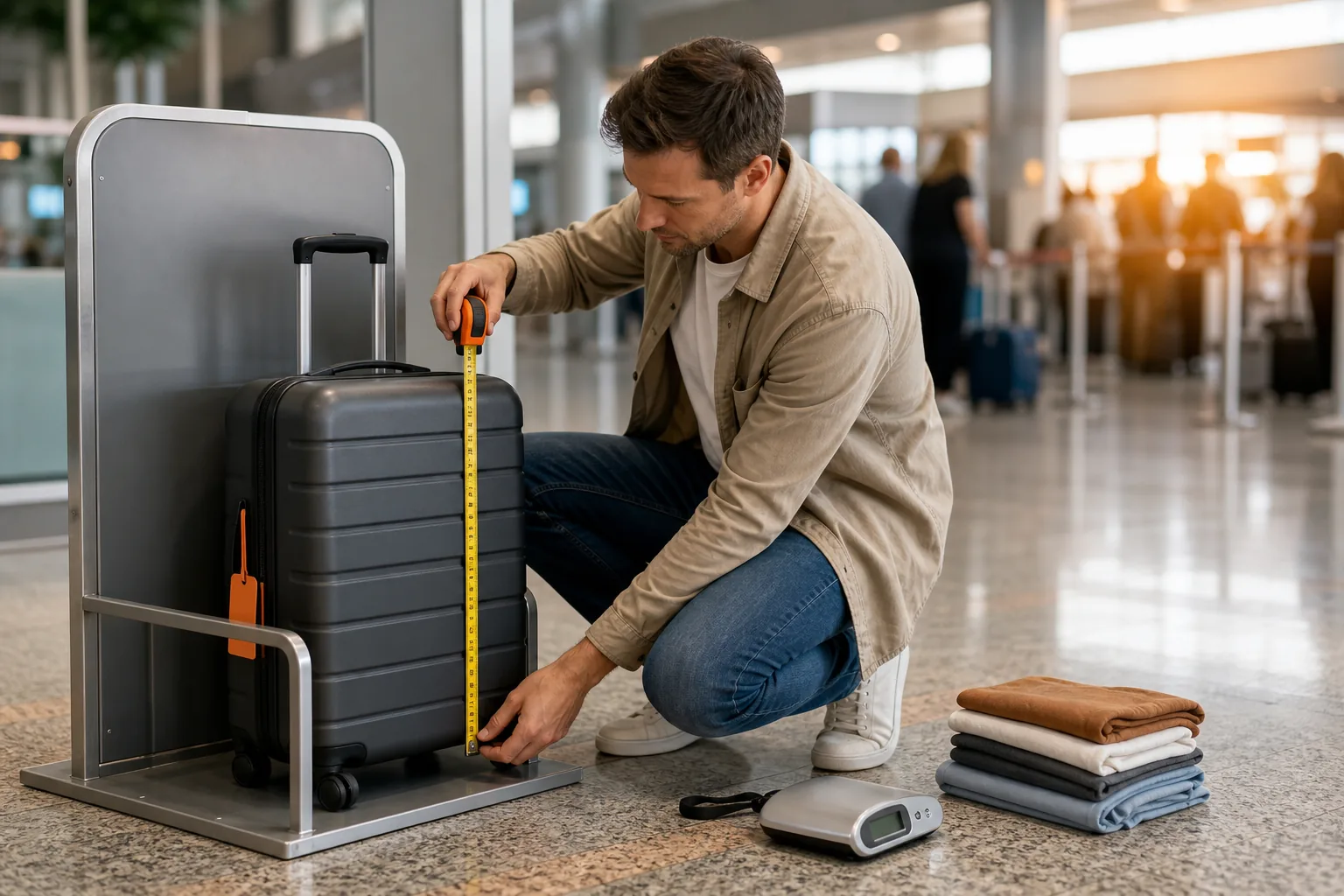
Size listings need care. A suitcase’s wheels, handle housing, side handles, and outer pockets count toward its total size. Airlines treat baggage as a physical item with limits, rather than as a simple body measurement.
Before buying, open the manufacturer’s measurement diagram. If it gives only the case body size, look for the full outer measurement. A case that is 21 inches at the shell can become taller once wheels and hardware are included.
Case
Weight
Outer size
Expansion
Useful trade-off
July Carry On Light
1.8 kg
21 x 14 x 8 in
No listed expansion
Leaves more weight for clothes
Samsonite Proxis
2.1 kg
22 x 14 x 9 in
Listed expansion
Matches the common US carry-on envelope
July Carry On Light Exp.
2.2 kg
21 x 14 x 9 in
Listed expansion
Adds room when the size rule allows it
Travelpro Maxlite 5 21”
2.5 kg
—
—
Moderate empty weight
Rimowa Original Cabin
4.3 kg
—
—
Premium name, much less weight left for packing
Our sample averages 2.88 kg across 19 models. The range proves the point: premium styling and low weight don’t always arrive together. If your airline weighs cabin bags, the empty case is part of your packing budget.
Skip the Rimowa Original Cabin if your main goal is to save every gram. Its 4.3 kg empty weight leaves less room than the lighter cases above. It may suit someone who values its design and build, but that is a different decision.
Step 3: Choose between expansion, capacity, and weight
Lightweight luggage becomes easier to judge when you decide what expansion must do. It can add room for a return trip, but it can also push the case outside the airline’s size limit.
Start with your outbound load. Pack the items you know you will carry, then weigh the bag. If the case already fills the airline’s limit, expansion should be a backup rather than part of your normal setup.
July Carry On Light Exp. is aimed at travelers who want that extra option. Its listed weight is 2.2 kg, and its size is 21 x 14 x 9 inches before any added depth. The non-expanded July Carry On Light weighs 1.8 kg and measures 21 x 14 x 8 inches. The lighter model makes more sense for strict weight limits. The expandable model makes more sense if you often return with gifts.
Capacity also depends on how the inside is shaped. A wide main compartment may hold more than a case with thick dividers. Compression panels can help keep clothing flat, but they don’t change the airline’s scale or sizer.
We use this order:
Pack for the first flight.
Weigh the closed case.
Measure it with the expansion open and closed.
Decide which setting fits your airline.
Use expansion only when you have checked the next leg’s rule. Some airlines care more about dimensions than weight. Others do the opposite. Your most generous flight does not set the standard for the whole itinerary.
Our verdict is plain: choose the fixed-size case if you pack light by habit. Choose expansion if you can keep the zipper closed until the rules allow more room.
Step 4: Match suitcase weight to your travel day
The best lightweight luggage for international travel is the case you can move without thinking about it. That means looking past the airport and picturing the full day.
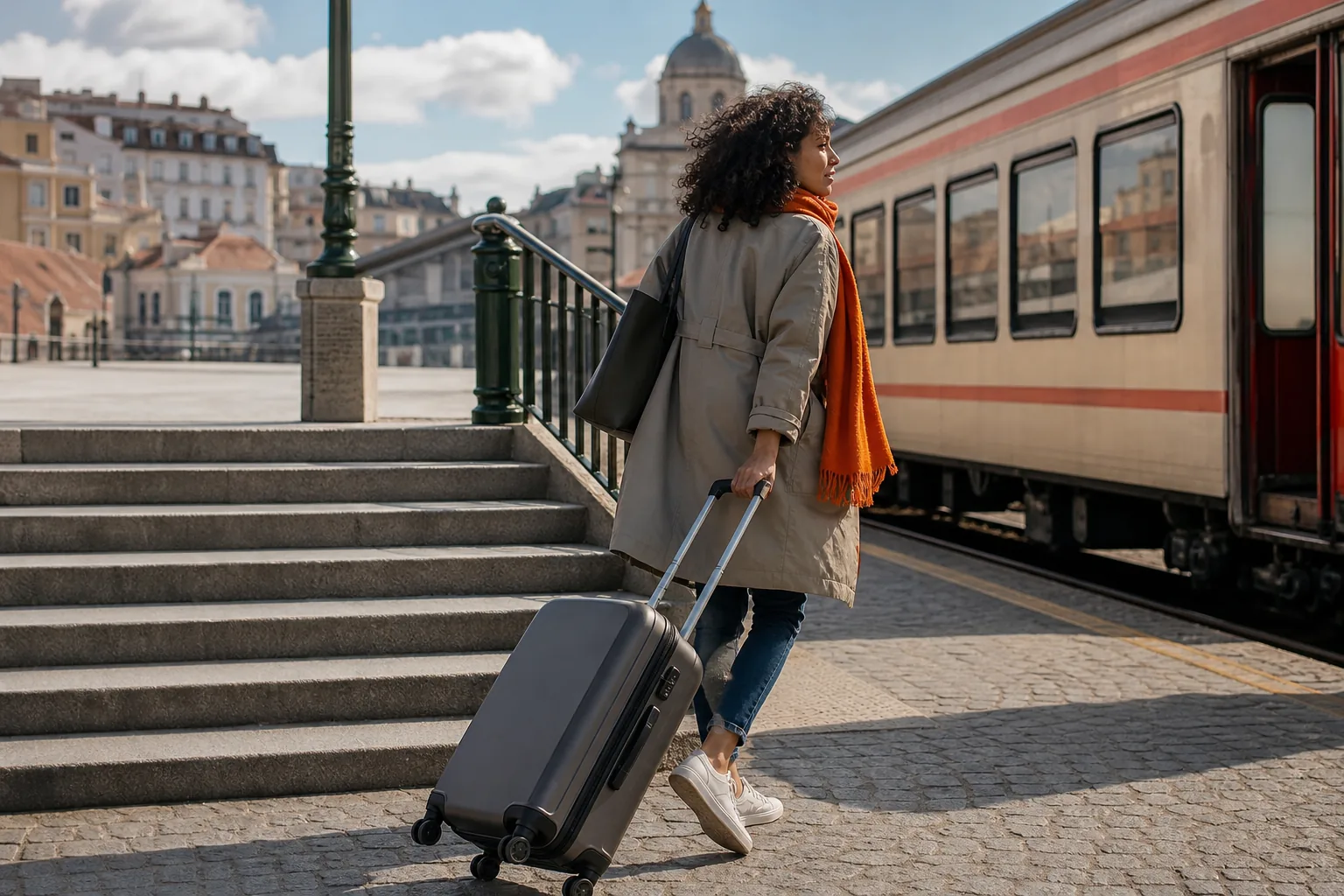
Count the lifts first. You may raise the case into an overhead bin, carry it up hotel stairs, lift it onto a train, and pull it over a curb. A difference of 1 kg feels small on a product page. It feels less small after several transfers.
Wheels matter too. Four-spinner designs can turn in tight spaces, which helps in crowded terminals and narrow hotel halls. They also add parts below the case, so confirm the full outer height.
Softside and hardside cases make different trade-offs. A softside case may flex into a tight space and give you outer pockets. A hardside shell may keep its shape, but it gives you less room for a last-minute item. Neither material wins every route.
For a rail-heavy trip through Europe, we would put wheel control and lift weight ahead of maximum capacity. For a hotel-based trip with one flight and a taxi transfer, a little extra room may be worth it.
To keep the load in check, place heavy items low and close to the wheels. Put shoes inside a bag. Keep a small scale in your packing kit if your airline has a strict limit. Weigh the case after adding chargers, toiletries, and souvenirs. Those are the items that turn a safe estimate into an airport problem.
We also check whether the handle feels stable when the case is full. Research on a suitcase may list weight and size without giving enough detail about balance. That is why field tests often focus on rolling, lifting, and moving the bag from a car trunk to an overhead bin.
If your itinerary includes several trains, the lighter fixed-size case is usually the calmer choice. Save expansion for the return leg only when the next carrier permits it.
Step 5: Make the final pick using weight, size, and price
Now score each case against your trip. Don’t let one impressive feature decide the whole purchase.
We use a simple four-part check:
Weight: Can you stay under the airline’s cabin limit after packing?
Size: Are the measurements for the full case, including wheels?
Use: Will you lift it often, or mostly roll it from a car?
Price: Does the cost leave room for the trip itself?
Choose July Carry On Light when empty weight is your first concern. Its smaller 21 x 14 x 8 inch size may also suit carriers with tighter cabin rules.
Choose Samsonite Proxis when you want a 22 x 14 x 9 inch case with a 2.1 kg empty weight. Its $500 starting price is high beside the July options. That price only makes sense if its build and brand support match how often you travel.
Choose July Carry On Light Exp. when you want added room but still care about a low empty weight. At 2.2 kg and $275 to start, it sits between the two in the basic decision. Keep it closed for the flight out.
Travelpro Maxlite 5 21” weighs 2.5 kg, which is still light enough for many travelers. Check its full dimensions before buying. A missing measurement is a reason to check, not a reason to guess.
Samsonite Freeform Spinner is another option. That can work for occasional trips, but it gives away nearly 1.2 kg compared with the lightest case. The trade-off may be sensible if price matters more than every gram.
Our method uses data gathered on September 6, 2026. Prices and airline rules can change, so verify both on the seller’s page and the airline’s own baggage page before you pay. A luggage decision should survive the actual check-in desk, not only a comparison chart.
For most travelers, we would start with the July Carry On Light. Move to Samsonite Proxis if exact 22 x 14 x 9 inch sizing matters more than price. Pick the expandable July model only if you have a clear plan for the extra space.
FAQ: Lightweight luggage for international travel
What weight is considered lightweight luggage?
Lightweight luggage in the listed models ranges from 2.1 to 3.2 kg. The July Carry On Light weighs 1.8 kg, while the Samsonite Proxis weighs 2.1 kg. Treat empty weight as part of your airline allowance. A case under 3 kg gives you more useful room than one above 4 kg.
What size suitcase is allowed for international carry-on travel?
A 22 x 14 x 9 inch case is a common US carry-on reference, but international airlines can use tighter limits. Measure the full outside size, including wheels and handle housing. Check every airline on your route before flying. A bag that fits one carrier may still need to be checked on another.
Is hardside luggage lighter than softside luggage?
Hardside luggage isn’t always lighter than softside luggage. Compare the empty weight, full dimensions, and inside shape instead of choosing by shell type alone.
Is expandable luggage worth it for international travel?
Expandable luggage is worth it when you need extra room on the return trip and can stay within the next airline’s size limit. Expansion may add depth beyond the permitted measurement. Pack in the closed setting for departure, then check the rules before opening the zipper.
Does expensive luggage weigh less?
Expensive luggage does not automatically weigh less. Samsonite Proxis starts at $500 and weighs 2.1 kg, while July Carry On Light starts at $245 and weighs 1.8 kg. Price can reflect materials or finish, but it isn’t a weight shortcut.
Final Thoughts: Buy the case that leaves weight for your trip
We recommend starting with a case near 2 kg, then checking its full outer size against every airline on your route. For most light packers, July Carry On Light is the cleanest fit.
The best earplugs for flying depend on your problem. Loop Quiet 2 for noise and sleep, Mack's Flightguard or Alpine FlyFit for ear pressure.
Verdict: Loop Quiet 2 ($24.95) is the best earplug for flying if cabin noise and sleep are your problem. Mack's Flightguard ($11.99) and Alpine FlyFit ($16.95) are the picks if your ears hurt on descent, because they are built with pressure-regulating filters.
The best travel blanket for most people is the 0.79 lb Rumpl Travel Puffy. Three picks compared on weight, price, and warmth, plus a scarf trick.
Verdict: The Rumpl Travel Puffy ($89.95, 0.79 lb, packs to 4 by 10 inches, 3-year warranty) is the best travel blanket for most people. Cocoon's COOLMAX blanket ($49.95) is the cheaper, lighter-feeling pick, and Cocoon's merino and silk blanket ($149.95) is the one for the coldest cabins.
The best luggage scale for most travelers is the $10.99 Etekcity EL11. Five scales compared on capacity, price, battery, and who should skip each.
Verdict: The Etekcity EL11 ($10.99, 110 lb capacity, 4.8 oz, 2-year warranty) is the best luggage scale for most travelers. Freetoo is the lighter runner-up, Samsonite is the pick if you want a built-in tape measure, and the battery-free Travelon is for people who never want to replace a battery.