Best Carry On Backpacks for Women
Find the best carry on backpacks for women with airline fit checks, comfort tests, capacity advice, and honest trade-offs for one-bag travel.
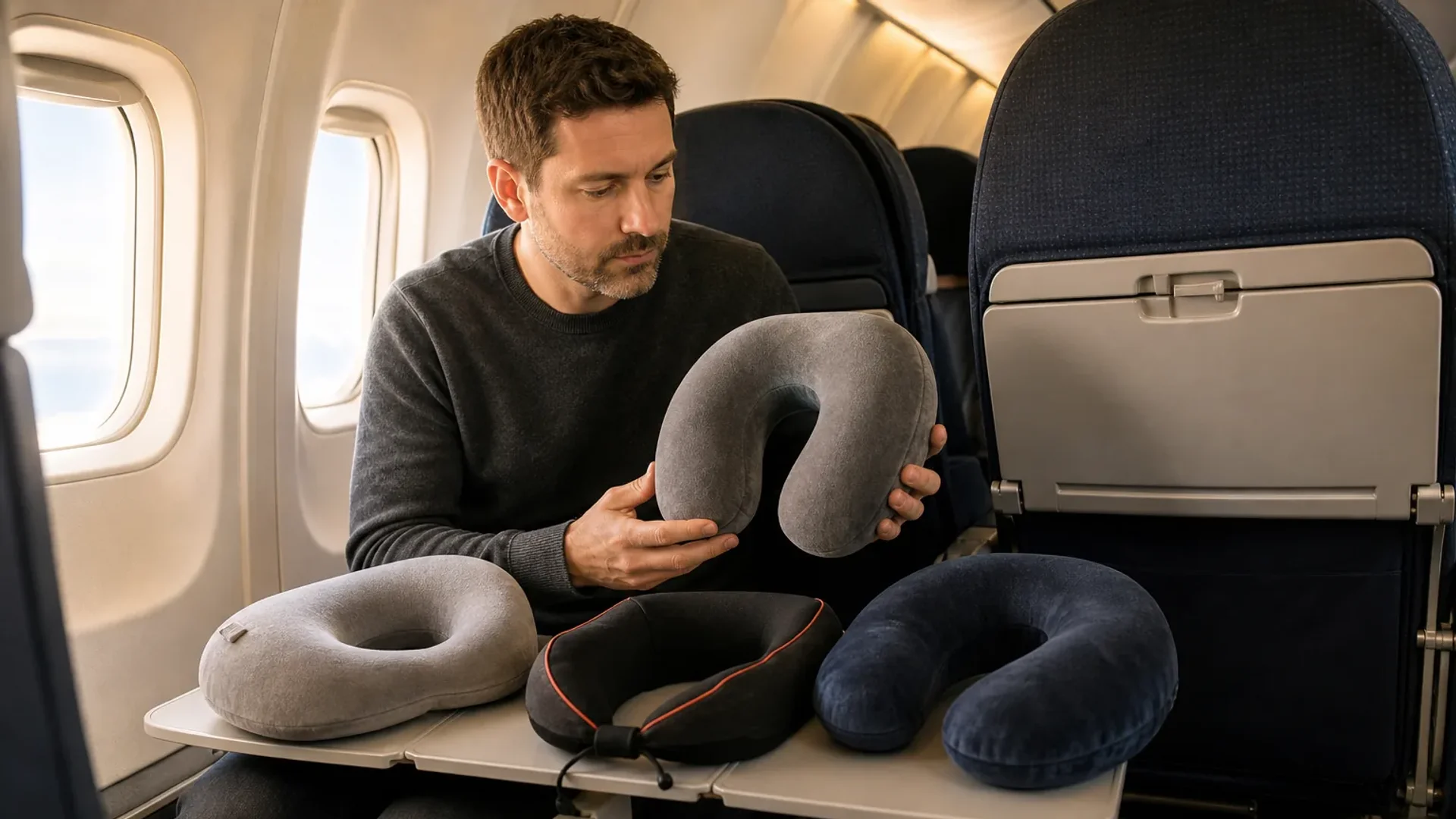
A neck pillow can save a long flight, or become one more bulky thing you regret packing. The research is oddly messy: nine pillows received the same numeric packability score, even though their descriptions range from nearly flat to not very packable. We use the physical details instead. Start with your sleep position, then check support, fit, and packed size before you buy.
The design of a neck pillow changes where your head can move. Before choosing among the pillows discussed in guides, decide whether you want a frame, a wrap, or a traditional cushion.
| Design | What it does | Good fit for | Watch for |
|---|---|---|---|
| Frame | A firm inner brace supports one side of the head | Sleepers who lean toward one side | It may feel stiff or warm |
| Wraparound | Fabric or foam circles the neck and can overlap | People who shift position or need chin support | More material can mean more bulk |
| Traditional U shape | Padding sits around the neck | Travelers who want a familiar, soft cushion | A thick back may push the head forward |
| Inflatable | Air creates adjustable support after inflation | Light packers and occasional sleepers | It may feel less plush than foam |
The Trtl Pillow uses a fleece-covered plastic frame. It feels soft on the outside but firm under your head. The frame works well when you lean toward one side because you rest against a defined support point. Trtl Cool uses breathable rayon fabric instead of the warmer fleece feel.
That frame design has a clear limit. If you shift from left to right while sleeping, one-sided support may leave the other side open. The wrap can also feel snug around the neck. Try wearing it while seated before a flight if pressure near your throat bothers you.
Bcozzy takes a different route. Its snakelike hemi-doughnut overlaps, so you can move the ends around your neck. That helps if your chin drops forward or if you wear large headphones. The trade-off is size. The description says it is not very packable and does not include a case.
Traditional foam pillows feel more like cushions. Cabeau Evolution Cool uses ventilated polyester, while Travelrest Curl uses memory foam. A cushion can feel pleasant for several hours, but a rounded back may interfere with the seat headrest. Check the rear shape before you focus on softness.
For a long flight, we’d skip any pillow that forces your head forward. A soft pillow is still a poor fit if your neck stays bent for hours. Side bending is one of the main movements a neck pillow should limit, though each sleeper needs a different shape.
The best neck pillows for long flights depend on where your head goes when you fall asleep. Pick the movement you need to stop, not the shape that looks most comfortable in a listing.
Choose a frame or wraparound shape with side support. Trtl places a firm brace on one side, and Ostrichpillow Go Neck uses an asymmetrical wraparound design. Its Velcro closure lets you change the tightness and choose the side orientation.
Ostrichpillow Go Neck rolls down to about the size of a large mango. That is smaller than many foam pillows, but it still takes more space than a flat scarf-style frame. Its added side coverage makes sense for a sleeper who tips left or right during a nap.
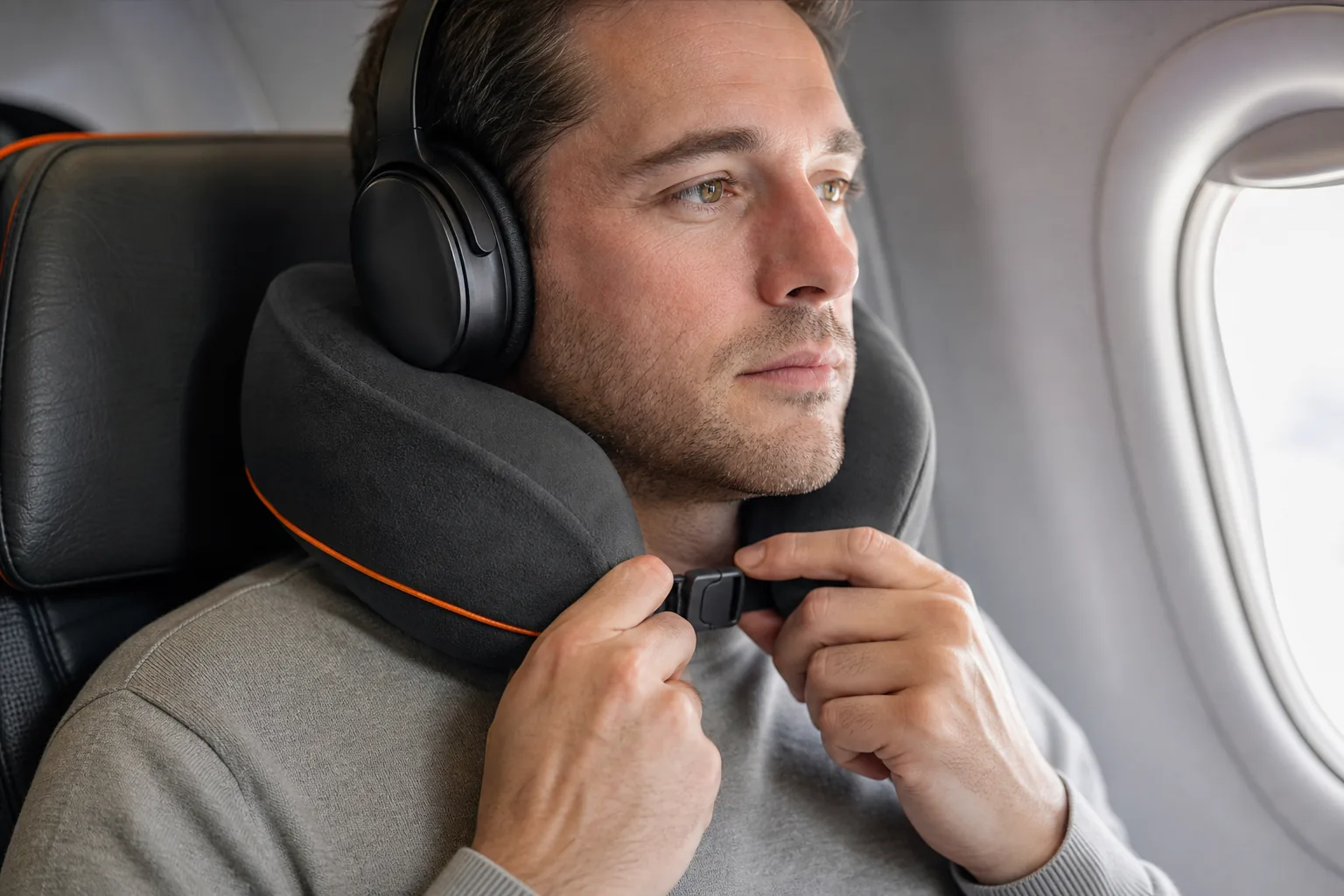
Look for front support that can sit under the chin. Bcozzy’s overlapping design lets you place the ends in front, then change the fit. Cabeau Air TNE also has chin support, plus an adjustable elastic strap and buckle.
Forward support can conflict with headphones or feel restrictive. Test the pillow with the headphones you plan to wear. A design that works with earbuds may press against over-ear cups.
A wraparound pillow gives you more coverage than a one-sided frame. Ostrichpillow Go Neck is built for side support, while Bcozzy lets you change where the overlapping ends sit. These shapes suit sleepers who cannot predict which way they will lean once the cabin lights go out.
Cabeau Air TNE is inflatable. Once deflated, it fits in its carrying bag at about the size of a soda can. The design saves space, but an inflatable pillow usually feels different from memory foam. You’ll need to adjust the air level instead of simply placing it around your neck.
Travelrest Curl is memory foam, but the available description gives less detail about its fit than the other models. Pluto POD adds a hood and eye mask, with padded neck support and adjustable Velcro arms. That may suit someone who wants a more enclosed sleep setup, though the hood adds another layer around your face.
We’d make the decision this way: side sleeper, start with a frame or asymmetrical wrap. Forward nodder, look for chin support. Restless sleeper, choose full coverage. Space-first traveler, start with an inflatable.
Adjustability decides whether the pillow stays useful after the first hour. Before you buy one of these options, find the exact part that changes the fit.
There is no single adjustment system across the group. Bcozzy uses an overlapping design. Ostrichpillow Go Neck uses a Velcro closure that changes tightness and side orientation. Cabeau Air TNE uses an elastic strap with a buckle. Cabeau Evolution Cool has an adjustable strap on its case, which can help keep the pillow in place.
These systems solve different problems. Overlap changes where the cushion sits. Velcro changes the wrap tension. A buckle gives you a repeatable setting. A case strap may help with stability, but it does not necessarily change the height of the pillow itself.
Try this fit check before you commit:
Your neck should feel held, not trapped. A pillow that needs constant fiddling may become annoying during a long flight. That matters even more when you wake during a connection and need to pack it quickly.
We also look for a washable cover. The pillow touches your face for hours, so care instructions matter. Treat removable or washable fabric as a useful detail, but check the current product instructions before washing.
Packability is where many neck pillow comparisons become hard to trust. Their written descriptions tell a more useful story.
Trtl Pillow packs almost flat and weighs next to nothing. Trtl Cool has the same general portability description. These frame designs do not need to be crushed into a case, which makes them easy to slide beside a laptop or notebook.
Cabeau Air TNE deflates into a carrying bag about the size of a soda can. That is the clearest space-saving choice in the set. The catch is that you must inflate it before sleeping and deflate it before packing.
Ostrichpillow Go Neck rolls down to about the size of a large mango. Cabeau Evolution Cool compresses to roughly half the size of a football. Those descriptions are more useful than the shared score because you can picture the space they may take in a personal item.
Bcozzy is the warning case. The research describes it as not very packable, with no case. Its flexible shape may help you sleep, but it can become a loose, bulky object in your bag. If you already carry a full laptop bag, we’d skip it unless you know you need its overlapping support.
Think about your whole travel day. A pillow that clips to a bag handle may be easy in the airport but awkward on a crowded train. A pillow inside a case stays cleaner, yet the case can take space. The right answer depends on whether comfort or bag volume causes the bigger problem.
We also suggest wearing a larger pillow during boarding if the airline allows it. That keeps it out of your carry-on, but it may feel silly while walking through the terminal. Travel has room for a little silliness. It has less room for a pillow that cannot fit anywhere.
If your trip includes a tight budget, our guide to finding cheap flights to Europe can help you protect more of your travel fund for the parts you’ll remember.
To choose among the best neck pillows for long flights, pay for the problem you actually have. Extra parts are only useful when they solve a clear sleep or packing issue.
If your head drops forward, start with Bcozzy or Cabeau Air TNE because both descriptions include chin support features. If your head falls to one side, consider Trtl or Ostrichpillow Go Neck. Their designs focus on side support rather than a simple soft cushion.
Memory foam can feel more padded than an inflatable design, but it usually takes more room. Travelrest Curl uses memory foam. Ostrichpillow Go Neck also has a memory foam core, with a wrap that changes the fit.
Do not assume thicker means better. A tall wall may support your neck, but it can press against your jaw or headphones. The seat matters too. A pillow that sits flat against the headrest has a different feel from one with a rounded rear.
Cabeau Air TNE is the obvious space-first option in this set. Its soda-can packed size is easy to understand, while the shared numeric score does not tell you much. You trade some plush feel for a smaller carry-on footprint.
A hood and eye mask may sound useful, but Pluto POD adds bulk if you already carry an eye mask. A case strap may help if you attach the pillow to luggage, but it does not replace neck support. A frame may look clever, but it is a poor fit if you move from side to side all night.
The research has no starting prices for any of the nine products. Check the current price from a retailer before you decide, then compare it with the cost of replacing an airport purchase after the pillow disappoints you.
For travelers who book often, we also keep a separate guide to credit cards for booking flights. Use it only if the card’s fee and rewards fit your normal spending. A points perk should not push you into buying a pillow you do not need.
Neck pillows are worth it if you plan to sleep upright and your head tends to fall forward or sideways. They cannot make an economy seat feel like a bed, but the right shape can limit unwanted movement. If you will stay awake or take a short flight, skip the extra item and use a rolled layer instead.
The right type depends on how you sleep on a plane. A frame suits one-sided leaning, while a wraparound pillow gives more coverage when you shift. An inflatable model suits travelers who care most about packed size. Test the pillow with your seat position and headphones before the flight.
Inflatable neck pillows can work for long flights, especially when bag space matters more than plush comfort. Cabeau Air TNE has chin support and packs to about the size of a soda can when deflated. The feel differs from foam, so adjust the air level instead of filling it as hard as possible.
A neck pillow should support your head without forcing your chin toward your chest. Close the strap or wrap gently, then turn your head in both directions. Check for pressure against your throat, jaw, ears, and headphones. If the back pushes you away from the seat, choose a flatter design.
I recommend choosing by sleep position first. For a side lean, start with Trtl or Ostrichpillow Go Neck. For chin support, look at Bcozzy or Cabeau Air TNE. If space is the main concern, choose the inflatable option. Check the current price and return terms before buying, then test the fit at home before your travel day.
Find the best carry on backpacks for women with airline fit checks, comfort tests, capacity advice, and honest trade-offs for one-bag travel.
Find the best hard shell carry on luggage for business trips, international flights, and frequent travel with an honest, practical buying guide.
Luggage straps keep bags closed and add a security layer. Top picks, what to look for, and how to use them effectively for checked and carry-on bags.