Best Neck Pillows for Long Flights
Compare the best neck pillows for long flights by support, packability, adjustability, and comfort so you can choose the right one for your next travel day.
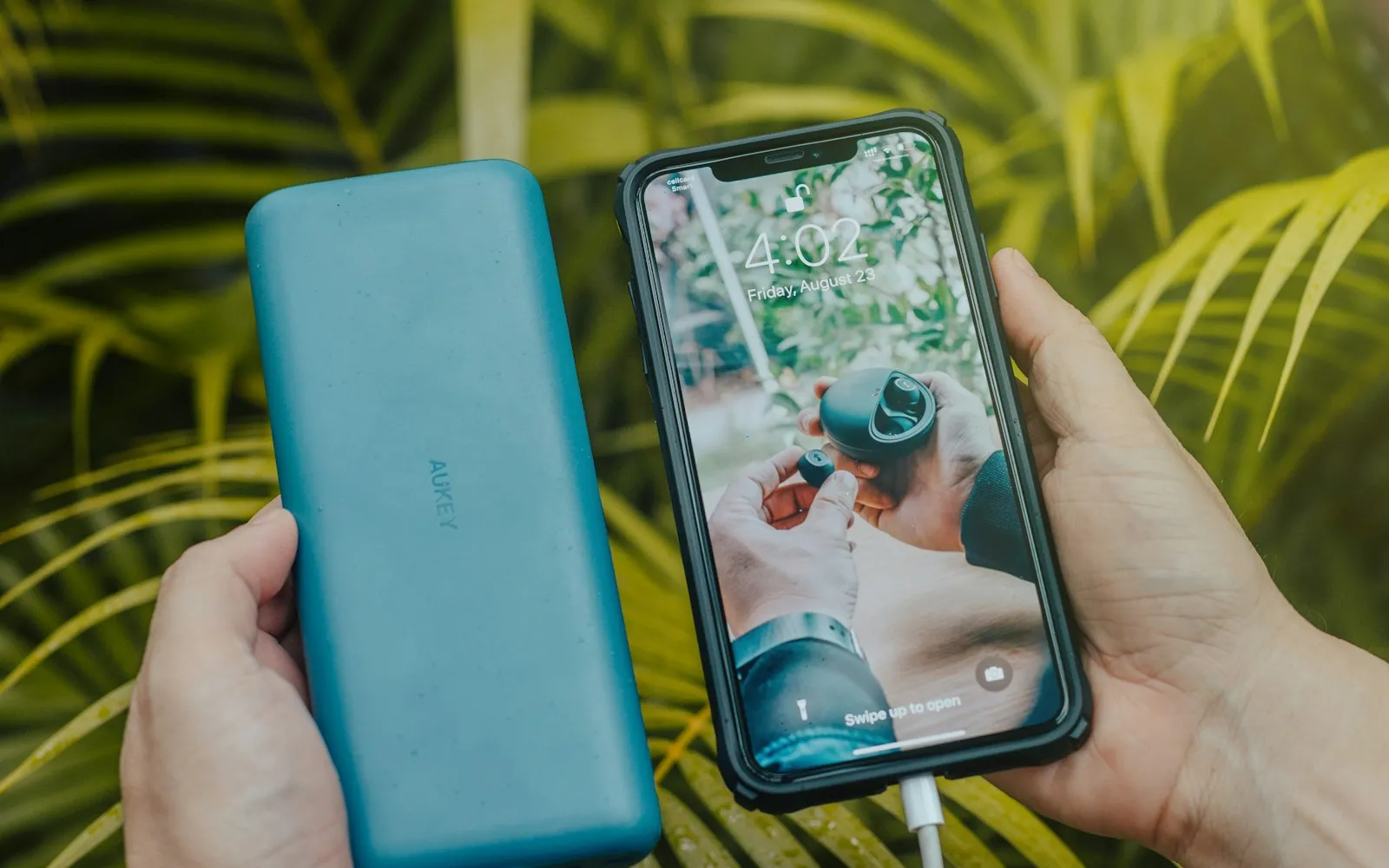
Buy the Nitecore NB10000 Gen4. It holds 10,000 milliamp-hours in a case that weighs about 5 ounces and shrugs off rain, it clears every airline battery rule without a second look, and it costs about 84 dollars from the brand the gram-counting testers keep ranking first. A travel power bank is one of the few gadgets where the compact, boring choice beats the giant one, because the failure you are guarding against is a dead phone at a border crossing, not a slow charge in a hotel room. The rest of this guide covers the higher-capacity picks for laptop travelers, the featherweight for minimalists, and the one airline rule that matters more than any pick on the list.
I spent a decade buying travel accessories for airport shops, and power banks were the category where the returns told the real story. People bought the biggest number on the shelf, discovered it was a brick they never fully drained, and brought it back. So this guide leans small on purpose. The picks below come from the current tested rankings, the packing forums, and each brand’s own spec page, which I checked live while writing. Every capacity and wattage number here is the manufacturer’s, not mine.
Some links here are affiliate links, which means Intastravel may earn a commission if you buy through them. It does not change which products we pick or what we say about them.

Four things decide it, and the headline capacity is not the first of them.
Airline legality comes first. A power bank that cannot fly with you is useless, and the rules are stricter than most travelers think. Every pick below sits comfortably under the limit airlines enforce, and I explain that limit in full further down, because it is the single most expensive thing to get wrong in this category.
Real weight and size come second. A power bank rides in your personal item and comes out every time security wants a look. A 5-ounce bank you forget is carrying disappears into a jacket pocket. A 1-pound brick is a thing you resent by the third airport. Capacity you never use is just weight you always carry.
Honest capacity comes third. For most travelers 10,000 milliamp-hours is the sweet spot, roughly two full phone charges, which covers a long travel day with margin. Step up to 20,000 if you also feed a tablet, and only reach for a 25,000-plus laptop bank if you genuinely refill a laptop away from outlets. Bigger is not better here. It is just heavier.
Charging speed comes last, but it decides which tier you are in. A phone-only kit is happy at 18 to 22 watts. A laptop needs a bank that states a real number like 100 watts on its spec page and means it.
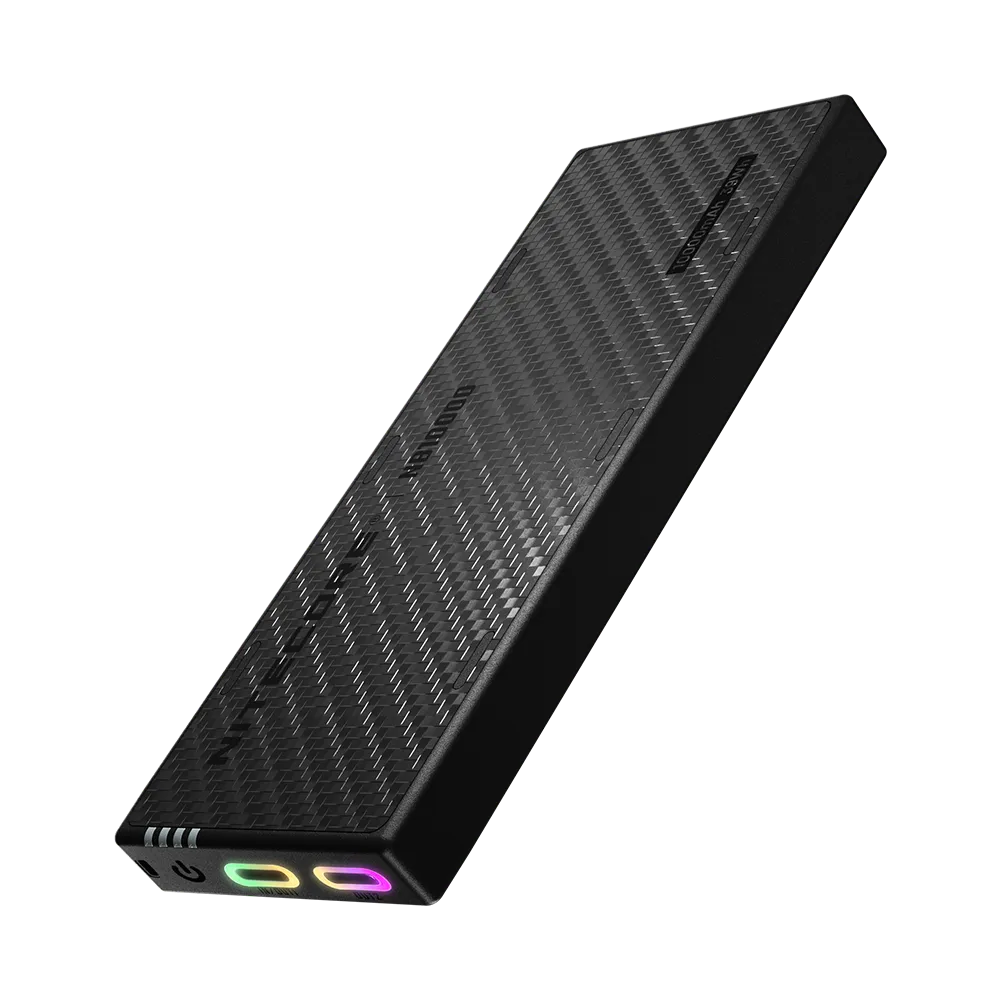
Photo: Nitecore
This is the bank I recommend to most travelers, because it does the whole job without the weight. Nitecore lists 10,000 milliamp-hours at 39 watt-hours in a slab that weighs 143 grams, which is a fraction of what a 20,000 brick costs you in pack space. It carries an IPX7 waterproof rating, so a rained-on daypack or a dropped water bottle does not end it, and the ports light up to show charge and status. The lanyard-style USB-C cable clips to the body, which sounds like a gimmick until the one trip you forget every other cord. The gram-counting testers ran it as their most efficient bank per gram, and the backpacking crowd has trusted this line for years.
The honest trade-offs. The two USB-C ports max out at 22.5 watts, so this refills a phone at a fair pace but will only sip into a laptop, which is why laptop travelers should size up. There is no display, just four dots, so you get a rough fuel gauge rather than a percentage. And at 84 dollars it costs more than a plain 10,000 bank from a no-name brand, which is the price of the weight savings and the waterproofing.
Buy it if your kit is a phone, earbuds, and maybe a tablet, and you want the lightest bank that clears security every time. If you carry a laptop, keep reading.
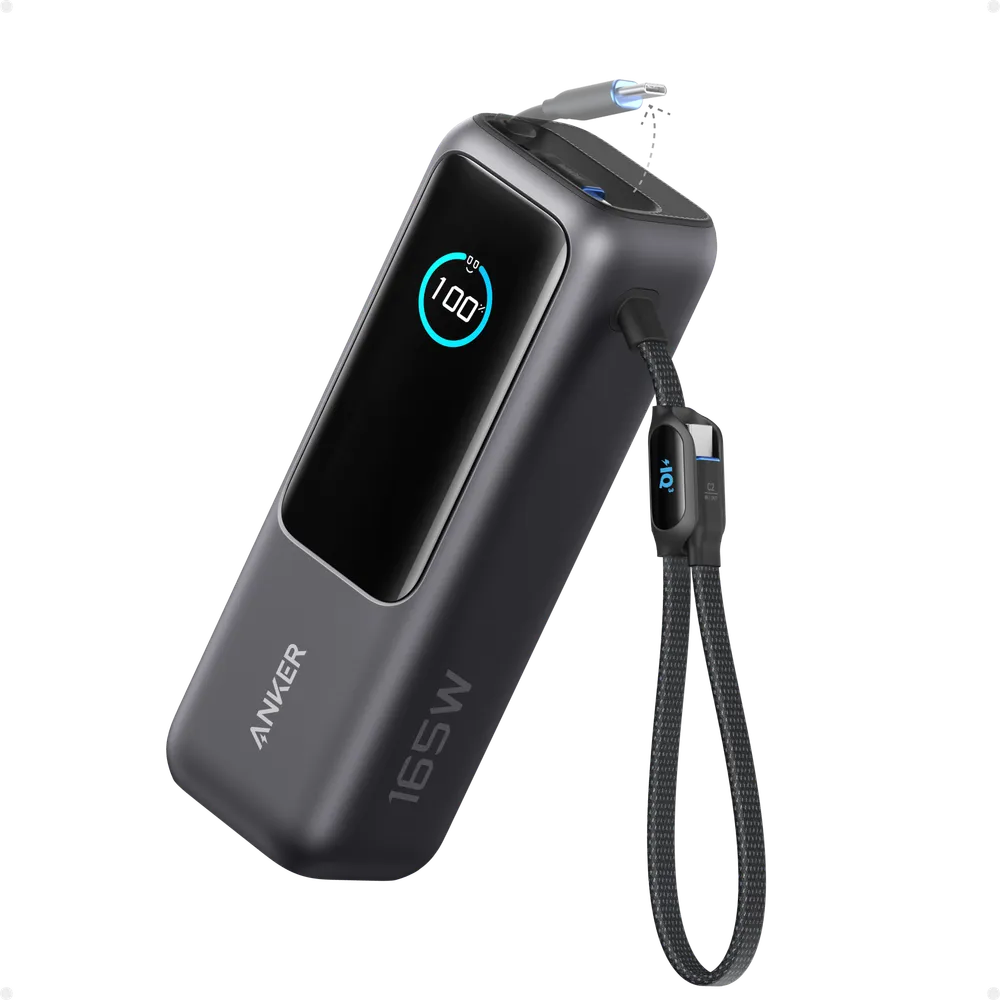
Photo: Anker
If your laptop has to leave a cafe charged, this is the bank built for it. Anker lists 25,000 milliamp-hours, 165 watts of total output, and a single USB-C port that pushes 100 watts, which is a real laptop charger rather than a trickle. Two cables are built in, a retractable flat USB-C up top and a braided loop that doubles as a carry handle, so you are never hunting for a cord. The display shows the exact percentage left, and Anker labels it flight-ready, because at 25,000 milliamp-hours it works out to about 92 watt-hours, under the 100 the airlines enforce. Wired named it their best power bank overall.
The honest catches. This is a heavy block, closer to a hardback book than a phone, and you feel it in a jacket pocket. It costs 120 dollars, the most on this list after the max-capacity Anker. And it is genuine overkill if the only thing you ever plug in is a phone, in which case the Nitecore above does that job at a third of the weight.
Buy it if you travel with a laptop and want one bank that fast-charges everything you own. Skip it if your devices are all pocket-sized.
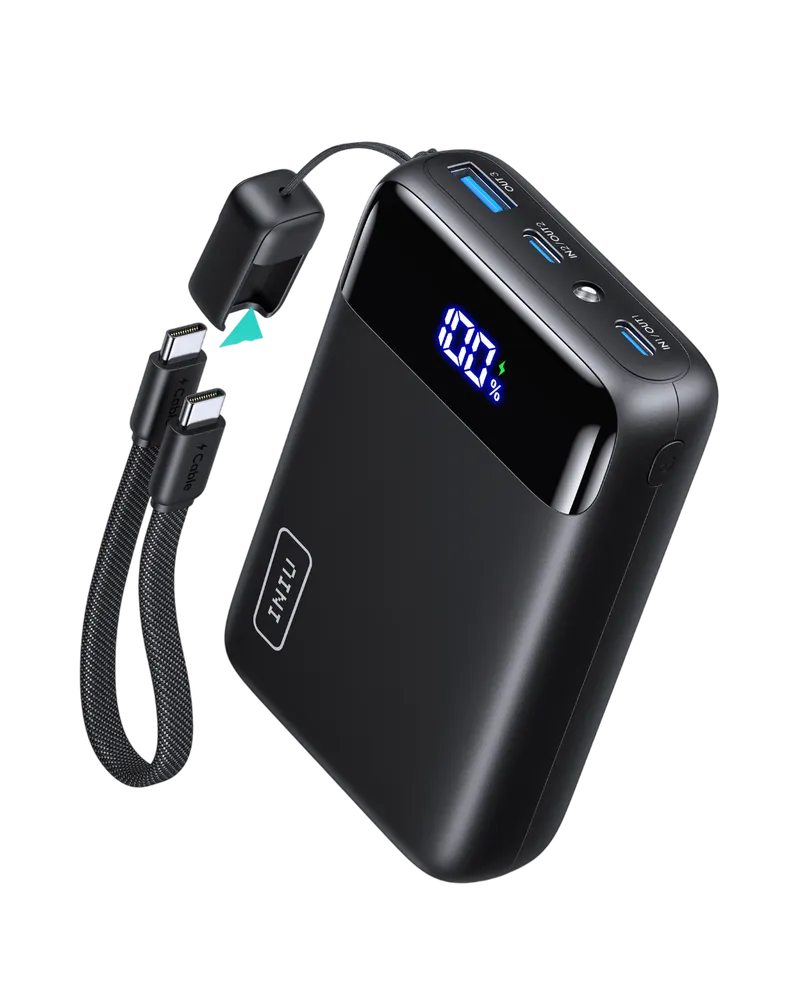
Photo: INIU
Thirty-seven dollars for 20,000 milliamp-hours, which is the most capacity per dollar on this list. INIU packs it into one of the smaller 20,000 bodies you can buy, with a detachable braided cable that clips on so it travels as one piece, three ports for charging a phone and a tablet at once, and an LED screen that shows the real percentage. The tested reviewers landed on this as their well-rounded 20,000 pick, praising its efficiency and its price, and at roughly 74 watt-hours it clears the airline limit with room to spare.
The honest trade-offs. The ports run at 22.5 watts, which is fine for phones but means the bank itself is slow to refill, so charge it overnight rather than between flights. The build is plastic and feels it next to the metal Ankers. And 20,000 milliamp-hours is more than a phone-only traveler needs, which circles back to my top pick for anyone packing light.
Buy it if you want two-plus days of phone and tablet power for the price of an airport lunch. Skip it if refilling the bank fast, or saving every ounce, matters more than the capacity.
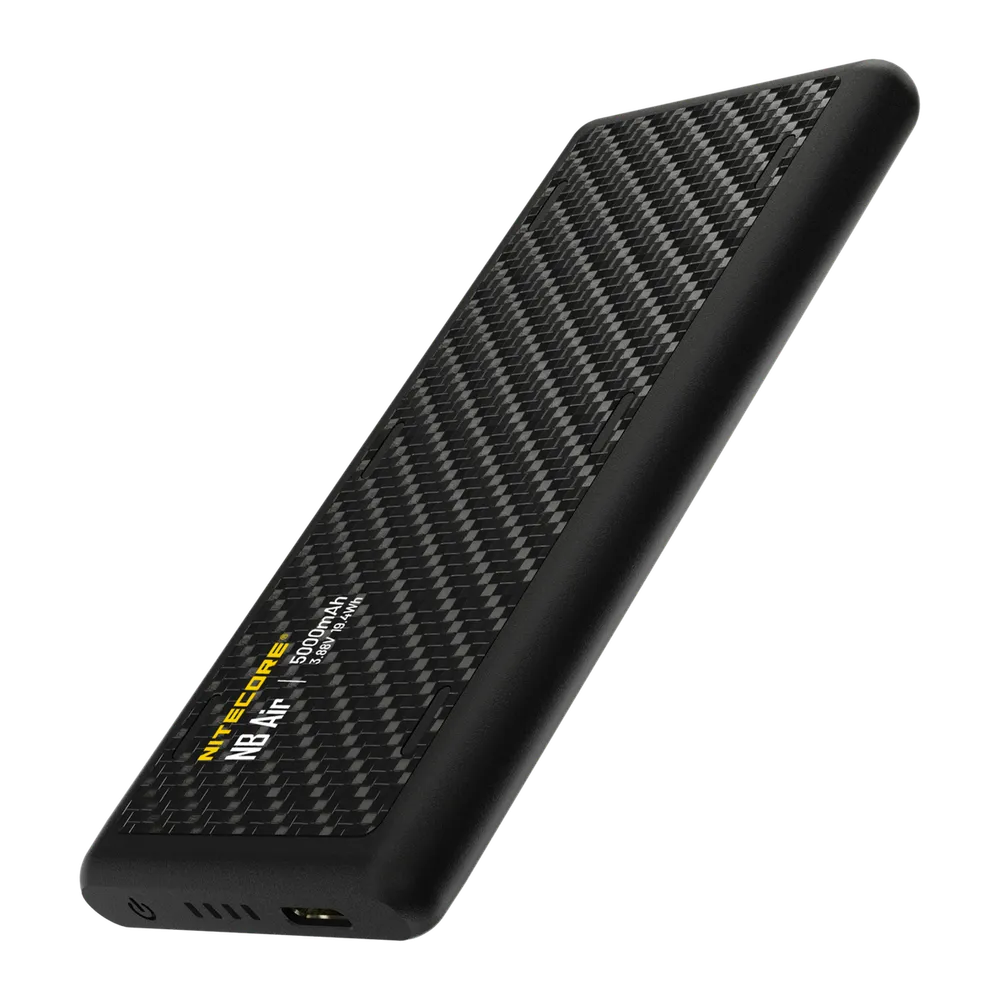
Photo: Nitecore
For the traveler who counts every ounce, this is the smallest useful bank on the list. Nitecore prints 5,000 milliamp-hours at 19.4 watt-hours right on the case, and it weighs about 3 ounces, roughly the size and heft of a stack of a few credit cards. The testers measured about 16 watt-hours of usable capacity and got around two partial phone charges from it, which is the honest ceiling of a bank this size. It is the top-off you carry when you do not want to feel like you are carrying anything.
The honest trade-off is the capacity itself. Five thousand milliamp-hours is barely one full phone charge in real use, so this is an insurance policy for a day out, not a battery for a long travel day or a trip without reliable outlets.
Buy it if you already charge nightly and just want a small safety margin between outlets. Skip it if a full day can pass before you next see a wall socket.
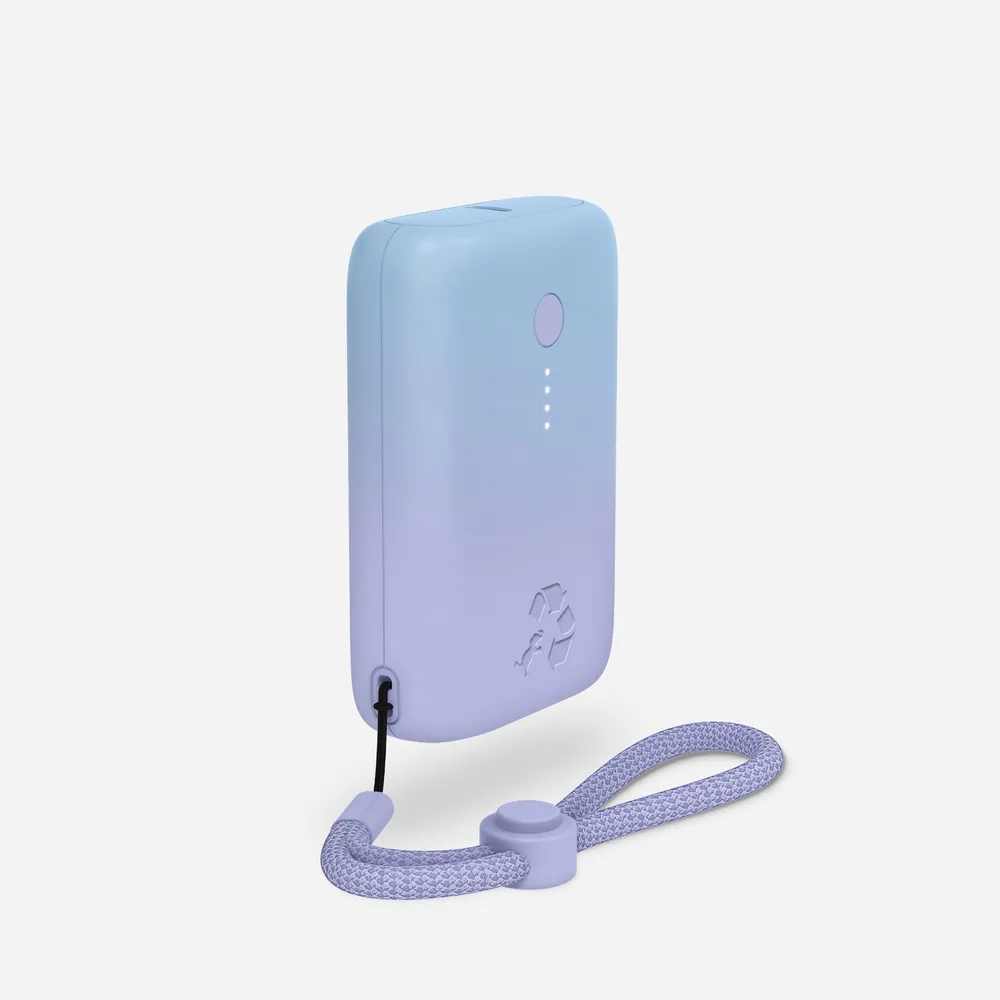
Photo: Nimble
If the environmental cost of your gear bothers you, this is the 10,000 bank that answers it. Nimble builds the Champ from recycled plastic and bioplastics and ships it in plastic-free packaging, and it still does the core job, 10,000 milliamp-hours and up to 20 watts of Power Delivery to two devices at once. It comes with a lanyard loop so you can pick it out of a bag by feel, and Wired singled out Nimble’s material choices as a genuine reason to consider the brand.
The honest catches. The 20-watt output is a phone speed, not a laptop one, and there is no percentage display, just indicator dots. And at 60 dollars it costs more than a plain 10,000 bank, so part of what you pay for is the recycled build and the packaging rather than raw performance.
Buy it if you want dependable phone power and you would rather your gadgets came from recycled material. Skip it if you need fast charging or the lowest price for the capacity.
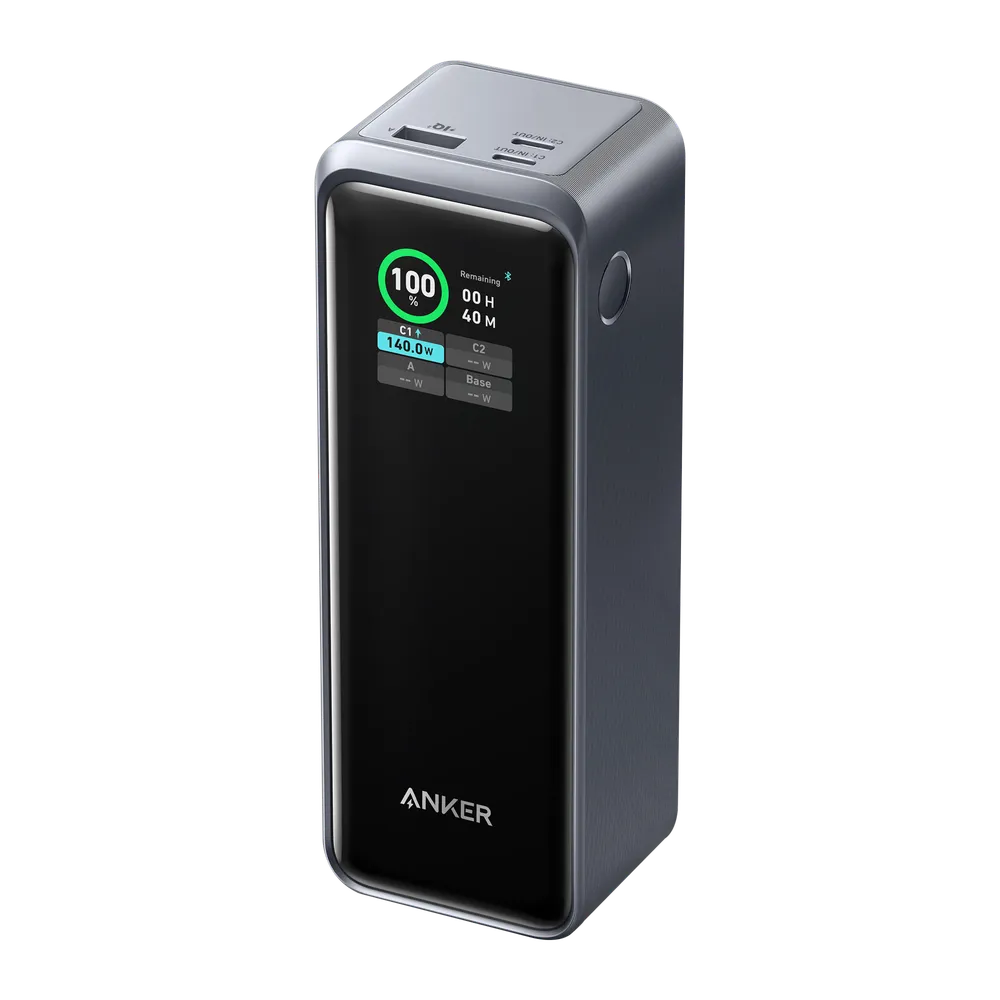
Photo: Anker
This is as much battery as you can legally board a plane with, and Anker engineered it right up to that line. It holds 27,650 milliamp-hours, which Anker rates at 99.54 watt-hours, a deliberate hair under the airline ceiling of 100. It pushes 250 watts across three ports, with a single port hitting 140 watts, enough to fast-charge a laptop, a tablet, and a phone at once, and a detailed display reads out exactly what each port is doing. Anker calls it TSA-approved, and the watt-hour math backs that up.
The honest trade-offs. This is the biggest and heaviest bank here, a genuine weight in a bag, and it is the one you have to think about when packing light. It costs 180 dollars. And the smart-app features and optional charging base are more than most travelers will ever use, so you are paying for headroom you may not need.
Buy it if you are a digital nomad or work off-grid and want the maximum power a plane allows in one unit. Skip it if you charge a phone and a laptop overnight like most people, because the smaller picks weigh far less.
| Power bank | Best for | The honest catch |
|---|---|---|
| Nitecore NB10000 Gen4 | Most travelers: light, waterproof, phone and tablet | Only 22.5W, no laptop charging |
| Anker Laptop 25K 165W | Laptop travelers, one bank for everything | Heavy brick, priciest but one |
| INIU P512 20K | Value, two-plus days of phone and tablet | 22.5W, slow to refill itself |
| Nitecore NB Air | Minimalists, a small safety margin | 5,000mAh is barely one phone charge |
| Nimble Champ | Recycled build, everyday phone power | 20W only, no display, costs more |
| Anker Prime 27K 250W | Max legal capacity, off-grid work | Biggest, heaviest, 180 dollars |
The Nitecore NB10000 Gen4 is the bank I keep recommending, but it is wrong for three kinds of travelers.
Skip it if you charge a laptop away from outlets. Its 22.5-watt ports will only trickle into a laptop, and the Anker Laptop Power Bank is built for that job with a real 100-watt port.
Skip it if you want the most capacity your money can buy. The INIU P512 doubles the milliamp-hours for half the price, and for phone-and-tablet travelers who do not mind the extra bulk, that is the better value.
Skip it if you truly count every gram and only need a top-off. The Nitecore NB Air weighs about 3 ounces and slips into a pocket you forget about, which the 10,000 bank cannot quite do.
That is curation, not hedging. A pick is only useful when you know who it is wrong for.
Before you buy any bank, learn the rule that decides whether it flies. Get this wrong and your charger gets confiscated at security, which is a worse outcome than a slow charge.
Power banks fly in your carry-on only, never in a checked bag. The TSA has not banned them, but a spokesperson has confirmed they are allowed in the cabin alone, because a lithium battery that starts smouldering needs a crew that can reach it. Pack your bank in the bag that stays with you, and buy one with the watt-hour rating printed clearly on the case, since screeners now pull them for a closer look. Every pick here has that number visible.
The capacity ceiling is 100 watt-hours. That is the number airlines enforce, and it works out to roughly 27,000 milliamp-hours at the standard 3.7 volts most cells run at. Everything on this list sits under it, from the NB Air at 19.4 watt-hours to the Anker Prime at 99.54, which is why the Prime is the largest bank I can recommend for flying. A bank rated between 100 and 160 watt-hours is allowed only with your airline’s approval, and even then you are capped at two spares. Anything over 160 watt-hours cannot board a passenger plane at all.
Airlines have tightened the rules again in 2026, so check yours before you fly. American and Delta now limit each passenger to two power banks, Southwest allows one and asks that you keep it visible rather than buried in a bag, and several carriers restrict using a bank in flight. None of this stops a normal travel bank, but the details vary by airline, so confirm your carrier’s current policy when you book rather than assuming last year’s rules still hold.
For most travelers, the Nitecore NB10000 Gen4. It holds 10,000 milliamp-hours in a 143-gram case Nitecore rates at 39 watt-hours, it carries an IPX7 waterproof rating, and it clears every airline limit without trouble. The gram-counting testers measured it as the most efficient bank per gram in their lineup, and at about 84 dollars it costs less than the laptop-grade options while covering what most people actually need.
Yes, in your carry-on only, never in a checked bag. The TSA allows power banks in the cabin because a lithium battery has to stay where the crew can reach it. The catch is capacity: your bank must be rated at 100 watt-hours or less, which is roughly 27,000 milliamp-hours, to fly without airline approval. Between 100 and 160 watt-hours you need the airline’s permission and are limited to two spares, and above 160 watt-hours it cannot board. Every bank in this guide sits under the 100 limit.
For most people, 10,000 milliamp-hours, which is about two full phone charges and enough for a long travel day with margin. Step up to 20,000, like the INIU P512, if you also charge a tablet or want a second day of power without a wall socket. Only go to a 25,000-plus laptop bank if you genuinely refill a laptop away from outlets, because the extra capacity is real weight you carry every day for the days you use it.
For flying, two smaller banks often beat one large one. The forum regulars have settled this: two 10,000 banks are easier to share, and if one gets flagged at security or runs flat, you still have the other. Two banks also keep you comfortably clear of the 100 watt-hour limit, since each is well under it. Buy one large bank only if you specifically need its fast single-port charging for a laptop.
Compare the best neck pillows for long flights by support, packability, adjustability, and comfort so you can choose the right one for your next travel day.
Find the best carry on backpacks for women with airline fit checks, comfort tests, capacity advice, and honest trade-offs for one-bag travel.
Find the best hard shell carry on luggage for business trips, international flights, and frequent travel with an honest, practical buying guide.