Most travel shoe advice talks about comfort, then skips the details that decide whether your feet stay happy after hour four. We use a better test: match the shoe to your route, your feet, and the longest day on your itinerary.
Step 2: Choose the Right Category for Your Route
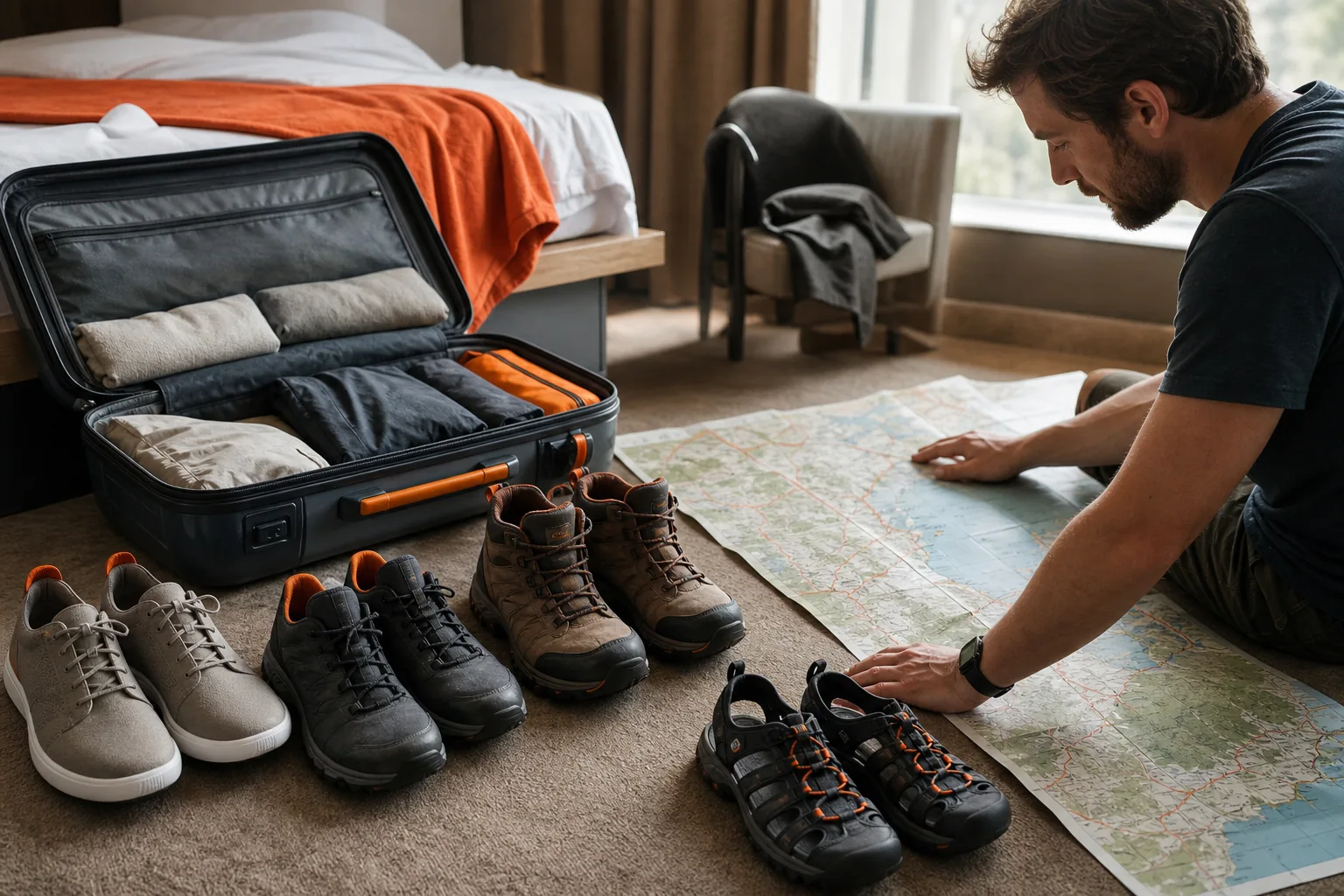
The best travel shoes for men usually fit one clear category before they try to cover extra ground. Start with terrain and weather, then decide how much compromise you can accept.
City walking
For pavement, transit platforms, museums, and old stone streets, look for a secure heel and enough room at the toes. Breathable uppers help in warm weather. A flexible sole can feel good on long walks, but very soft shoes may feel less steady on uneven streets.
Allbirds Tree Skippers are listed for city walking and described as breathable. The VivoBarefoot Gobi II Desert Boot is listed for everyday city wear and also has a breathable design. Both point to the same lesson: city shoes can look calm and still need airflow.
Trail days
Trail runners make sense when your trip includes dirt paths, light hikes, or mixed road-to-trail days. Altra Lone Peak Trail Runners are listed for trail hiking and described as breathable. They may be a poor fit for a trip built around formal clothes or heavy rain.
Rain and snow
Don’t treat “water resistant” as a full answer. Ask if the source gives a waterproof rating, then check how high the protection reaches and how the shoe handles heat. Choose weather protection for a specific route, not as a universal answer for every trip.
Water activities
Teva Sandals are listed for water activities and hiking. They can make sense when wet feet are part of the plan. They won’t replace a closed shoe for cold weather, formal settings, or long walks on rough ground.
Hiking sandals have their own trade-offs. Foot shape can change the fit, and no single sandal works for everyone. That is why we treat sandals as route tools, not automatic packing wins.
If you can’t name the surface and weather your shoe must handle, you’re still shopping too early. Write the route first.
Step 3: Compare Comfort, Breathability, and Support
Comfort is the first filter for travel shoes for men, but “comfortable” needs a time limit. A shoe that feels good for ten minutes may rub after four hours on concrete.
Use this check in a shop or at home:
Stand for at least ten minutes. Look for pressure at the heel, little toe, and top of the foot.
Walk up and down stairs. Your toes shouldn’t hit the front on the way down.
Bend the shoe by hand. It should flex where your foot bends, unless you need a stiffer hiking shoe.
Check the heel after a brisk walk. Any slip can turn into a blister.
Breathability gets most of the attention in current travel shoe roundups. Breathability appears in 88% of the entries. By contrast, weight appeared in only 25%, and arch support also appeared in only 25%. That leaves travelers with plenty of airflow language but little help on pack weight or foot structure.
UYN Free Flow Tune is described as very breathable and is listed for travel and adventure. That may suit hot routes, but airflow alone doesn’t tell you how the shoe feels under your heel or on rough ground.
Arch support needs care. The sample gives neutral support data for only two shoes. If you already use orthotics or have a diagnosed foot issue, shop around that need instead of trusting a generic label. A neutral shoe may feel fine. It may also leave you sore after a long day.
For a city-heavy itinerary, compare the shoe against the actual walking plan. Someone spending a day in Bremen’s compact streets may value a different feel than someone crossing steep paths all day. Our Bremen walking guide shows why the surface and daily route deserve attention before the purchase.
For a plain definition of the parts you’re comparing, a shoe is footwear made to protect and comfort the foot. That sounds basic, but it keeps the decision grounded: the upper affects heat and moisture, while the sole changes grip and feel. See this basic shoe reference if you want the basic terms in one place.
Our verdict is firm here: give more weight to the last two hours of your longest walking day than to the first five minutes in a shop.
Step 4: Test Fit and Break In Your Shoes Before Flying
Fit testing catches problems while you can still return the shoes. Do it before your trip, not at the airport gate.
Wear the socks you expect to pack. Lace both shoes, then walk indoors for at least 30 minutes. Try stairs, a hard floor, and a few turns. Pay attention to heat, heel movement, toe pressure, and any spot that feels “almost fine.” Almost fine is often a blister waiting for a longer day.
Next, repeat the test on two separate days. If the shoe has a stiff upper or a firm sole, give it more time. Sandals with toe straps may need gradual wear too. Toe straps can need a break-in period before they feel smooth.
Don’t make a major change right before departure. Barefoot-style shoes can feel very different because they may have thin, flexible soles, a wide toe box, and zero heel lift. If you’re new to that shape, start with short walks. Your calves and feet may need time to adjust.
Sizing can shift across brands, even when the number on the box looks the same. Comparing listed sizes before ordering can help, but your own fit test still wins.
Wear the shoes on a normal errand before taking them overseas. If you notice rubbing, return them or fix the fit now. The guides won’t feel the hot spot on your heel. You will.
Step 5: Build a One-Shoe or Two-Shoe Travel Setup
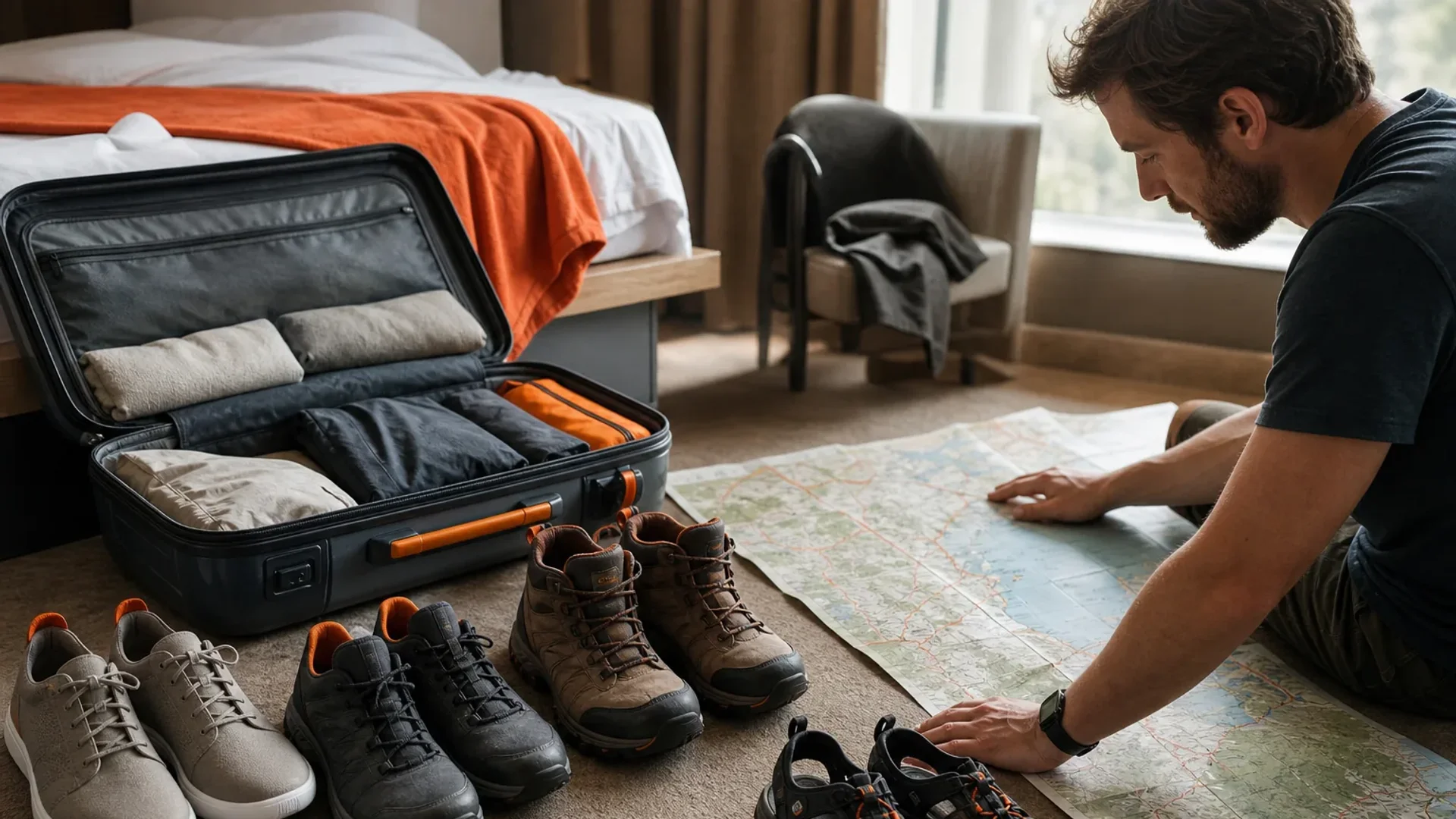
A one-shoe setup works when one pair covers the route without a serious weakness. A two-shoe setup works when each pair has a separate job.
Start with one pair if your trip is mostly city walking and casual meals. Choose a shoe that looks acceptable with your planned clothes. Their listed weight is 641 grams, so check the actual bulk before you plan to carry them in a bag.
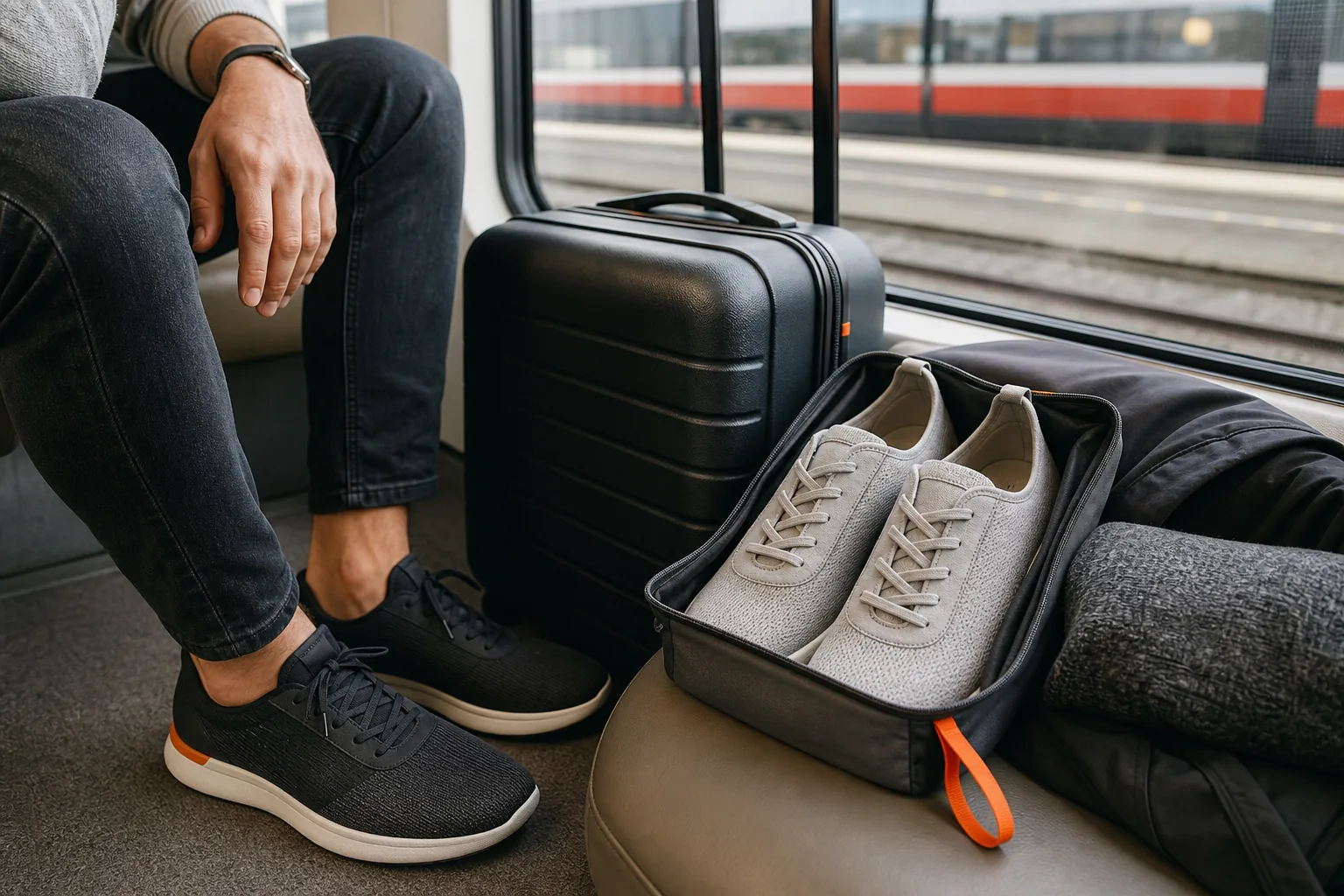
Choose two pairs when water, trail work, or formal clothes create a clear gap. Wear the larger pair in transit. Pack the flatter pair in a shoe bag. This keeps dirt away from your clothes and saves space around the awkward shape of the shoe.
Trip pattern
Pair to wear
Pair to pack
Trade-off to accept
City trip with long walks
Breathable walking shoe
None, if the first pair works
Less backup if the shoe gets wet
City plus beach or shared showers
Walking shoe
Teva Sandals or another water-use option
Extra space for a second pair
City plus trail hiking
Trail runner or mixed-terrain shoe
Light city shoe, if needed
Trail shoes may look sporty at dinner
Rain or snow route
Weather-ready boot
Breathable lighter shoe
Water protection can add heat and bulk
Formal event plus daily walking
Walking shoe in transit
Dress shoe only if required
One narrow-use pair takes pack space
Keep the setup tied to the itinerary. A two-week trip with one formal dinner may justify a second pair. A weekend with no special event probably doesn’t.
We also suggest packing enough socks to manage laundry without carrying a drawer. Three pairs can work for a simple rotation if they dry well, but the right number depends on your laundry plan and weather.
Skip the third pair unless your itinerary has a true need for it, such as serious trekking, snow, or a formal event. “Just in case” shoes usually stay buried in the bag.
FAQ
What are the best travel shoes for men?
The best travel shoes for men are the pair that fits your longest day and hardest surface. For city trips, start with a breathable walking shoe that stays secure at the heel. For trail trips, consider a trail runner. For snow or rain, look for stated waterproof protection. Don’t choose from the name alone.
Are barefoot shoes good for travel?
Barefoot shoes can work well for travel if you’re already used to flexible soles and a wide toe box. They may feel tiring at first if your feet and calves aren’t adapted. Wear them on short walks before flying. Skip them for a major trip if they still cause soreness during your test period.
Should I pack one pair or two pairs of shoes?
Pack one pair when it covers your route, clothes, and weather without a major weakness. Pack two when you need separate shoes for wet areas, trails, or a formal event. Wear the bulkier pair in transit and pack the lighter one. That setup saves space while giving each pair a clear job.
How do I stop travel shoes from causing blisters?
Stop blisters by testing the shoes with your travel socks before departure. Walk for at least 30 minutes, then repeat on another day. Check heel slip and toe pressure. A hot spot that appears indoors will usually get worse after hours on pavement, so return the shoes or adjust the fit early.
Are waterproof shoes better for travel?
Waterproof shoes are better when rain, snow, or wet ground is a likely part of the route. They can feel warmer than breathable shoes in dry weather. Match the feature to your forecast and terrain.
Final Thoughts
I recommend choosing one shoe for the hardest day you have actually planned, then adding a second pair only when it solves a clear problem. Test the fit on two ordinary walks before departure. That small step can save a whole travel day, and it costs nothing but time.
The best earplugs for flying depend on your problem. Loop Quiet 2 for noise and sleep, Mack's Flightguard or Alpine FlyFit for ear pressure.
Verdict: Loop Quiet 2 ($24.95) is the best earplug for flying if cabin noise and sleep are your problem. Mack's Flightguard ($11.99) and Alpine FlyFit ($16.95) are the picks if your ears hurt on descent, because they are built with pressure-regulating filters.
The best travel blanket for most people is the 0.79 lb Rumpl Travel Puffy. Three picks compared on weight, price, and warmth, plus a scarf trick.
Verdict: The Rumpl Travel Puffy ($89.95, 0.79 lb, packs to 4 by 10 inches, 3-year warranty) is the best travel blanket for most people. Cocoon's COOLMAX blanket ($49.95) is the cheaper, lighter-feeling pick, and Cocoon's merino and silk blanket ($149.95) is the one for the coldest cabins.
The best luggage scale for most travelers is the $10.99 Etekcity EL11. Five scales compared on capacity, price, battery, and who should skip each.
Verdict: The Etekcity EL11 ($10.99, 110 lb capacity, 4.8 oz, 2-year warranty) is the best luggage scale for most travelers. Freetoo is the lighter runner-up, Samsonite is the pick if you want a built-in tape measure, and the battery-free Travelon is for people who never want to replace a battery.