Best Neck Pillows for Long Flights
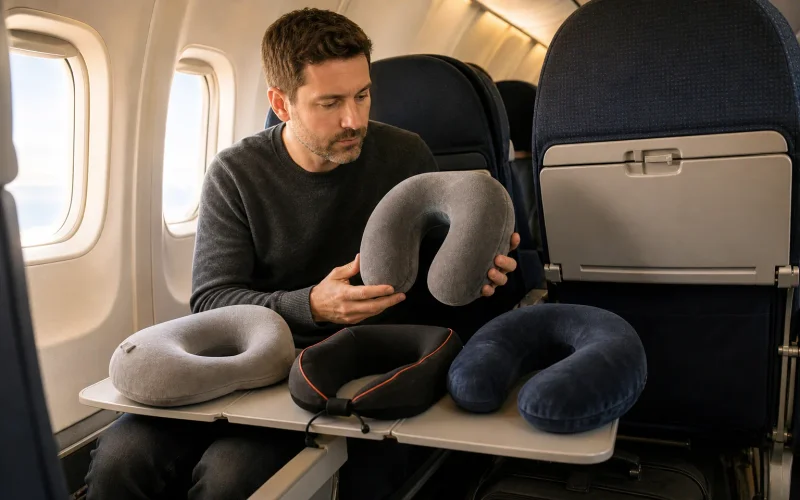
Compare the best neck pillows for long flights by support, packability, adjustability, and comfort so you can choose the right one for your next travel day.

Buy the Lewis N. Clark TSA-approved combination lock strap. For around 12 dollars you get a reinforced polypropylene belt, a three-dial combination lock that TSA agents can open without cutting, and enough length to wrap a 28-inch checked bag with room to spare. That is the short answer. The longer answer is that luggage straps do three things at once — they keep a zipper from bursting under checked-bag pressure, they flag your bag on a carousel full of identical black suitcases, and they give a would-be thief one more visible obstacle to talk them out of a quick grab. Most travelers skip them until a zipper blows or a bag comes off the belt half-open. Skip that lesson.
Some links here are affiliate links, which means Intastravel may earn a commission if you buy through them. It does not change which products we pick or what we say about them.
A checked bag gets handled by at least six pairs of hands between the check-in desk and your destination. It gets stacked under heavier bags, thrown on conveyor belts, and squeezed into cargo holds. Zippers — even good ones — are not designed for that kind of lateral pressure. A luggage strap holds the shell of the bag closed even if the zipper pull separates, which is the most common in-flight failure on soft-side bags.
Identification is the second reason. Airlines lose around 4.35 bags per thousand passengers, according to DOT Air Travel Consumer Reports, and the most common cause is misrouting. A bright-colored strap is visible from 20 feet away on a dark carousel. It will not stop your bag from being sent to Denver when you are flying to Dallas, but it will help you spot it immediately and help the handler confirm it is yours.
Security is the third reason, and it is the one most travelers undervalue. A TSA-lock strap is not a vault. A determined thief with scissors can defeat it in under a minute. What it does is raise the time and visibility cost of tampering, and most opportunistic theft is deterred exactly by that. Studies on retail theft consistently show that visible friction — anything that adds a step — reduces impulsive theft significantly. A luggage strap is that visible friction.
TSA-approved combination lock straps are the most common type and the one most travelers should buy. The lock dial is integrated into the buckle, so you set a three- or four-digit code and TSA agents carry a master key that opens it without cutting the strap. Lewis N. Clark and Travelon both make solid versions for under 15 dollars.
Belt-style straps without locks are simpler and lighter. They wrap the bag and buckle with a plastic or metal clasp. Good for identification and keeping zippers closed; not useful for security. Fine for carry-ons you never let out of sight.
Retractable straps use a reel mechanism that auto-adjusts to the bag’s girth. They work well for irregularly shaped bags or for travelers who switch between bag sizes. The tradeoff is that the reel mechanism adds a failure point that straight-strap designs do not have.
Heavy-duty ratchet straps are adapted from cargo tie-downs and are genuinely difficult to cut through quickly. Overkill for most travelers, but worth considering if you check expensive camera gear or ship bags via freight. They add meaningful weight and are not TSA-approved for locks.
Material. Polypropylene (PP) is the standard and the right choice for most travelers. It is stiff, abrasion-resistant, and does not stretch under tension. Nylon is softer, lighter, and handles cold temperatures better without becoming brittle, but it stretches slightly under load, which means the strap can work loose on a long journey. Either works; PP is the more durable everyday choice.
Width. Straps come in 1-inch and 2-inch widths. A 1-inch strap concentrates force on a narrower area of your bag’s fabric. A 2-inch strap distributes it and is less likely to cut into a soft-side shell over time. Buy 2-inch if your checked bag is soft-side.
Length. The right length depends on your bag. A 28-inch checked bag needs at least 72 inches of strap. A 22-inch carry-on can get away with 56 inches. Most straps sold for luggage run 72–96 inches and are adjustable; check the product page before buying if you travel with an extra-large or oversized bag.
TSA lock compatibility. If you check bags, buy a strap with a TSA-approved lock. Non-TSA locks get cut. TSA agents are required to repack your bag after inspection, but a cut strap does not get replaced. The TSA website confirms agents carry master keys for approved locks — look for the “Travel Sentry” or “Safe Skies” logo on the packaging.
Visibility and color. This matters more than it sounds. A black strap on a black bag provides almost no identification value. Bright orange, yellow, or red straps are visible immediately. Patterned straps are a middle ground. Buy a color you will recognize at 20 feet.
| Product | Type | Width | TSA Lock | Best For |
|---|---|---|---|---|
| Lewis N. Clark TSA Strap | Combination lock | 2 in | Yes | Overall best, checked bags |
| Travelon Luggage Strap with Lock | Combination lock | 1.5 in | Yes | Budget pick, frequent flyers |
| Samsonite Travel Strap | Belt-style, no lock | 2 in | No | Carry-ons, identification |
| Erycsun Heavy Duty Strap | Ratchet-style | 1.5 in | No | Oversized or fragile gear |
| Docooler Retractable Strap | Retractable | 1 in | No | Irregular bags, light packers |
Lewis N. Clark Secure-It TSA Combination Lock Strap is our top overall pick. The polypropylene belt is 2 inches wide, the combination lock is easy to reset, and the strap runs to 90 inches, long enough to double-wrap a large soft-side bag if you want extra security. It runs around 12 dollars on Amazon and in most airport shops. Lewis N. Clark has been making travel accessories for over 30 years and their TSA products are consistently well-reviewed for durability and lock reliability.
Travelon Luggage Strap with TSA-Accepted Lock is the best budget pick at around 9 dollars. It is slightly narrower at 1.5 inches and the lock dial is a little stiffer than Lewis N. Clark’s, but the build quality is solid and Travelon’s products hold up under regular travel. If you are buying in a set for family travel, the price difference adds up.
Samsonite Travel Strap is the right pick if you want identification without the bulk of a lock mechanism. Samsonite’s version is a clean 2-inch polypropylene belt with a quick-release buckle and a bright-color range. It will not give a thief any pause, but it will help you identify your bag on a busy carousel and keep a zipper from bursting. Best for carry-ons or short trips where your bag does not leave your sight.
Erycsun Heavy Duty Ratchet Strap is for the traveler checking camera equipment, sports gear, or a bag that genuinely needs to stay closed under serious pressure. The ratchet mechanism cinches tighter than any buckle-style strap and will not loosen during transit. The trade-off is weight and the lack of a TSA lock. Not for everyday travel; exactly right for the specific situation it is designed for.
Docooler Retractable Luggage Strap is a niche pick for travelers who carry differently-sized bags on different trips. The reel auto-adjusts between about 40 and 80 inches, so you are not buying separate straps for your carry-on and your checked bag. The reel adds bulk and the 1-inch width is narrower than we would prefer on a large soft-side bag, but it earns its spot for versatility.
Position the strap horizontally around the widest part of your bag, not diagonally. Diagonal placement puts asymmetric pressure on the shell and shifts when the bag is thrown. Horizontal wrapping distributes tension evenly and keeps the zipper coils aligned.
Set your combination and test it before you leave home. Reset from the factory default — most come set to 000. Choose a code that is not your birth year or a sequence someone can guess from your ID.
If you are using two straps (a good idea for large soft-side bags), place one horizontal and one vertical in an X pattern. This is the configuration most used by travelers who check surf or ski bags and need to hold an irregular shape.
Write your name and phone number on a piece of paper and tuck it inside the strap label pocket if your strap has one. If your bag is misrouted and the airline tag falls off, that information becomes the next handler’s fastest way to reunite your bag with you.
Do not put a luggage strap on a hardside spinner if it sits over the wheels or handle mechanism. Position it so the buckle is on the flat face of the bag, away from moving parts.
Will TSA cut my luggage strap? TSA agents are required to inspect bags that trigger screening, and if your strap has a TSA-approved combination lock (with the Travel Sentry or Safe Skies logo), they have a master key that opens it without cutting. If your strap has a non-TSA lock or a regular buckle, they will cut it. Always buy TSA-approved locks for checked bags.
Can a luggage strap prevent theft? A luggage strap does not prevent a determined theft, but it meaningfully reduces opportunistic theft by adding visible friction. Most baggage theft is low-effort and opportunistic. A strap with a lock raises the time and visibility cost enough to deter casual tampering. It is one layer of a sensible security setup, not a complete solution on its own.
What size luggage strap do I need for a 28-inch suitcase? For a standard 28-inch checked bag, you need at least 72 inches of strap to wrap once with the buckle positioned on the flat face. Most luggage straps sold for checked bags run 72–96 inches and are adjustable, which covers most bag sizes. Measure your bag’s perimeter (height plus depth plus a few inches for overlap) if you are buying for an oversized bag or a duffel with an irregular shape.
Compare the best neck pillows for long flights by support, packability, adjustability, and comfort so you can choose the right one for your next travel day.
Find the best carry on backpacks for women with airline fit checks, comfort tests, capacity advice, and honest trade-offs for one-bag travel.
Find the best hard shell carry on luggage for business trips, international flights, and frequent travel with an honest, practical buying guide.