Best Binoculars for Alaska Cruise: Honest Guide
Find the best binoculars for Alaska cruise viewing. Compare 8x, 10x, and 15x options by shake, field of view, size, and low-light use.
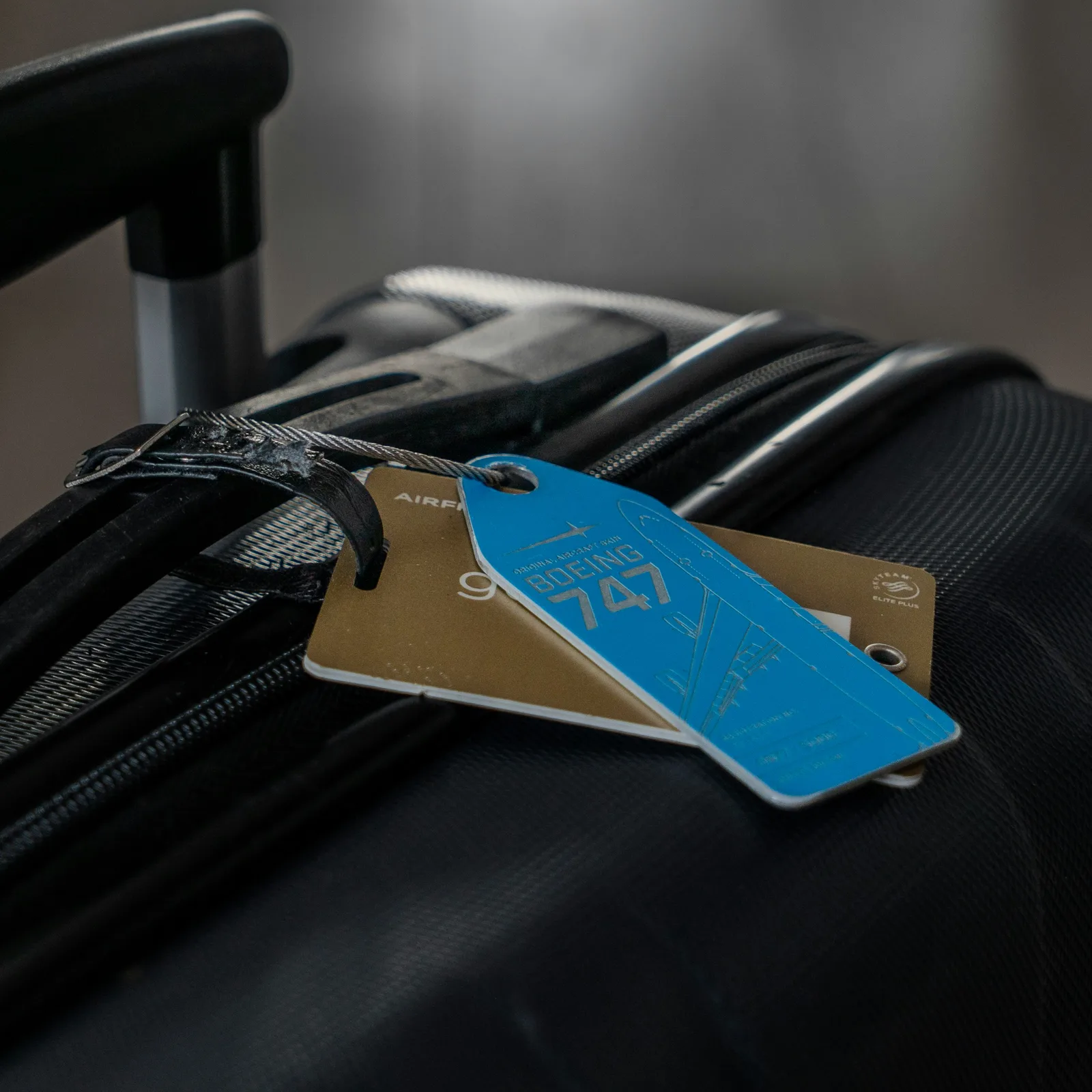
Buy the Shacke Luggage Tags with the full back privacy cover, and buy them because they bend instead of snapping and hide your details from the person standing behind you at the carousel, not because they look fancy. That is the honest frame for this whole category. A luggage tag fails in exactly two ways, it snaps off under a baggage handler’s boot or it broadcasts your home address to a crowded terminal, and the good ones solve both for almost nothing. Shacke sells a set of two for 7.99 dollars, the price on Shacke’s own store page, and it is the pair I hand most travelers. The other five picks below cover a leather AirTag tag, a weatherproof strap tag, two premium leather options, and a metal one. I will tell you which one beats the Shacke for you.
I want to say the quiet part first, because most tag roundups are ranked on looks and ignore the two things that actually matter. First, hard plastic snaps when a bag is thrown, so the material has to bend, which means rubber, silicone, aluminum, or a fabric strap, never brittle plastic. Second, a tag that shows your full home address tells a stranger your house is empty while you travel, so the smart move is a name and a cell number or email, ideally behind a privacy flap. I chose these six on those two rules first, and on looks and price after.
Some links here are affiliate links, which means Intastravel may earn a commission if you buy through them. It does not change which products we pick or what we say about them.
Two things, and neither is the design.
The first is the material. Baggage handling is violent, bags get thrown, stacked, and dragged, and a rigid plastic tag snaps at the loop on exactly the trip you needed it. Travel gear testers at AFAR and Pack Hacker both say the same thing plainly: avoid hard plastic, and choose something that flexes, because silicone, bendable rubber, aluminum, and Hypalon straps survive the belt while plastic cracks. That is why a seven-dollar rubber tag can outlast a thirty-dollar plastic one.
The second is privacy, and this is the part that packaging never mentions. Putting your full home address on a permanent tag is a quiet mistake, because anyone who reads it now knows your name and that nobody is home. Travelers on the airline forums keep repeating the fix: put your name and a cell number or email on the tag, not your street address, and use a tag with a back flap that hides even that from a casual glance. There is a second, stranger privacy angle too. A widely shared claim, relayed by outlets like Fox News, is that thieves collect discarded paper airline bag tags, which carry your last name, flight, and bag number, to file false lost-baggage claims. Travel experts think it is low volume rather than an epidemic, but the takeaway is free and sensible: keep the sticky airline tag on until any baggage issue is resolved, then shred it at home rather than dropping it in an airport bin.
Here is the honest conclusion. A good luggage tag is a bendable material with your name and a phone number behind a privacy flap, plus the discipline to shred the airline’s paper tag later. Everything else, the leather, the color, the monogram, is preference. Spend on the look if you enjoy it, but do not let a pretty plastic tag talk you out of the two things that decide whether it works.
Photo: Unsplash
Four things decide it, in this order.
Material comes first, because it is the difference between a tag that survives and one that snaps. Rubber, silicone, aluminum, and Hypalon strap tags bend and endure. Hard plastic is the one thing to avoid. Leather sits in the middle, it looks the best and lasts if it is full-grain or vegetable-tanned, though it is not as indestructible as silicone.
Privacy comes second. A back flap that hides your details, or at least a design that lets you write a name and phone number rather than a full address, is what keeps a found tag from becoming a security problem. The privacy-cover tags below are cheap and solve this outright.
Attachment comes third. A steel cable loop or a Hypalon strap holds far better than a thin plastic buckle or an elastic band, both of which let a tag walk off in transit. If you are adding an AirTag, you want a holder with a locked, secure attachment so it cannot be simply pulled off.
Looks and price come last. Once a tag bends, hides your address, and clips on securely, the rest is taste. A monogrammed leather tag and a seven-dollar rubber pair identify your bag equally well, so buy the finish you like at the price you want.
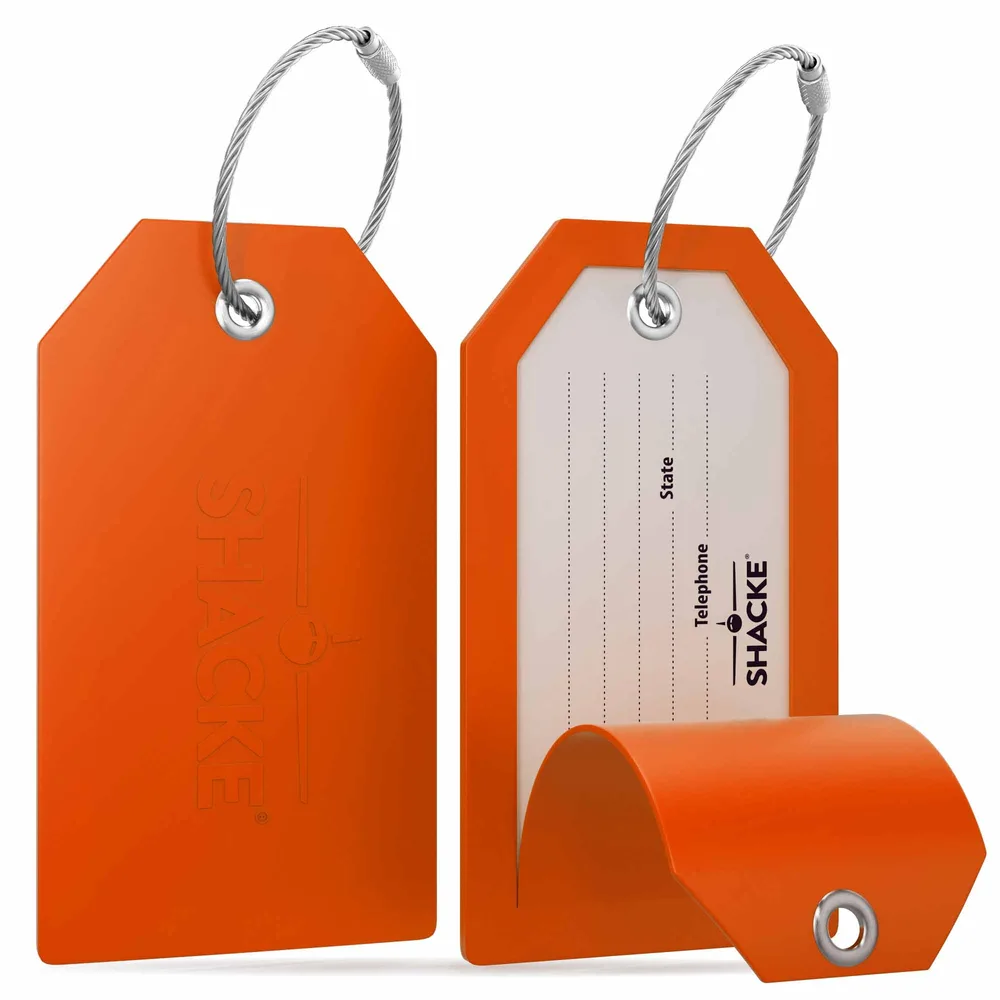
Photo: Shacke
This is the pair I point most people to because it nails the two things that matter for the price of a coffee. The rubber body bends under a baggage handler’s boot instead of snapping at the loop, which is the exact moment rigid plastic tags die. The full back flap hides your name and number from the person reading over your shoulder at the belt, so you get a private tag without paying for the privilege. The steel loops are the quiet upgrade, because they thread the handle securely rather than relying on a flimsy buckle that pops off in transit.
The honest trade-offs. It is rubber, so it looks utilitarian, not luxurious, and it will never develop the patina a leather tag does. It comes as a set of two, which is a feature if you have two bags and a slight waste if you have one.
Buy it if you want tags that survive the belt and keep your address private, and you do not care about a fancy finish. If you want leather or tracking, keep reading.
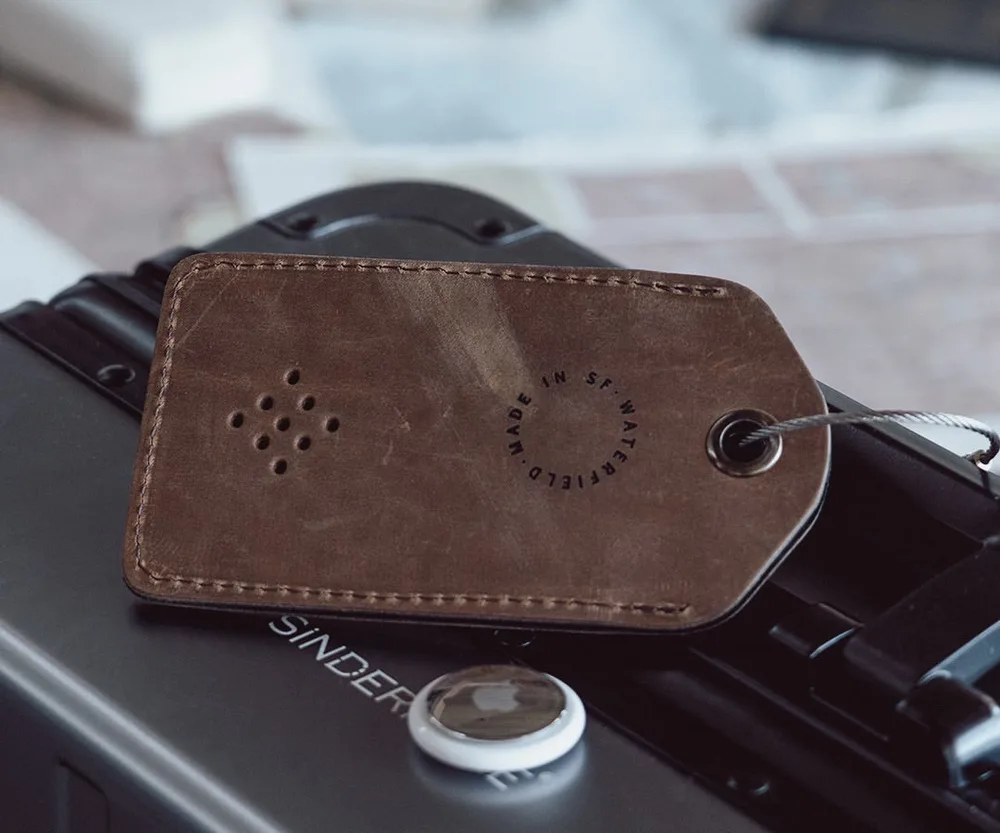
Photo: WaterField
This is the pick for the traveler who wants to track a checked bag and carry something that looks the part. The WaterField AirTag Leather Luggage Tag is full-grain leather with a hidden interior pocket for an AirTag, perforated so the tag can still chime, closed with a steel cable and barrel clasp, and made in the USA. It costs 49 dollars on WaterField’s own store, with an optional leather handle wrap for 19 dollars more.
The honest trade-offs. Forty-nine dollars is a real price, and it does not include the AirTag itself, so budget for that separately if you do not already own one. It is a single tag, not a pair. And an AirTag helps you find a bag the airline has misplaced, but it will not stop the bag from being lost in the first place, so treat it as a locator, not a guarantee.
Buy it if you want to track your checked bag inside a leather tag that hides the AirTag cleanly and clasps on with steel. Skip it if you do not use AirTags or you want to spend under ten dollars.
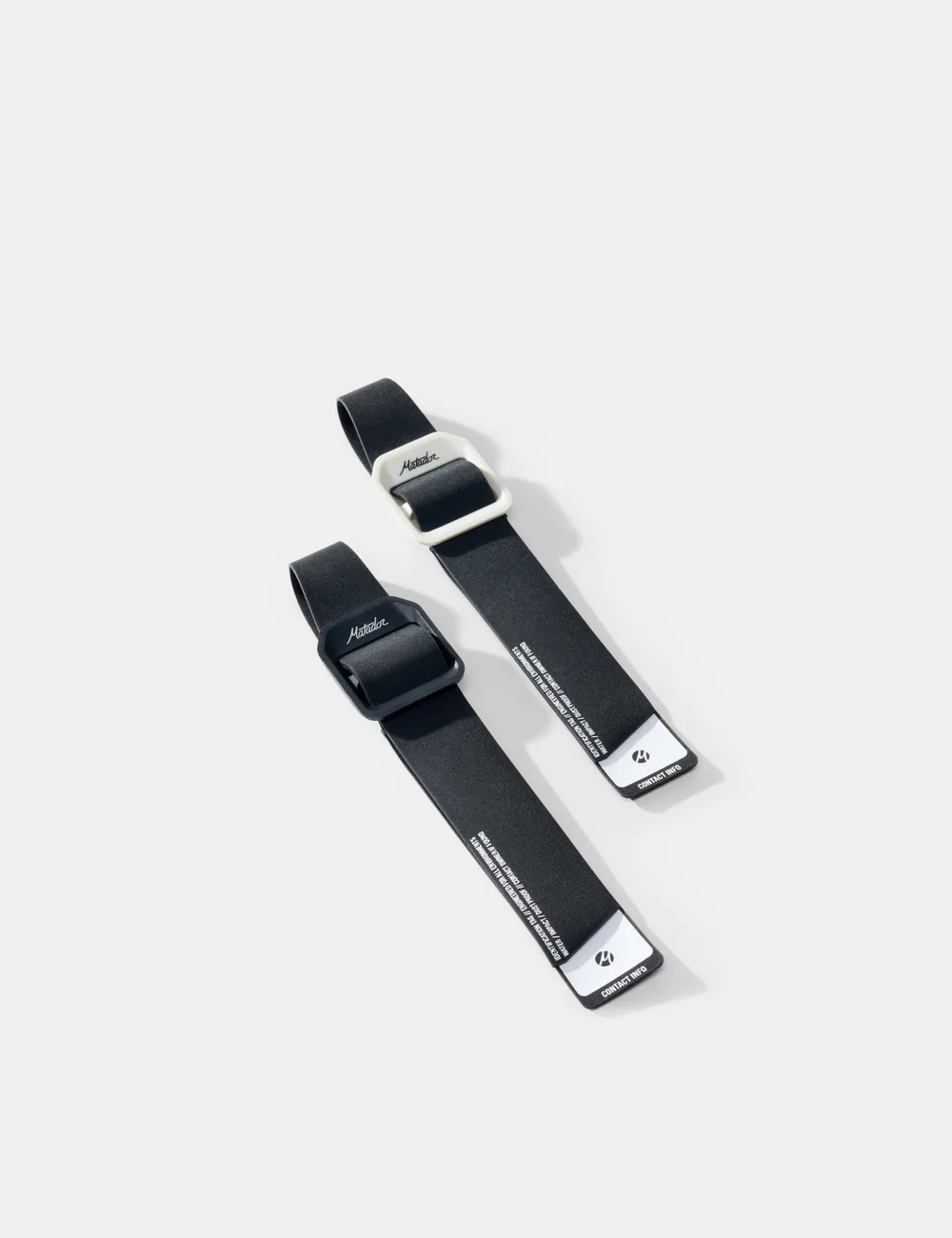
Photo: Matador
If your bag lives outdoors, gets rained on, or takes real abuse, this is the toughest pick here. The Matador Gear Tags are a two-pack of weatherproof tags built from Hypalon, the same rubberized fabric used on inflatable boats, with a polycarbonate buckle rather than a snap-prone plastic loop. They cost 16 dollars on Matador’s own store. The onebag and outdoor crowd reach for these because they simply do not fail in weather.
The honest trade-offs. They are all-black and minimal, so they will not make your bag pop on a crowded belt the way a bright tag does, and the writable ID area is small. There is no privacy flap, so keep to a name and phone number rather than an address. And at 16 dollars for the pair they cost twice the Shacke, which you are paying for genuine weatherproofing you may not need indoors.
Buy it if you check rugged gear, travel in bad weather, or just want the most durable strap tag going. Skip it if you want a large writable card, a bright color, or a privacy cover.
This is the pick if you want the leather look and a privacy flap without paying leather money. The Travelambo tags are a two-pack of faux-leather tags with a back flap that covers your details, a steel loop for secure attachment, and a long list of color options. Pack Hacker, which tests these, puts the pair under 10 dollars, which makes it the default good-enough tag for most travelers who want the look for almost nothing.
The honest trade-offs. It is faux leather, so it apes the look but will not patina, and on a rough-checked bag it wears faster than silicone or real leather. The privacy flap is the genuinely useful feature here, so use it and keep to a name and number. As a two-pack it suits two bags and slightly overshoots if you only have one.
Buy it if you want the leather aesthetic plus privacy for the price of a rubber tag. Skip it if you want a tag that lasts for years or the real full-grain feel.
This is the tag for the traveler who wants one beautiful piece that ages well and does not care to save a few dollars. The Fjällräven Leather Luggage Tag is made in Sweden from vegetable-tanned leather that develops a rich patina, closes with a secure pin belt buckle, and holds a business card behind a metal opening. AFAR, which tests these, lists it at 40 dollars.
The honest trade-offs. Forty dollars is a lot for a single tag, and you are paying for the leather and the Swedish make, not for better identification than a seven-dollar rubber tag gives. There is no full privacy flap, so use a business card with a name and phone number rather than a home address. Leather is durable but not as indestructible as silicone, so it is a handsome tag rather than a bombproof one.
Buy it if you want a single, gorgeous leather tag that patinas and you will keep for years. Skip it if you want privacy-first coverage or the toughest possible tag.
This is the pick if you want something that will practically never break and does not mind a spartan look. The Ovener Aluminum Luggage Tag is a lightweight anodized-metal tag with a steel cable loop, chosen by AFAR as a durable metal option at 9 dollars. Aluminum bends and dents rather than snapping, so it survives the belt as well as rubber does while looking sleeker.
The honest trade-offs. Metal is the least private material here, since the details are usually engraved or slid under a small window rather than hidden behind a flap, so keep strictly to a name and number. It is also cold and utilitarian rather than warm like leather. And at 9 dollars for a single tag it costs a touch more than the two-pack Shacke, so you are paying for the metal finish.
Buy it if you want a near-indestructible metal tag with a clean, modern look. Skip it if you want a privacy cover or the warmth of leather.
| Tag | Best for | The honest catch |
|---|---|---|
| Shacke Privacy Tags | Bendable, private, cheap | Utilitarian rubber look |
| WaterField AirTag Tag | Tracking a checked bag | $49, and no AirTag included |
| Matador Gear Tags | Weatherproof, rugged gear | All-black, no privacy flap |
| Travelambo Faux Leather | Leather look plus privacy, cheap | Faux leather wears faster |
| Fjällräven Leather | One beautiful tag that patinas | $40, no full privacy flap |
| Ovener Aluminum | Near-indestructible metal | Least private material |
The Shacke privacy tags are the pair I recommend most, but they are wrong for three kinds of buyers, and pretending otherwise would waste your money.
Skip them if you want to track your bag. The Shacke tags identify your luggage but cannot locate it. The WaterField AirTag tag hides an AirTag inside leather so you can follow a misplaced bag across an airport, which the rubber tags cannot do.
Skip them if you want a tag that looks like an heirloom. Rubber is durable and private but plain. The Fjällräven leather tag patinas into something you are proud to hang on a nice bag, and the Travelambo gives you the leather look for less.
Skip them if your bag lives in the weather. The Shacke tags are fine for normal travel, but the Matador Gear Tags are built from boat-grade Hypalon for gear that gets rained on and thrown around, and that toughness earns its price outdoors.
That is curation, not hedging. A pick is only useful when you also know when it is wrong.
Your name and a phone number or email, and not your home address. A tag showing your street address tells anyone who reads it that your house is sitting empty while you travel, which is a privacy and security risk the airline forums warn about repeatedly. A cell number or email lets an airline or a good samaritan reach you without exposing where you live. Better still, use a tag with a back privacy flap, like the Shacke, so even that information is hidden from a casual glance at the carousel.
For pure survival, silicone and other bendable materials win, because baggage handling is rough and a flexible tag bends where a rigid one snaps. Travel testers at AFAR and Pack Hacker specifically warn against hard plastic and favor silicone, rubber, aluminum, and Hypalon straps for exactly this reason. Full-grain or vegetable-tanned leather, like the Fjällräven, is durable and ages beautifully, but it is a handsome choice rather than the most bombproof one. If you only care about a tag that lasts, choose a bendable material; if you want looks that endure, choose real leather.
It is worth it if you check bags and want to follow a misplaced one, which has become a mainstream move for good reason. An AirTag inside a secure holder like the WaterField tag lets you see where your bag is when the airline cannot tell you, and travelers routinely use them to recover delayed or misrouted luggage. Two honest caveats. It locates your bag, it does not prevent the bag from being lost, and you want a holder with a locked, secure attachment so the tracker cannot simply be pulled off.
Yes, but not at the airport. Keep the airline’s paper sticker tag on until any baggage claim or delay is fully resolved, because you may need the bag number. Once you are home and everything is sorted, shred it rather than tossing it in a bin. Those stickers carry your last name, flight, and bag number, and there are reports, relayed by outlets like Fox News, of that information being used for false lost-baggage claims. Experts consider it a low-volume risk, but shredding a paper tag costs you nothing and closes the door.
Find the best binoculars for Alaska cruise viewing. Compare 8x, 10x, and 15x options by shake, field of view, size, and low-light use.
Compare the best neck pillows for long flights by support, packability, adjustability, and comfort so you can choose the right one for your next travel day.
Find the best carry on backpacks for women with airline fit checks, comfort tests, capacity advice, and honest trade-offs for one-bag travel.