Best Binoculars for Alaska Cruise: Honest Guide
Find the best binoculars for Alaska cruise viewing. Compare 8x, 10x, and 15x options by shake, field of view, size, and low-light use.
Buy the Bellroy Zip Wallet, and buy it because it is a good leather wallet that happens to block RFID, not because someone scared you about wireless card theft. That distinction is the whole point of this guide. An RFID protection wallet earns its place when the wallet itself is worth carrying, and the shielding is a small bonus rather than the reason you reach for it. Bellroy sells the Zip Wallet for 99 dollars, the price Travel and Leisure’s tester logged on Bellroy’s own store, and it is the one I hand to most travelers. The other five picks below cover slimmer, cheaper, and passport-friendly cases, and I will tell you which one beats the Bellroy for you.
I want to say the quiet part first, because this whole category runs on fear, and the fear is mostly unfounded. Documented cases of someone skimming your credit card wirelessly are close to nonexistent, and I will show you the sources in a moment. So I chose these six the way I choose any wallet, on the leather, the layout, the size, and the price. I treated the RFID shielding as a tiebreaker. If a wallet was only good at blocking a threat that barely exists, it did not make the list.
Some links here are affiliate links, which means Intastravel may earn a commission if you buy through them. It does not change which products we pick or what we say about them.
Not very. This is the part most wallet roundups skip because it hurts the sales pitch.
Security researchers and consumer advocates keep landing in the same place. Consumer Reports quoted a security expert, Roey Eliyahu, saying flatly that “there have been no documented cases of RFID-based credit card fraud.” He added that a thief would need almost ideal conditions at very close range to virtually pickpocket you. The Identity Theft Resource Center told AARP, “We do not believe this topic addresses a real risk.” In the same AARP piece, a fraud analyst named Frank McKenna called it “very theoretical fraud” and said plainly, “Don’t waste your money.”
The technology is the reason. Your contactless card is an EMV chip card, and it does not broadcast your name or your static card number. It sends a one-time cryptographic code that changes with every tap. Bankrate notes that even if a thief captured that signal, it is “unlikely that a thief could store your card information to use over and over.” Range is the other problem for the thief. A reader has to get within a few inches of your card, and the clothing and bag already around it get in the way.
So where does real card fraud come from? Data breaches, skimmers glued onto ATMs and gas pumps, and phishing. None of those are stopped by a wallet. If you want to spend your worry somewhere useful, turn on transaction alerts and check your statements.
Here is the honest conclusion. An RFID protection wallet closes a door that is already mostly shut. That is not a reason to avoid one. It is a reason to stop paying a fear tax for one, and to judge these wallets as wallets. The good news is that RFID shielding is now cheap and common, so you can get it for free inside a wallet you would have wanted anyway.
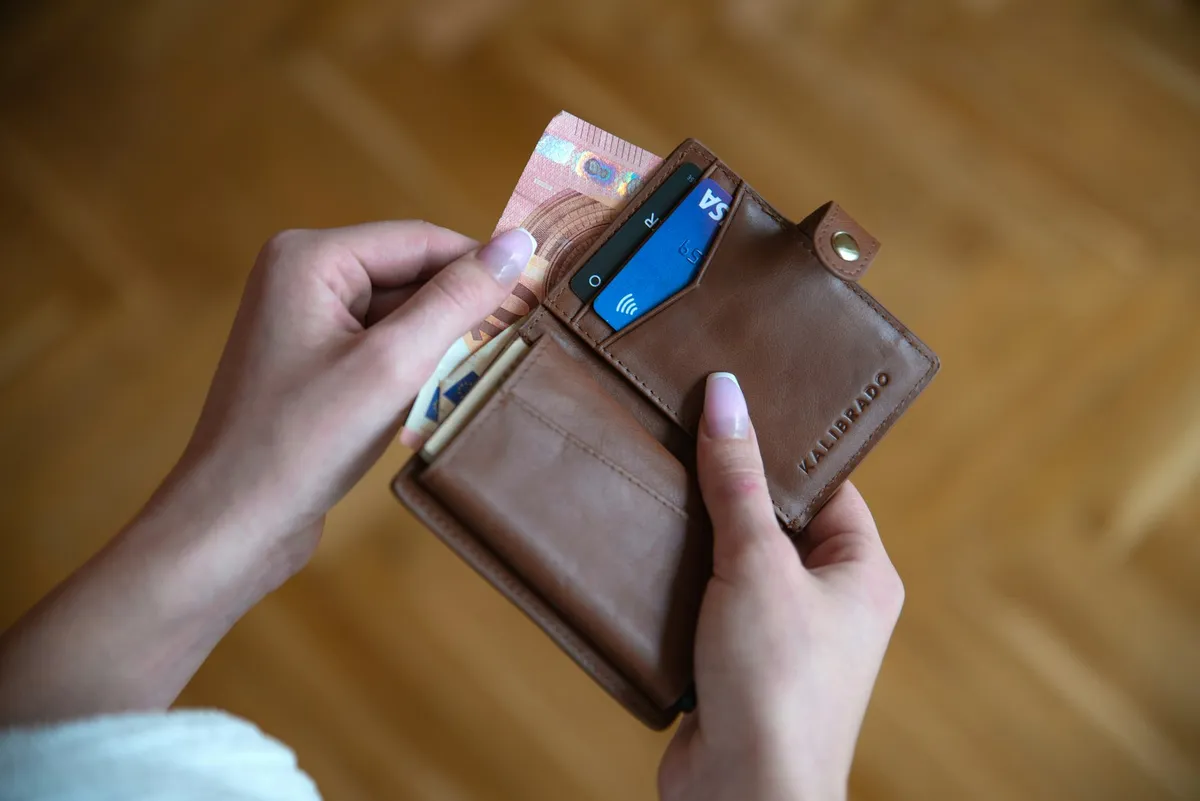
Photo: Emil Kalibradov on Unsplash
Four things decide it, and RFID is the last of them.
The wallet has to fit your carry style first. A slim card holder and a full zip organizer solve different problems, and buying the wrong shape is how good wallets end up in a drawer. Decide whether you want to shed cards or corral them before anything else.
The material and build come second. Leather that ages well, stitching that holds, and a card slot that grips without stretching are what you live with for years. This is where the money should go.
Price honesty comes third. You can pay 30 dollars or 100 dollars for RFID shielding that performs identically, because the blocking layer costs pennies. Pay for the leather and the design, not the word “RFID” printed on the box.
The RFID layer comes last. Every wallet below blocks it, each brand says so on its own page, and I confirmed that while writing. Treat it as a checkbox that is already ticked, then choose on the first three.
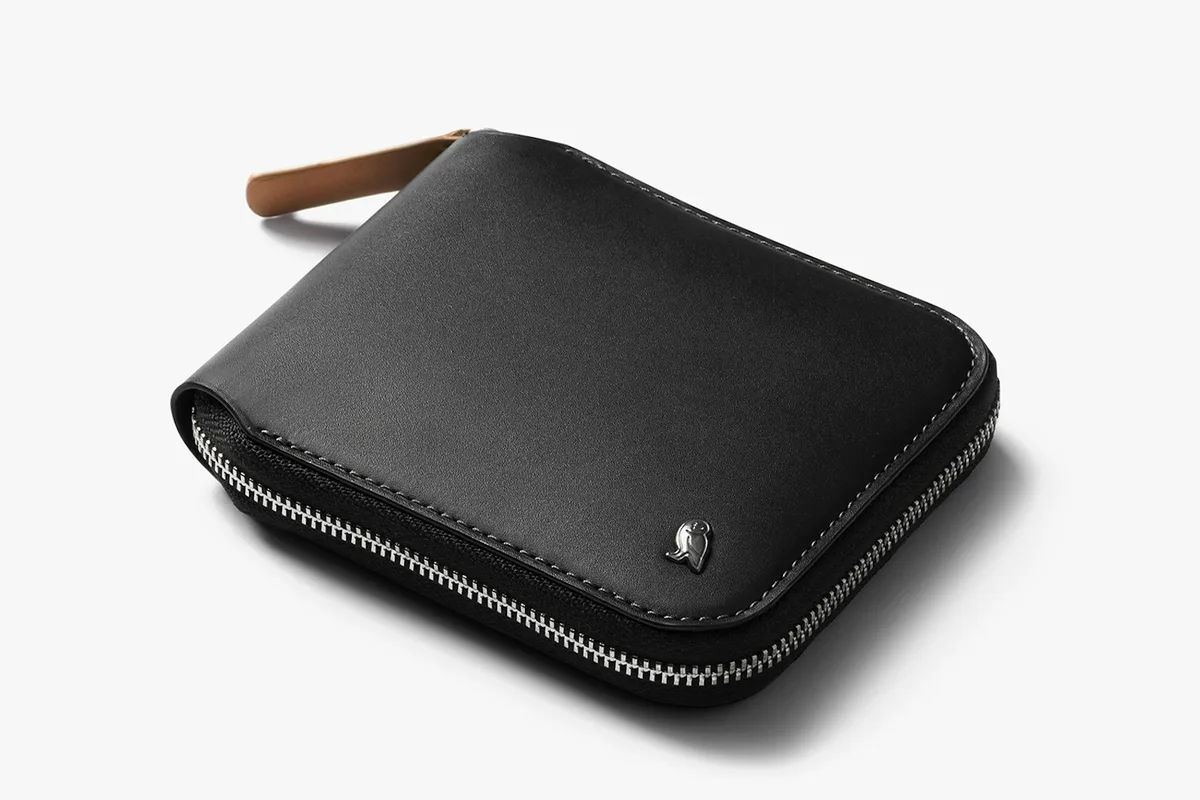
Photo: Bellroy
This is the one I recommend to most people because it does the whole job without asking you to carry a second thing. The zip keeps coins, a folded receipt, and a spare SIM from falling out when you dig for your boarding card, which is the exact moment loose wallets betray you. The leather has a matte finish, and Travel and Leisure’s tester found it shrugged off scuffs over their testing. Bellroy is also the brand I trust most on the honesty front here, because it adds RFID protection without building its whole identity around scaring you.
The honest trade-offs. Ninety-nine dollars is a real price for a zip wallet, and you are paying for the leather and the layout, not the shielding. The coin pouch that makes it tidy also makes it thicker than a card sleeve.
Buy it if you want one wallet that holds everything and looks better the more you use it. If minimal is the goal, keep reading.
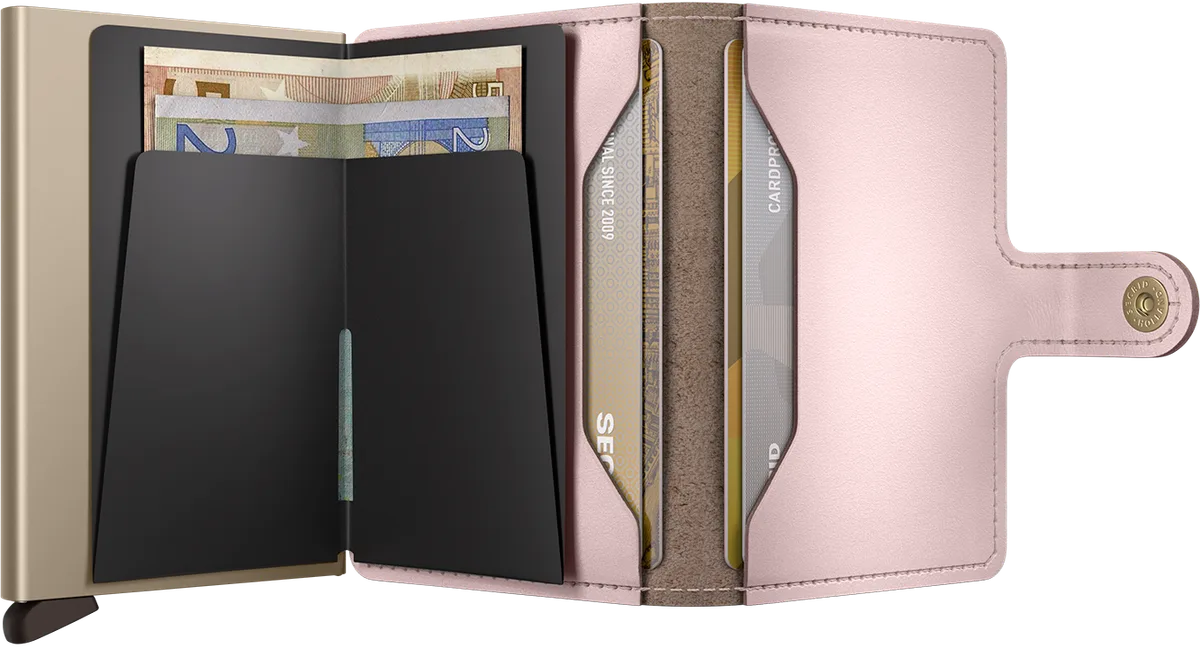
Photo: Secrid
The Secrid Miniwallet is the one that gets stopped at dinner tables, because you press a lever and the cards fan out of an aluminum case like a magic trick. That case is the RFID story too. Secrid says it protects the cards inside and points to independent lab testing to back it, so the blocking here is more than a claimed liner. The leather sleeve around it holds a few more cards and folded bills, and the whole thing costs 99 dollars, which I confirmed on Secrid’s page.
The honest trade-offs. The metal case comfortably holds four to six cards and no more, so a card-heavy person will feel the ceiling fast. The pop-up mechanism is a moving part, and moving parts eventually wear. The colorway shown here is a pale rose, and Secrid sells plenty of restrained shades if that is not you.
Buy it if you have culled your cards and want the slimmest daily carry with a genuine metal shield. Skip it if you still carry a thick stack.
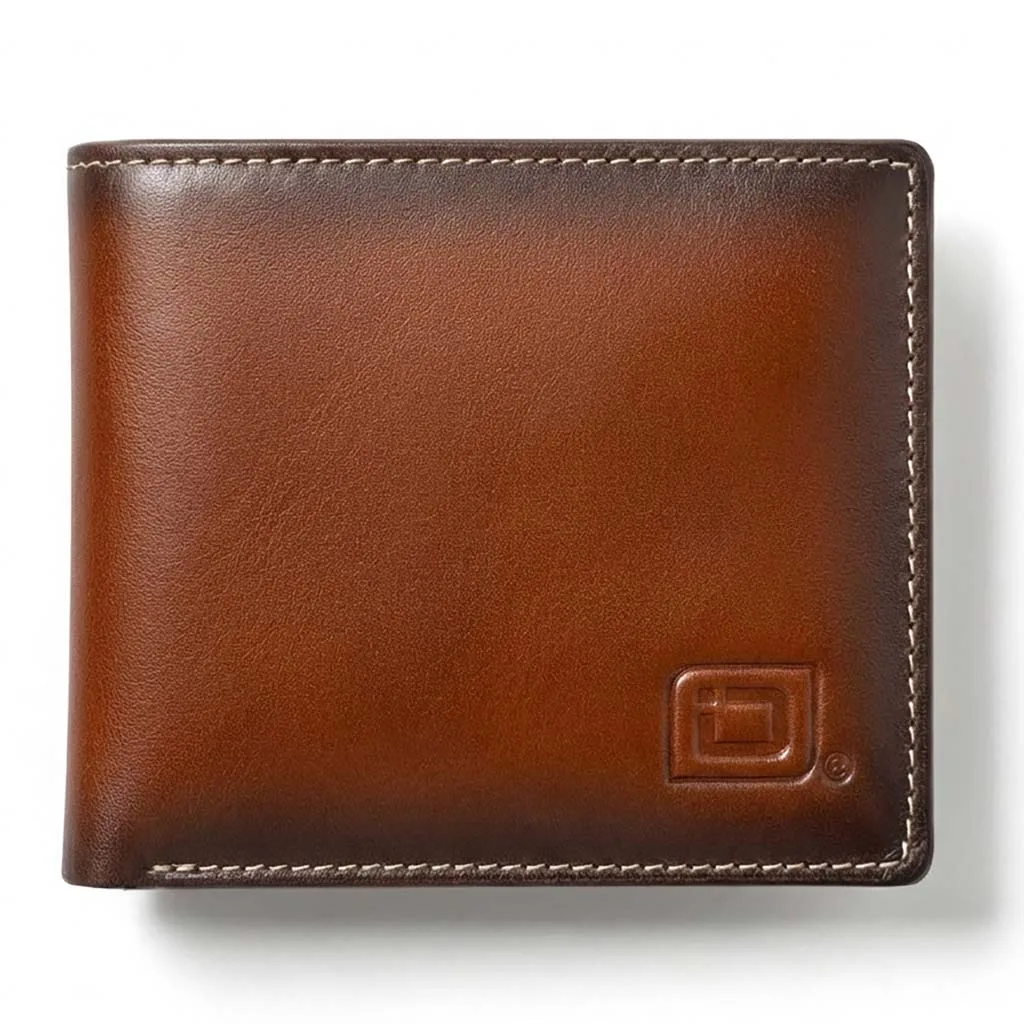
Photo: ID Stronghold
If you want a normal leather bifold and simply want the RFID box ticked, this is the sensible, cheap answer. ID Stronghold has made shielded wallets for two decades, so the blocking is the part they take most seriously. You get ten card slots, an ID window, and a bill compartment in a classic fold, for 44.99 dollars on their site. That price is the real appeal, because it buys you the same shielding as wallets costing twice as much.
The honest trade-offs. It is a full bifold, so it will not slim down your pocket the way a card holder does. The brand leans hard into the security pitch, which is worth naming, because you are buying a plain, well-priced bifold, not a magic force field. The leather is decent rather than heirloom grade at this price.
Buy it if you like a traditional bifold and refuse to pay a designer markup for a liner. Skip it if you are trying to carry less.
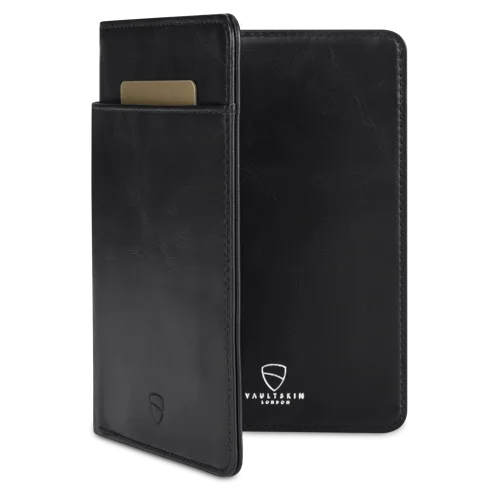
Photo: Vaultskin
This is the pick for the traveler who wants passport, boarding pass, and cards in one place at the gate. The Vaultskin Kensington is a slim leather passport wallet with a pop-up card slot and room for the documents you juggle at check-in, and it blocks RFID, which Vaultskin states on the page. It runs 59.99 dollars, confirmed on their store.
The honest trade-offs. A single wallet holding your passport and your cards is convenient right up until you lose it, and then you have lost everything at once. Keep it zipped in the same inside pocket every time. It is also larger than a card wallet by design, so it is a travel-day item, not an everyday one. And to be straight about the shielding, your e-passport chip already reads only at very close range and needs the printed details inside to open it up, so the RFID layer matters even less on a passport than on a card.
Buy it if you want your travel documents corralled in one tidy case. Skip it if you would rather split your passport and cards across two pockets for safety.
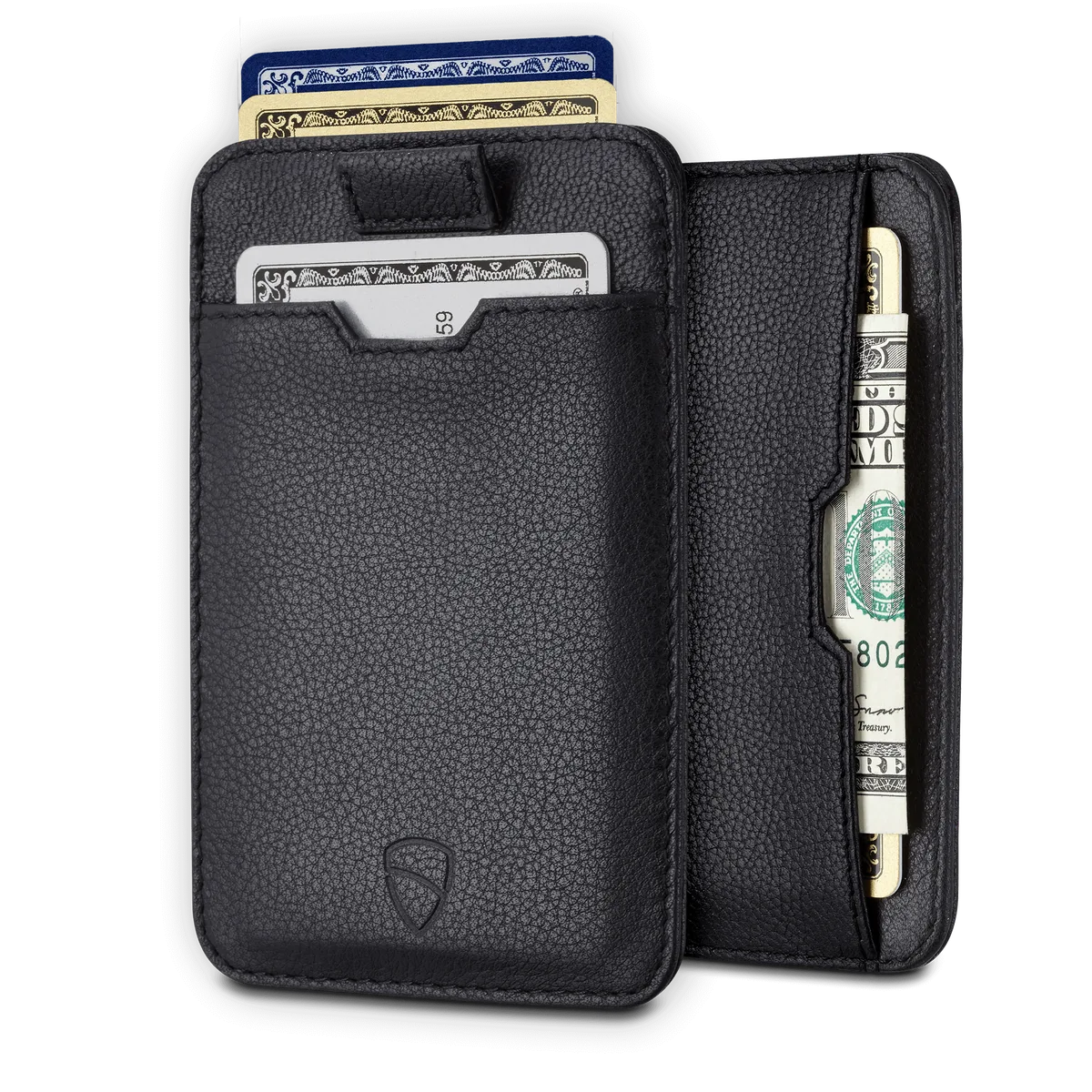
Photo: Vaultskin
The Chelsea is the least you should spend to get real leather and a working RFID layer, rather than a bargain-bin sleeve. Travel and Leisure called it their most compact pick, and it is a slim front-pocket card holder with a pull-tab for your most-used cards and a squeeze pocket for cash. It costs 29.99 dollars, confirmed on Vaultskin’s site, which makes it the value choice here.
The honest trade-offs. Compact means limited, so this is a five-or-six-card wallet, not a home for your whole stack. There is no proper bill fold, just the cash pocket, so folders of receipts do not belong here. And thirty dollars, while the cheapest pick, is still more than a fear-free traveler strictly needs to spend, so buy it for the slim leather, not the shield.
Buy it if you carry few cards and want a tidy front-pocket wallet without paying luxury money. Skip it if you need a bill compartment.
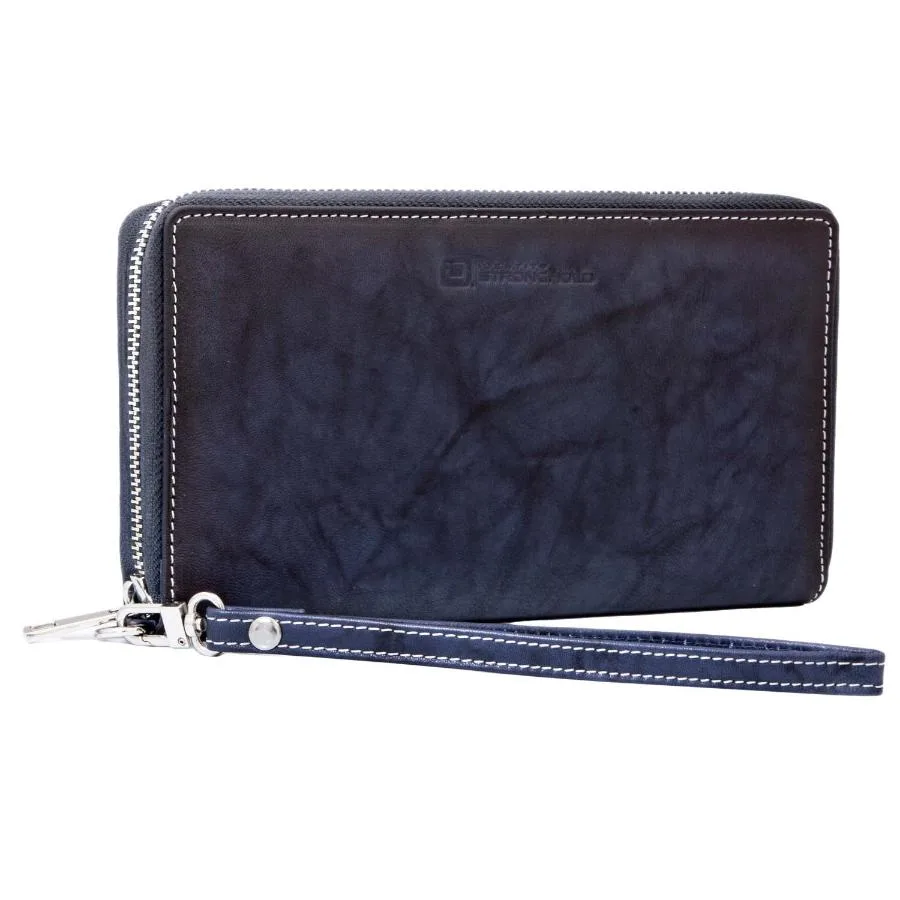
Photo: ID Stronghold
For anyone who wants a full zip-around clutch that doubles as a grab-and-go for coffee runs abroad, this is the pick. The ID Stronghold clutch zips all the way around, holds a row of cards, cash, and a phone, and adds a detachable wrist strap. The shielding is built in, which is this brand’s whole reason for being, and it sells for 54.99 dollars on their store.
The honest trade-offs. It is a large wallet, closer to a small purse than a pocket piece, so minimalists should look at the Chelsea instead. The wrist strap is a love-it-or-lose-it feature, and it detaches for a reason. And as with every wallet here, the RFID lining is the least important thing you are buying, well behind the layout and the leather.
Buy it if you want one zip case that carries your cards, cash, and phone for a day out. Skip it if you want to travel light.
| Wallet | Best for | The honest catch |
|---|---|---|
| Bellroy Zip Wallet | One wallet that holds everything | $99, and a coin pouch adds bulk |
| Secrid Miniwallet | Slimmest carry, metal shield | Holds only 4 to 6 cards |
| ID Stronghold Bifold | A cheap, normal leather bifold | Full-size fold, heavy on the sales pitch |
| Vaultskin Kensington | Passport and cards in one case | Lose it and you lose everything |
| Vaultskin Chelsea | Compact front-pocket value | No real bill compartment |
| ID Stronghold Clutch | A women’s zip-around day carry | Large, more purse than pocket |
The Bellroy Zip Wallet is the one I point most people to, but it is wrong for three kinds of buyers, and pretending otherwise would waste your 99 dollars.
Skip it if slim is the whole goal. A zip wallet with a coin pouch is tidy, not thin, and the Secrid Miniwallet or the Vaultskin Chelsea will disappear into a front pocket in a way the Bellroy will not.
Skip it if you travel with your passport in hand. The Bellroy holds cards and cash beautifully and has nowhere for a passport. The Vaultskin Kensington is built for that job.
Skip it if 99 dollars feels steep for a liner you now know you barely need. The ID Stronghold bifold gives you the same shielding and a normal leather wallet for 44.99 dollars, and that is a completely reasonable place to land.
That is curation, not hedging. A pick is only useful when you also know when it is wrong.
Honestly, no, not for safety alone. Documented cases of wireless credit card skimming are close to nonexistent, and Consumer Reports quoted a security expert saying there have been no documented cases of RFID-based credit card fraud. Modern contactless cards send a one-time code, not your real number, and a reader has to get within inches to catch anything. So buy an RFID protection wallet because you wanted a good wallet anyway, and enjoy the shielding as a free bonus rather than a reason to worry.
Yes, the blocking layer does what it claims and stops a nearby reader from talking to your cards. The catch is that the threat it blocks is rare to begin with, as fraud analysts quoted by AARP put it when they called RFID theft “very theoretical fraud.” A working shield against a threat that almost never happens is still fine to own. Just do not pay extra for it, since the lining costs pennies and comes standard in most wallets now.
In theory, within a few inches, and in practice, almost never. Bankrate notes a thief would have to get very close with a reader, and even then a captured signal is hard to reuse because the code changes each tap. The far more common ways cards get stolen are data breaches, ATM and gas-pump skimmers, and phishing, and no wallet stops any of those. Transaction alerts protect you more than any liner.
For most travelers, the Bellroy Zip Wallet, because the zip keeps cards, coins, and a boarding pass from spilling when you are moving through an airport. If you want your passport in the same case, the Vaultskin Kensington is the better travel organizer. If you are trying to carry as little as possible, the Secrid Miniwallet or the Vaultskin Chelsea slim down to almost nothing while still shielding your cards.
Find the best binoculars for Alaska cruise viewing. Compare 8x, 10x, and 15x options by shake, field of view, size, and low-light use.
Compare the best neck pillows for long flights by support, packability, adjustability, and comfort so you can choose the right one for your next travel day.
Find the best carry on backpacks for women with airline fit checks, comfort tests, capacity advice, and honest trade-offs for one-bag travel.