Best Neck Pillows for Long Flights
Compare the best neck pillows for long flights by support, packability, adjustability, and comfort so you can choose the right one for your next travel day.
Buy the Manta Sleep Mask. It is the travel sleep mask I hand to anyone who still cannot black out a bright cabin on a red-eye or a hotel room with a two-inch gap in the curtains, and at 39 dollars on Manta’s own page it costs less than the fancier version everyone photographs. Its deep, repositionable eye cups fix the two things a bright flight ruins, which are light at the edges and pressure on your eyelids. If you sleep on your side, hate fiddly parts, want silk, travel on a tight budget, or need a mask for stationary hotel naps rather than a plane seat, one of the five alternates below is your pick instead.
I want to be honest about this category before you spend a cent. Most cheap flat masks leak light right at the nose, and on a daytime flight or a hotel room at 6 a.m. that thin bright line is exactly what wakes you. The testers I trust say the same thing over and over: closing your eyes is not enough, because light still slips through your eyelids and suppresses the melatonin that helps you drop off. A good mask closes the nose gap and stays put when the plane jolts. The six below do that. The airport-kiosk freebie does not.
Some links here are affiliate links, which means Intastravel may earn a commission if you buy through them. It does not change which products we pick or what we say about them.
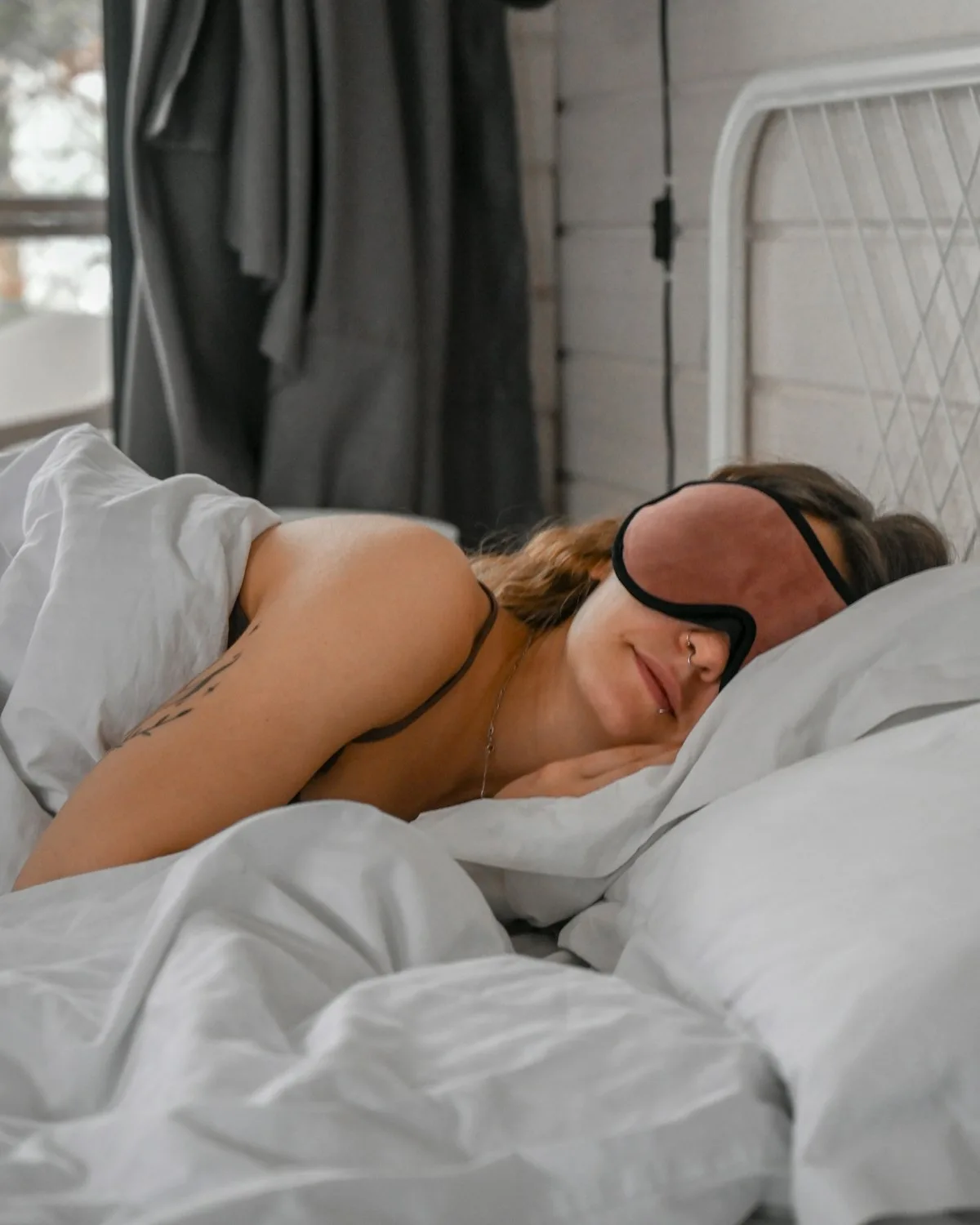
Five things decide it, and softness is only one of them.
Nose-gap light blocking comes first. Almost every mask leaks a sliver of light where the fabric meets your nose, and a bright cabin finds that gap instantly. Contoured masks and ones with a shaped nose baffle close it best. A flat silk mask looks lovely and still lets that line through.
Contoured versus flat comes second, and it is really about how you sleep in the seat. A contoured mask lifts the fabric off your eyelids so you can blink, which is nicer on a long-haul, but the raised foam presses into your face the moment you lean on the window. Flat masks avoid that pressure and sit directly on your lashes instead.
Strap comfort comes third, because the strap is what fails on a plane. A thick buckle or a loud strip of hook-and-loop wedges between your head and the headrest, then digs in or slides the mask off when you shift. Look for a thin strap or a headband style that sits above the ears and clear of over-ear headphones.
Packability comes fourth. A contoured foam mask is bulkier than a silk one you can crush into a pocket, so decide whether you want the best blackout or the smallest pack-down. No single mask wins both.
Honesty about sleep comes last. No mask makes you sleep sitting up in economy. It blocks light and gives your eyes some dark, and that is the whole promise.
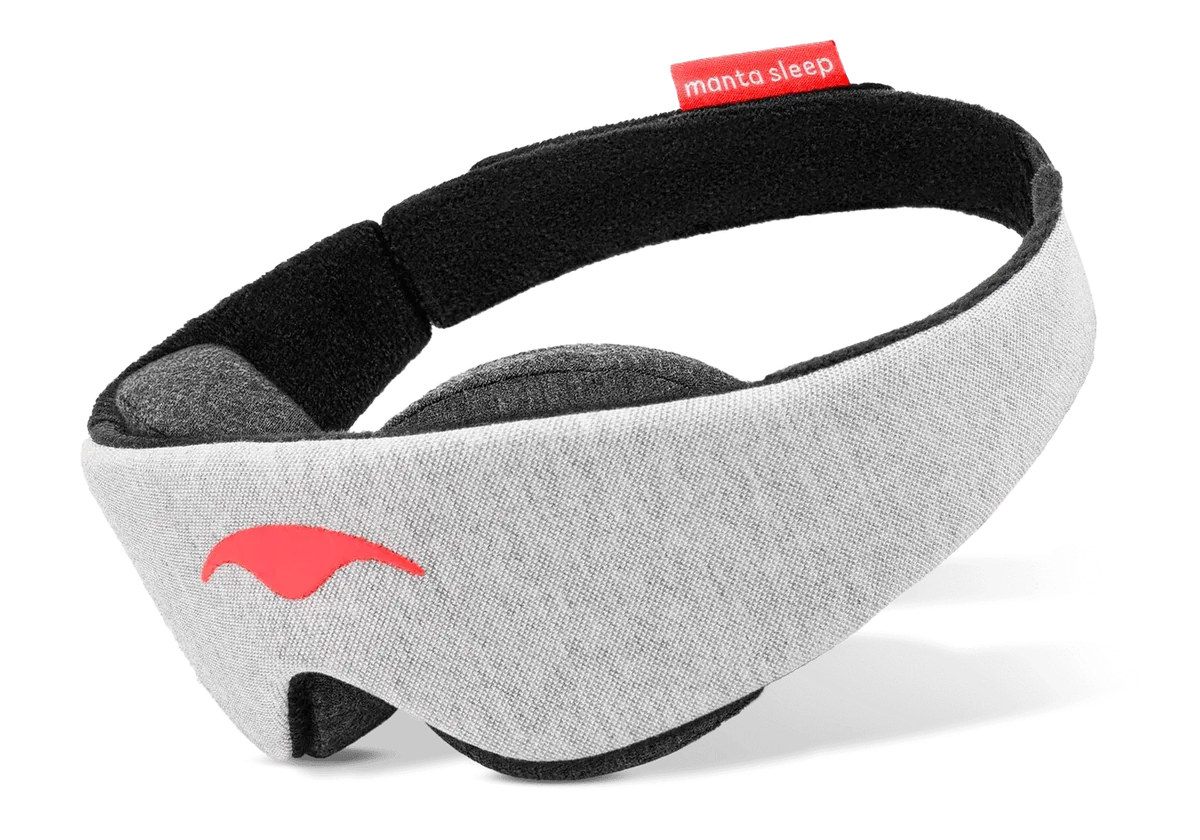
Photo: Manta Sleep
The Manta solves the nose gap and the eyelid pressure at the same time. The eye cups are among the deepest I have seen, so you can open your eyes inside the mask without your lashes touching anything, and you can slide the cups until the light disappears at the bridge of your nose. One tester who compared it against seven others called it near-spooky in how completely it blacks out a lit room. On a 7 a.m. descent into sun, that is the difference between another hour of sleep and none.
The honest trade-offs are real. On your back it blacks out almost everything, but the moment you turn onto your side the foam feels lumpy against your face, which the testers flag every time. One reviewer who moved around a lot found the raised cup edges drifted onto his eyes overnight. It is also bulkier than a silk mask, so it eats a little more bag space.
Buy it if your main enemy is light and you sleep mostly on your back or upright in the seat. That is the common case, and this is the mask that handles it best.
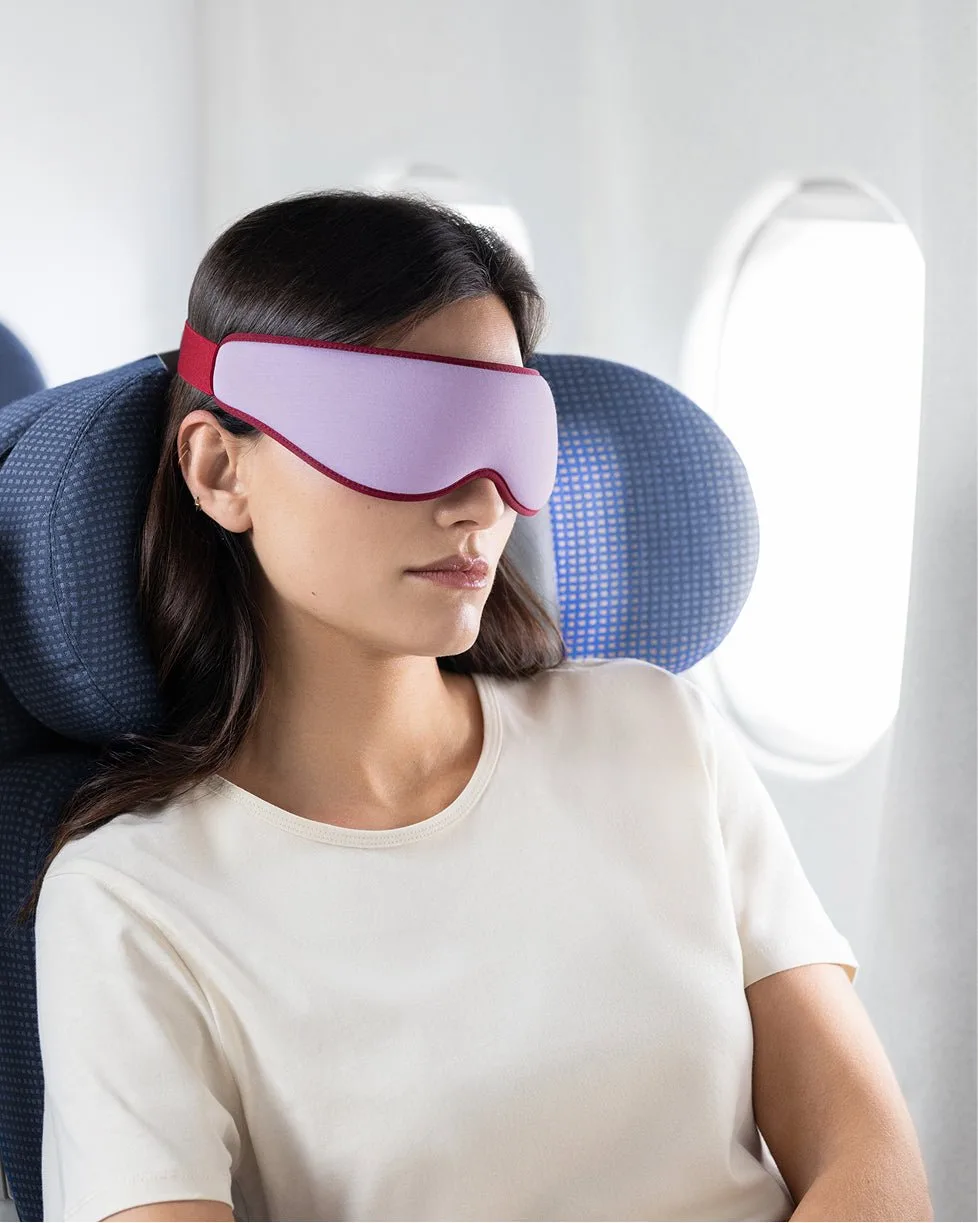
Photo: Ostrichpillow
The Ostrichpillow is for the traveler who wants a contoured mask without the fiddly parts. Ostrichpillow describes it as a 3D contoured mask with full blackout, pressure-free eye cups, an adjustable fit, and a washable build, and it lives in the brand’s travel range. There are no removable cups to reposition and lose. You put it on, the shaped foam lifts off your lashes, and it holds a dark seal. For a lot of people that simplicity beats the Manta’s adjustability.
The honest trade-offs: it is still a foam contour, so it carries the same side-sleeping problem as any shaped mask and presses on your cheek when you lean on the window. And at 45 dollars it asks more than the pile of near-identical foam masks on Amazon, so you are paying for the brand’s fabric and finish rather than a feature the cheap ones lack.
Buy it if you like a contoured mask but never want to adjust anything. Skip it if you want to dial in the fit or you sleep hard on your side.
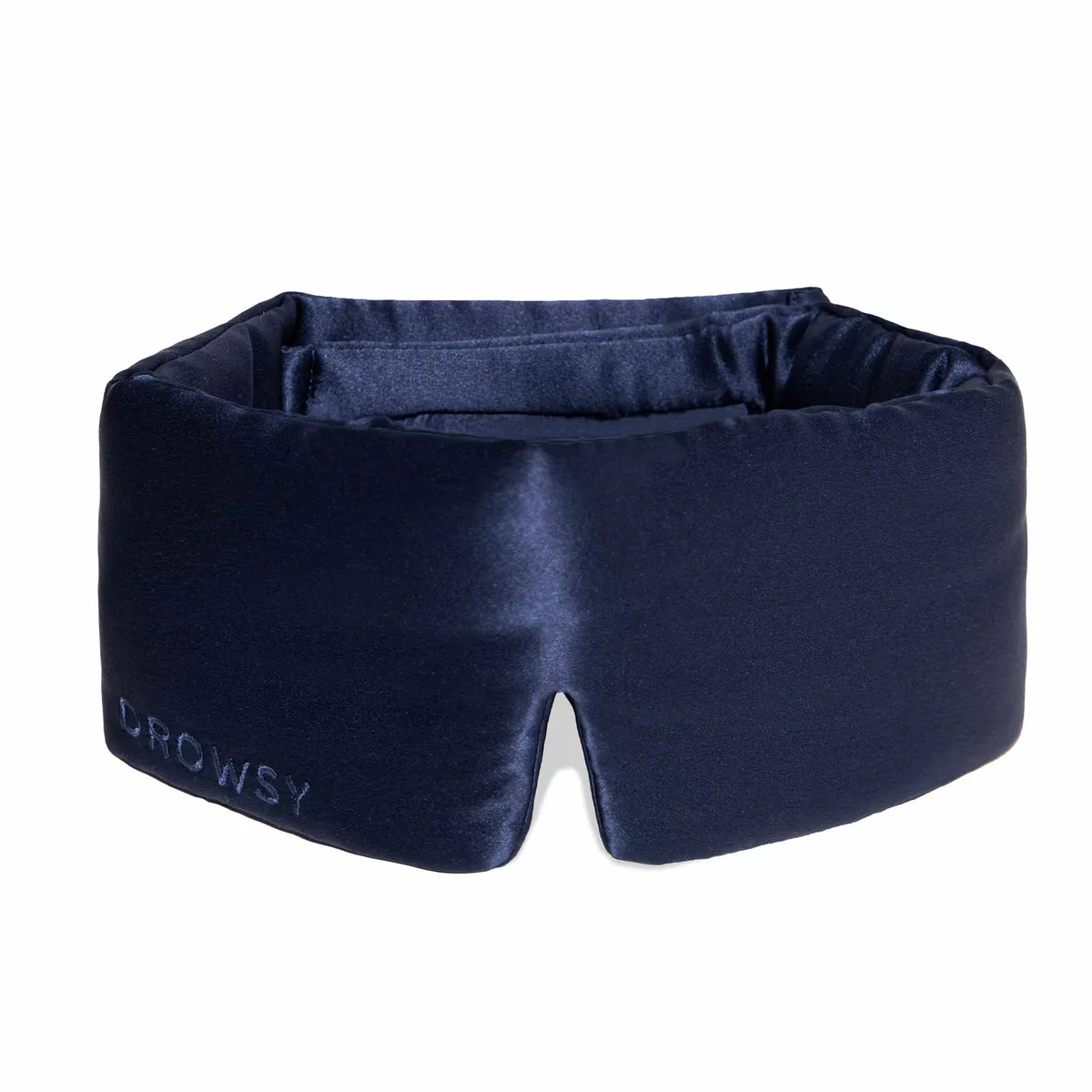
Photo: Drowsy Sleep Co
If foam masks feel like too much hardware on your face, silk is the other road, and Drowsy makes the wide one. This is padded mulberry silk with a band far broader than a standard flat mask, so it covers from your brow to the top of your cheeks and wraps most of the way around your head. Silk stays cooler than synthetic foam, which matters on a stuffy overnight flight, and the smooth surface slides less against a pillow so it stays put in a hotel bed.
The honest trade-offs: it is flat, so the silk rests directly on your lashes, and even a padded silk mask lets a faint line of light in at the nose when a pillow pushes it out of shape. At 63 dollars it is a lot for a piece of silk, and like most silk it wants a hand wash rather than a tumble.
Buy it if you find foam contours claustrophobic and you sleep on your back or in a bed rather than upright. Skip it if total blackout on a bright plane is the whole point.
Check price at Drowsy Sleep Co
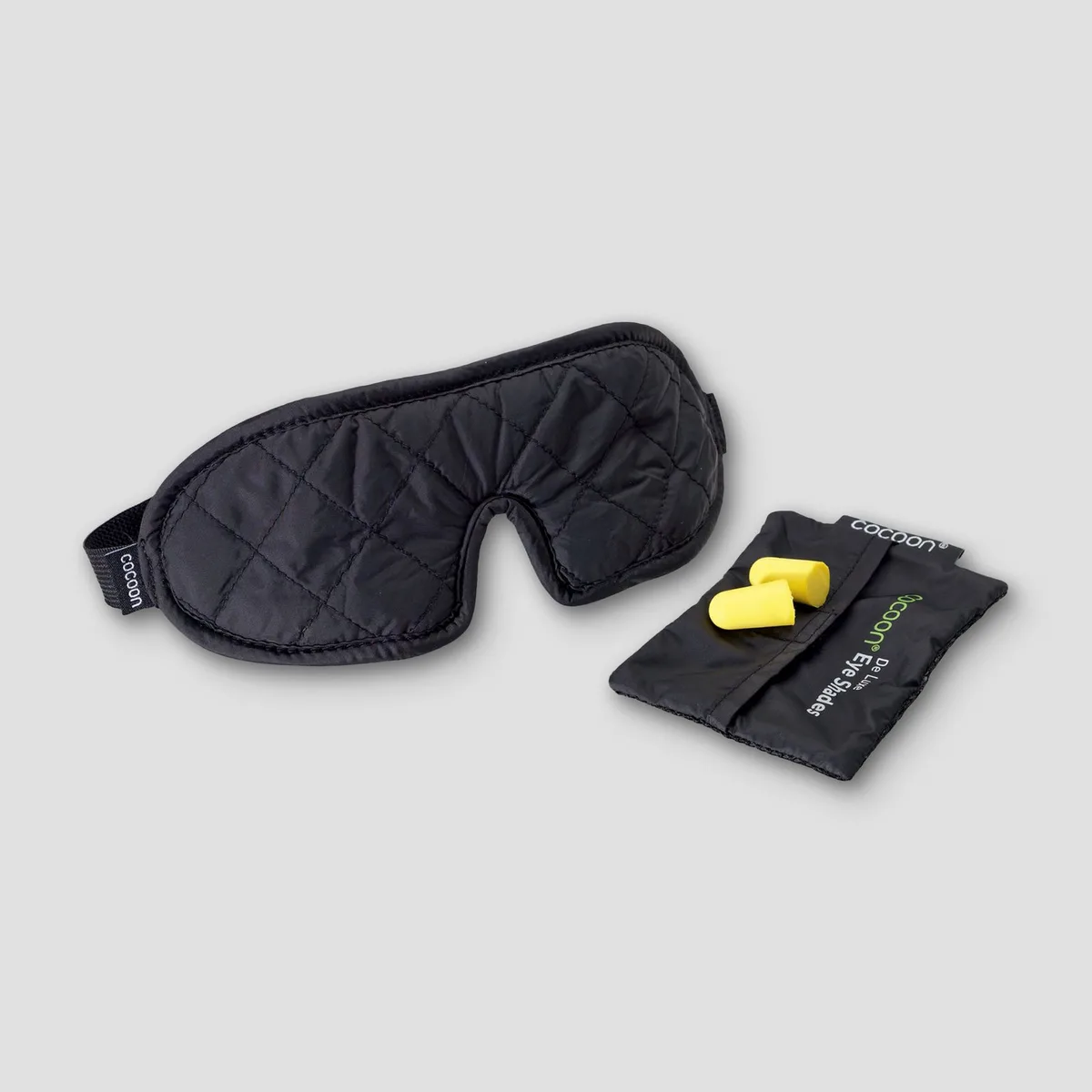
Photo: Cocoon
For about 20 dollars, the Cocoon Eye Shade covers two travel problems at once. It is a quilted flat mask with a Mylar light-blocking layer inside, and it ships with a pair of foam earplugs rated to block 30 decibels, plus a small pouch that holds both. On a plane, light and engine drone are the two things keeping you awake, and this handles both for the price of a bad airport sandwich.
The honest trade-offs: it is a basic mask. It sits flat against your lashes with no eye cavity, and the thin strap can get nudged off by a headrest when you shift, which is the standard complaint with slim-strapped budget masks. It blocks light well when it stays in place, but it will not seal like a contoured mask on a bright afternoon flight.
Buy it if you want light and sound handled cheaply and you carry a small kit. Skip it if you need surgical blackout or a strap that never moves.
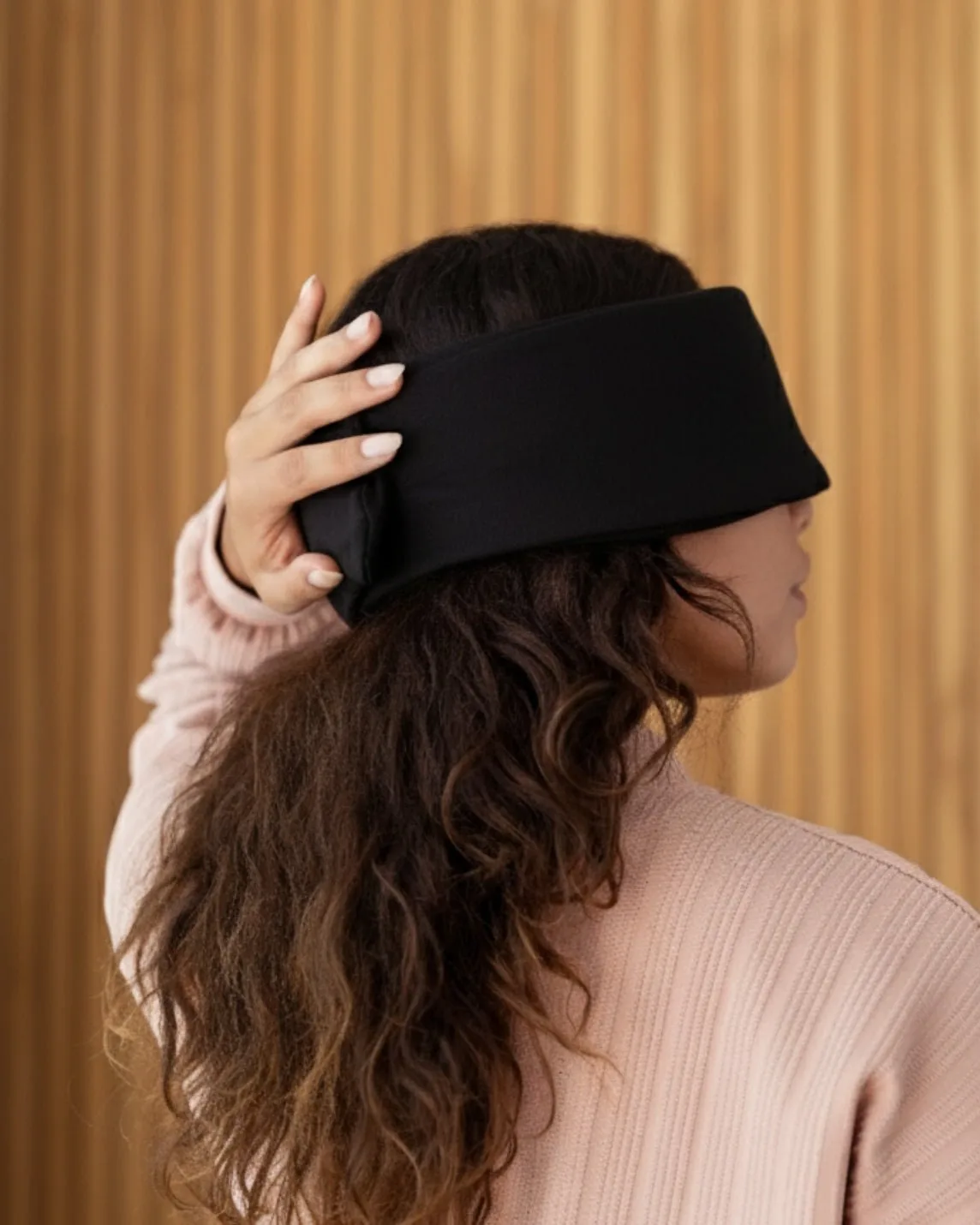
Photo: Baloo Living
This one is not for the plane. It is for the hotel room after the plane, when your body thinks it is 3 a.m. and you are forcing an afternoon nap. The Baloo is a mulberry silk mask with a gentle 9-ounce weight sewn in, and that soft pressure around the eyes is what testers reach for to wind down rather than just to block light. Pack Hacker named it their silk pick for exactly that feel.
The honest trade-offs: 9 ounces is dead weight in an upright economy seat, where it drags and can press on your nose when you tip your head, so this is a lie-down mask only. At 90 dollars it is the most expensive pick here by a wide margin, and it earns that price for relaxation, not for raw light blocking.
Buy it if your real fight is the time-zone nap in a quiet room and you like weighted pressure. Skip it if you want one mask for the seat, because the Manta does that job for less than half the money.
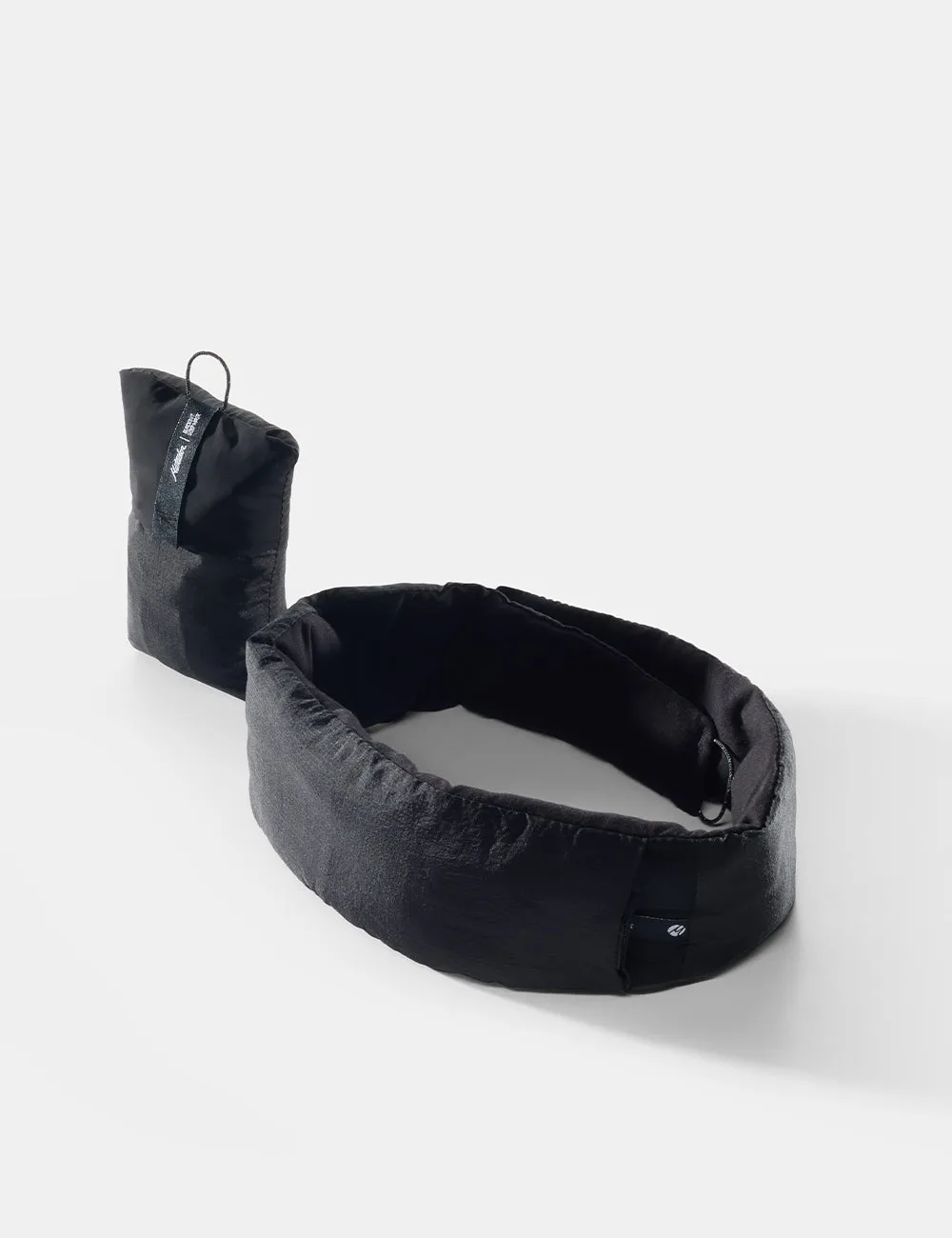
Photo: Matador
Every foam mask above costs you bag space. This one does not, because the whole thing packs into its own pouch and weighs 1.4 ounces with the earplugs included. Matador built it as a wide quilted wrap with a bamboo liner, and you cinch it around your head with hook-and-loop so it puts light pressure on your eyes like a small weighted blanket. Pack Hacker made it their best-value travel mask for that pack-down alone, and there is a dedicated pocket for the Mack’s earplugs it comes with.
The honest trade-offs: it is a one-size wrap, not a fitted mask, so it has no eye cavity and the fabric rests on your lashes. The hook-and-loop closure is the usual noisy strip, and a wrap takes a moment to get seated right in the dark of a cabin.
Buy it if you pack light and want light blocking plus earplugs in a pouch the size of a golf ball. Skip it if you want a shaped cup that keeps fabric off your eyes.
| Mask | Best for | The honest catch |
|---|---|---|
| Manta Sleep Mask | Best blackout, back and upright sleepers | Foam presses on the side, cups can shift |
| Ostrichpillow Eye Mask | A contoured mask with no fiddly parts | Still bulky on the side, $45 for foam |
| Drowsy Silk | Cool silk, back and hotel-bed sleepers | Flat, so it leaks a little at the nose, $63 |
| Cocoon Eye Shade | Cheap light and sound, small kits | Basic build, thin strap can shift |
| Baloo Living Weighted Silk | Time-zone naps in a quiet room | 9 oz is useless upright, $90 |
| Matador Blackout | Smallest pack-down, plus earplugs | One-size wrap, sits on your lashes |
The Manta is the one I point most travelers to, but it is wrong for three kinds of people, and pretending otherwise would waste your 39 dollars.
Skip it if you sleep hard on your side. The foam cups that make it so dark on your back turn into a lump against your cheek on the window, and if you move a lot they can drift onto your eyes. A flat silk mask like the Drowsy, or the packable Matador wrap, sits kinder on a side sleeper’s face.
Skip it if bag space is the fight you are losing. The Manta is one of the bulkier picks. The Matador crushes into a pouch and the Cocoon folds flat, and a mask you left at home blocks no light at all.
Skip it if your real problem is the hotel, not the seat. If you sleep fine on the plane but cannot nap against jet lag in a bright afternoon room, the weighted Baloo is built for that and the Manta is not.
One honest note to close: some people simply cannot sleep sitting up in a plane seat, and no mask changes that. If that is you, put the money toward a seat with more recline instead.
For most travelers, the Manta Sleep Mask, sold on Manta’s own page for 39 dollars. Its deep, repositionable eye cups black out a bright cabin more completely than any flat mask, and they keep the fabric off your lashes so you can blink. The one group I steer elsewhere is dedicated side sleepers, who do better with a flat silk mask like the Drowsy or the soft Matador wrap.
It depends on how you sleep in the seat. Contoured masks block light better and keep the fabric off your eyes, which is why the Manta and Ostrichpillow lead on blackout. The trade is that their raised foam presses on your face when you lean on the window. Flat masks like the Drowsy and Cocoon avoid that pressure but rest on your lashes and let a little more light in at the nose. Back and upright sleepers should lean contoured, committed side sleepers flat.
They help by blocking light, which your brain reads through closed eyelids as a signal to stay awake. Testers are clear that a mask cannot force sleep in an upright economy seat, and a cheap one that leaks light at the nose barely helps. A mask that seals the nose gap and stays on your head through a jolt is doing its whole job. If light is what keeps waking you, a good one is worth the small space it takes.
The strap is the culprit. A thick buckle or a strip of hook-and-loop sits between your head and the headrest and gets pushed off when you shift. Choose a mask with a thin strap or a headband style that rides above your ears, which is why the Manta’s grippy micro-hook strap and the wide Matador wrap stay put better than a slim budget band. Seating the strap high on the back of your head, above where the headrest touches, also helps.
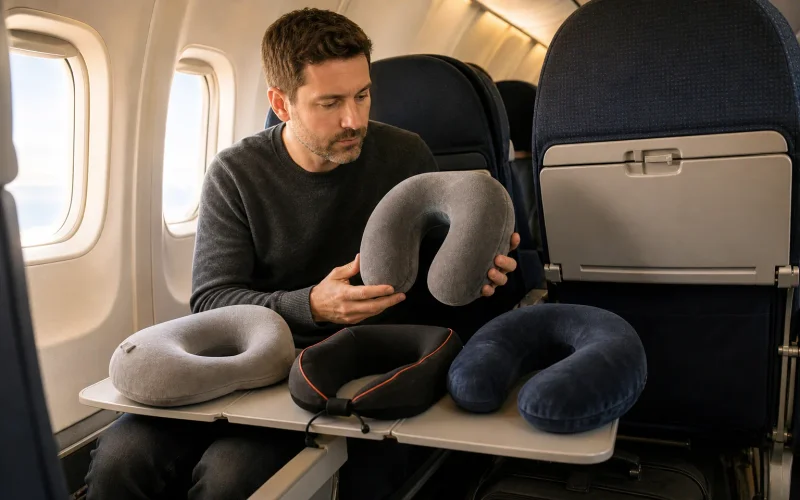
Compare the best neck pillows for long flights by support, packability, adjustability, and comfort so you can choose the right one for your next travel day.
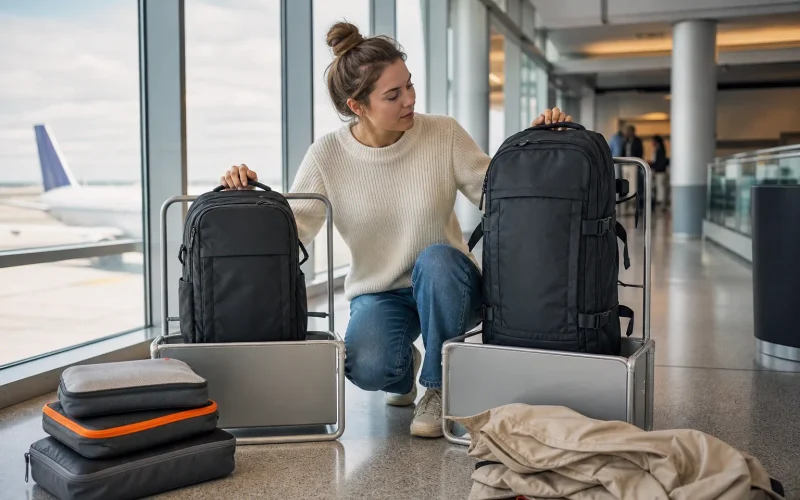
Find the best carry on backpacks for women with airline fit checks, comfort tests, capacity advice, and honest trade-offs for one-bag travel.
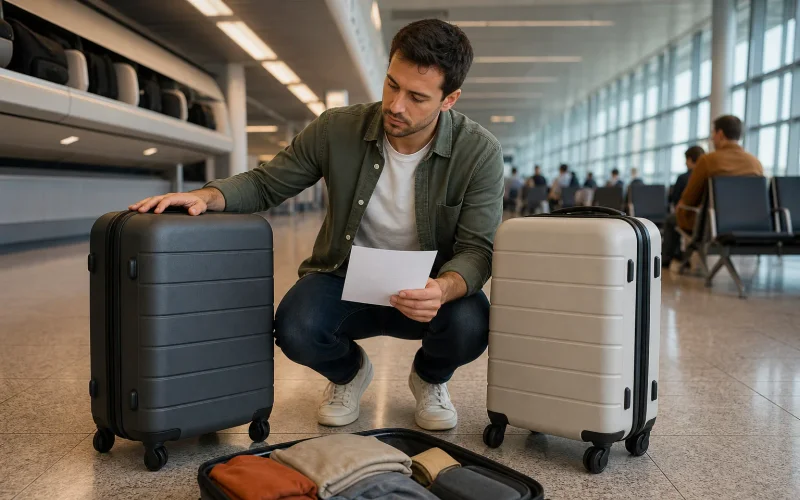
Find the best hard shell carry on luggage for business trips, international flights, and frequent travel with an honest, practical buying guide.