Best Binoculars for Alaska Cruise: Honest Guide
Find the best binoculars for Alaska cruise viewing. Compare 8x, 10x, and 15x options by shake, field of view, size, and low-light use.
Buy the Master Lock 4688D, and buy it knowing what it is: a nine-dollar convenience that keeps your zipper shut and stops an agent from cutting your lock off, not a device that will stop a real thief. That is the honest frame for this whole category. TSA approved locks are low-security by design, and once you accept that, the shopping gets easy and cheap. The 4688D is the one I hand most travelers because it does the basic job for the least money, and its bendy braided shackle threads any zipper pull. The other five picks below cover a search-alert version, a tougher build, a tiny keyed one, a strap for bags with nowhere to clip a lock, and a colorful spare. I will tell you which one beats the 4688D for you.
I want to say the quiet part first, because this category is full of security theater and the truth should come before you spend a cent. A TSA lock cannot really protect your bag, and even the TSA says so. So I chose these six the way I choose any small travel item: on price, on how they fit real luggage, and on one or two features that genuinely help. I treated the word “security” as marketing and looked at what each lock actually does on a travel day.
Some links here are affiliate links, which means Intastravel may earn a commission if you buy through them. It does not change which products we pick or what we say about them.
Two useful things, and neither of them is real security.
First, it keeps your bag from falling open: a zipper that creeps apart in the hold, a curious hand at the carousel, a flap that pops in an overhead bin. The travel forums have a tidy phrase for this. A lock keeps honest people honest and pushes a casual opportunist toward an easier bag. Second, it saves your lock from the bolt cutters. Agents carry master keys that open any Travel Sentry lock, the ones marked with the little red diamond, so instead of cutting a non-approved lock off during a hand search, they open it, look, and relock it. Travel Sentry says the program is recognized in dozens of countries and hundreds of airports, which is why the red diamond is worth looking for.
Now the part the packaging will not tell you. Those master keys are public. In 2015 a newspaper photo of a TSA agent’s key ring leaked, lockpickers turned the images into 3D-print files, and by 2016 hackers had working copies of all eight master keys online. Researchers later showed you do not even need the photos, since two of the master keys alone open roughly 98 percent of approved locks and anyone can reverse-engineer one from a lock they own. The TSA’s own spokesperson shrugged it off, calling these “convenience products that have nothing to do with TSA’s aviation security regime.” Believe the agency that runs the program.
If your suitcase has a coil zipper, the lock is close to decorative anyway. A thief can push a ballpoint pen through the zipper teeth, pop the seam open, then run the sliders back around to zip it shut, with your lock still hanging there untouched. That is not a scare story, it is a trick travel writers have filmed many times.
So here is the honest conclusion. A TSA approved lock deters the casual and keeps your zipper closed in transit. It will not stop a determined thief, the master keys are out in the world, and the TSA can open any of them. A few dollars for a zipper that stays shut and a lock that survives inspection is fine value. Just spend almost nothing and stop believing the security pitch.
Photo: Michał Parzuchowski on Unsplash
Four things decide it, and none of them is a security rating, because there is no meaningful security to rate.
Price comes first, and it should be low. Every lock here blocks the same casual opening and carries the same red diamond, so paying more buys features and build, not safety. Fit comes second: check your zipper pulls, because small metal pulls with tiny holes need a thin or flexible shackle, and a chunky rigid one simply will not pass through. Style comes third, and it is a wash for safety, so pick your annoyance: a set-your-own combination has nothing to carry, a key has no code to forget. A single useful feature comes last: a pop-up alert that an agent was inside, a strap that holds an old case shut, a bright color to spot your bag. Those earn a couple of dollars. A “high security” label does not.
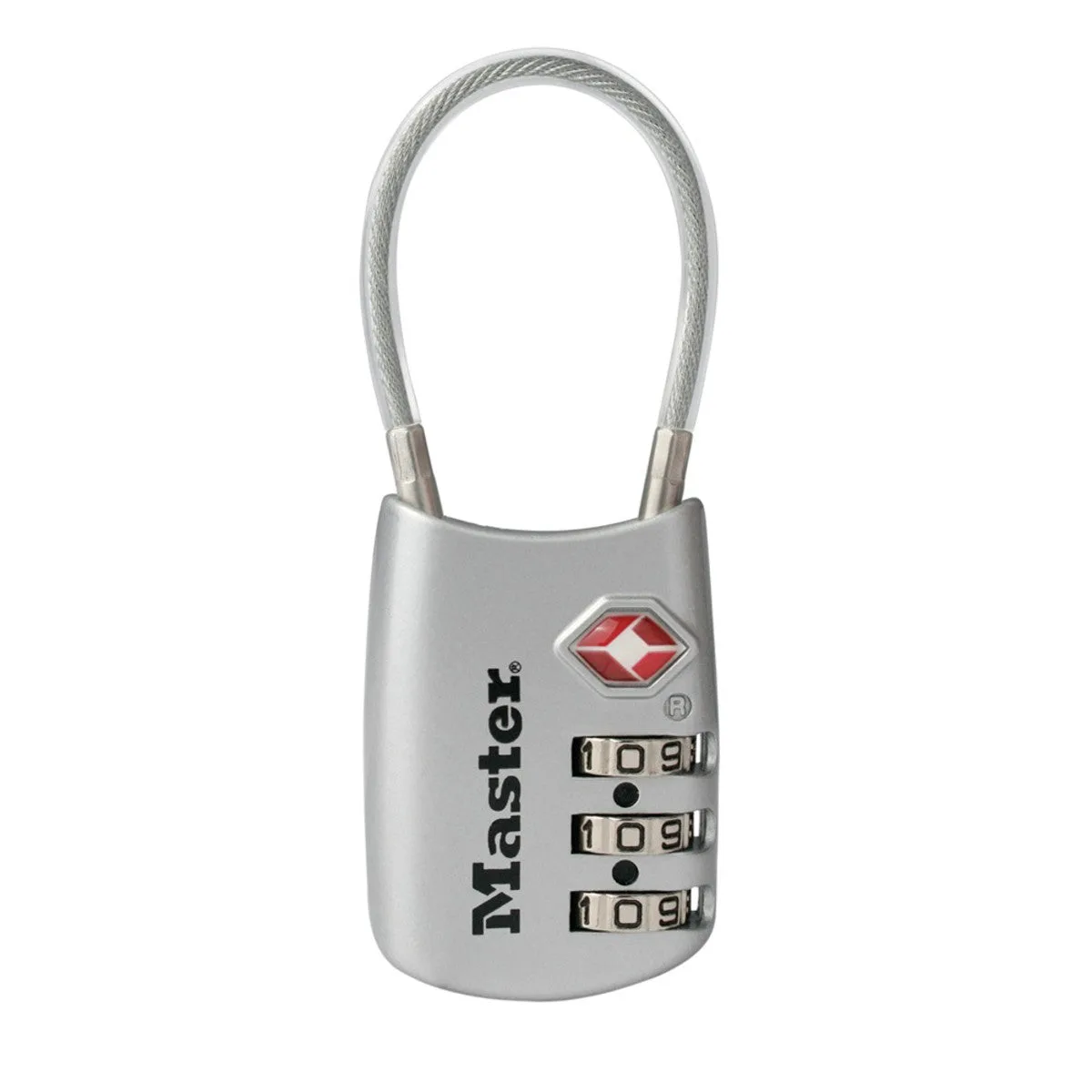
Photo: Master Lock
This is the one I point most people to because it gets the low-stakes job done for the least money. The cable shackle is the quiet reason it beats the rigid padlocks: it loops through doubled zipper pulls and small holes that stop a stiff shackle cold, so you can actually lock the bag you own rather than the bag the lock designer imagined. You set your own three-digit code, scramble the dials, and forget about it.
The honest trade-offs. A three-digit combination is a thousand possibilities, which is trivial to run through if someone sits down with your bag, though realistically the master key or the zipper pen beats them to it. It is a single lock at this price, not a multipack, so a family locking four bags should look at the sets below. And a soft cable shackle is easy to snip, but so is every lock in this guide, so that is a category truth, not a mark against this one.
Buy it if you want the cheapest lock that fits any zipper and keeps your bag shut. If you want to know when an agent has been inside, keep reading.
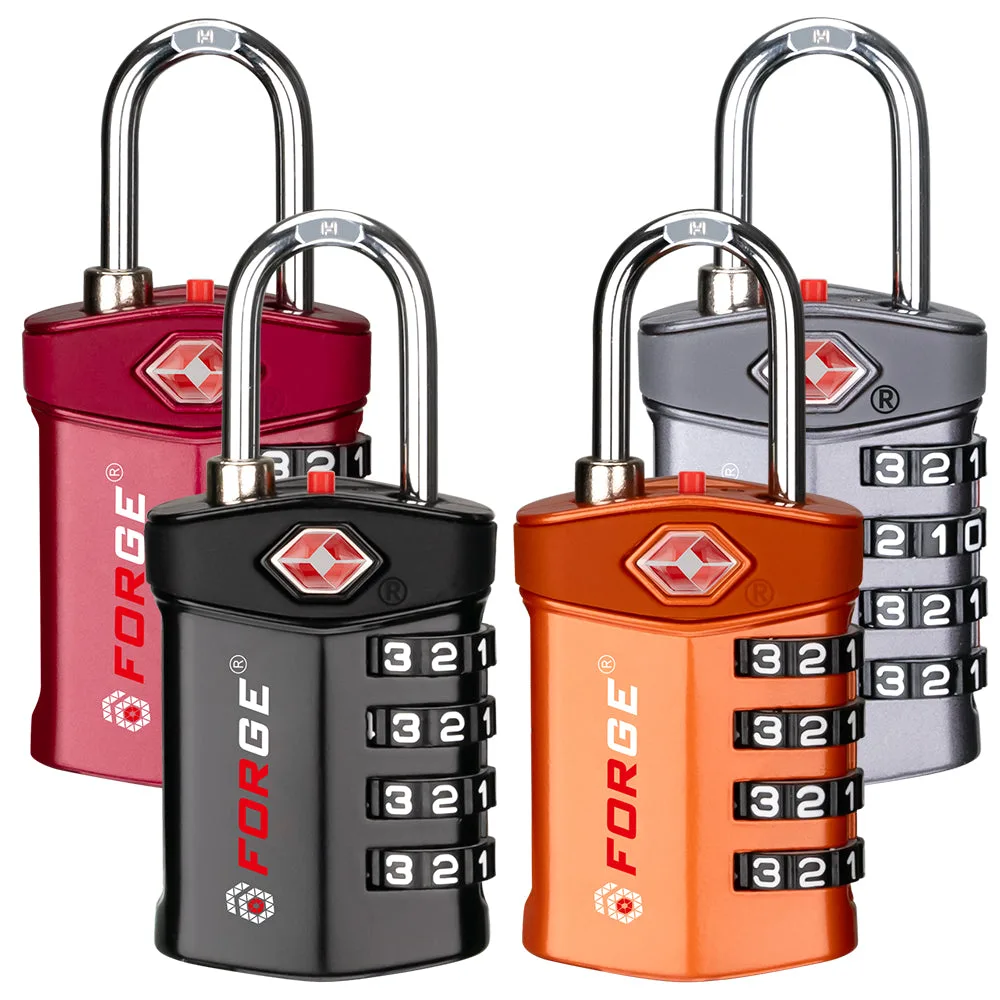
Photo: Forge
Forge builds the one feature I actually like here: a small red button that pops up when an agent uses the master key, so you know at a glance your bag was opened. That does not stop anything, but it turns a silent inspection into a visible one and flags when something is worth checking against your packing list. This four-color pack is the value play, at about six dollars a lock, with a lifetime guarantee and four-digit codes.
The honest trade-offs. The alert only tells you after the fact, so it is information, not protection. The shackle is rigid, so check your zipper pulls, because it will not thread the tight ones the Master Lock cable slips through. And you are buying four, which is only value if you have four things to lock.
Buy it if you lock several bags and want a heads-up when one has been searched. Skip it if you need one lock or your zippers have small pulls.
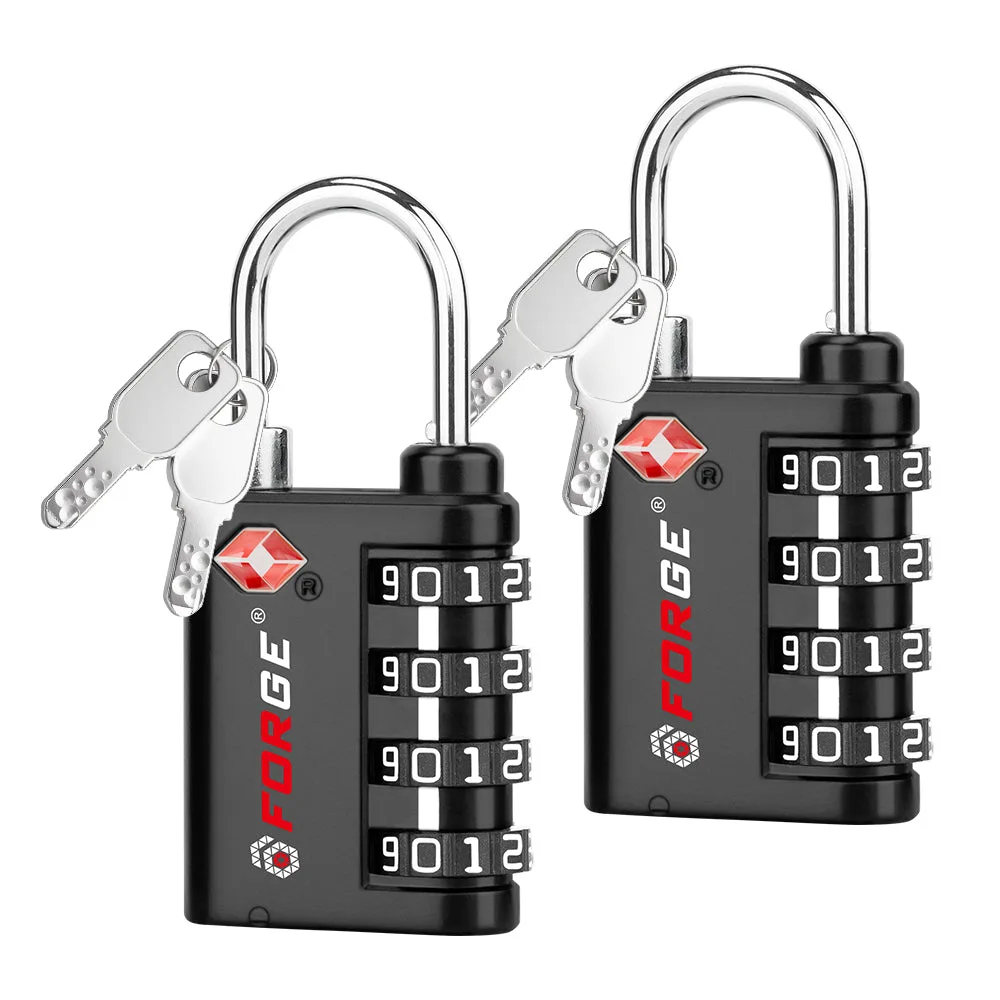
Photo: Forge
If your locks keep getting mangled at the belt, this is the sturdier answer. The OX Edge uses a heavier zinc body and a thicker shackle than the slim travel locks, so it shrugs off the handling that bends cheap padlocks out of shape. It suits big checked cases, duffels, and hard equipment boxes. You get two, with the same four-digit, set-your-own code.
The honest trade-offs. A thicker shackle will not pass through small zipper holes, so this is a lock for generous pulls and hasps, not delicate carry-on zippers. It is heavier in the bag. And a tougher body does nothing about the master key or the zipper trick, so this is durability against baggage handlers, not security against thieves.
Buy it if your locks take a beating on checked bags or gear cases. Skip it if you travel carry-on with fine zippers.
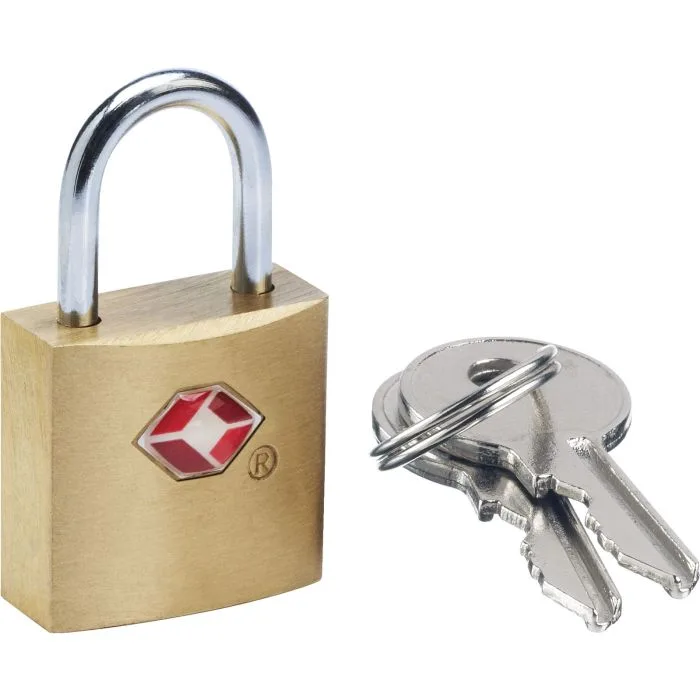
Photo: Design Go
Some people hate combinations, and for them a small keyed padlock is the calmer choice. This brass Design Go lock is about the size of a large coin, costs under six dollars, and comes with two keys, so there is no code to blank on at the gate. It suits a daypack zipper, a hostel locker, or a second bag you only lock occasionally.
The honest trade-offs. A key is a thing to lose, and losing the only key to a locked bag is its own small nightmare, so keep the spare separate. The brass body and simple key are easy to pick or force, worth saying plainly. And at this size it is fiddly in cold hands.
Buy it if you would rather carry a key than remember a code. Skip it if you know you will misplace the key.
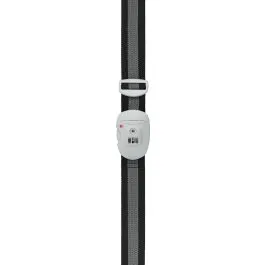
Photo: Design Go
Not every bag has two zipper pulls sitting side by side for a padlock. An older hard case, a duffel, or an overstuffed suitcase that barely closes needs a different tool, and that is what this strap is for. It wraps the whole case and cinches it with a combination buckle that carries the red diamond, so it holds a bulging bag shut and gives you a bright band to spot on the carousel. It runs about twenty dollars.
The honest trade-offs. A strap holds a case closed, but it does nothing against the zipper pen attack, and a determined hand can still get in around it. It is about keeping a tired suitcase from bursting and making your bag easy to identify, not security. And it is one more thing to unclip at inspection.
Buy it if your bag has no good place for a padlock or tends to pop open. Skip it if a normal padlock fits your zippers fine.
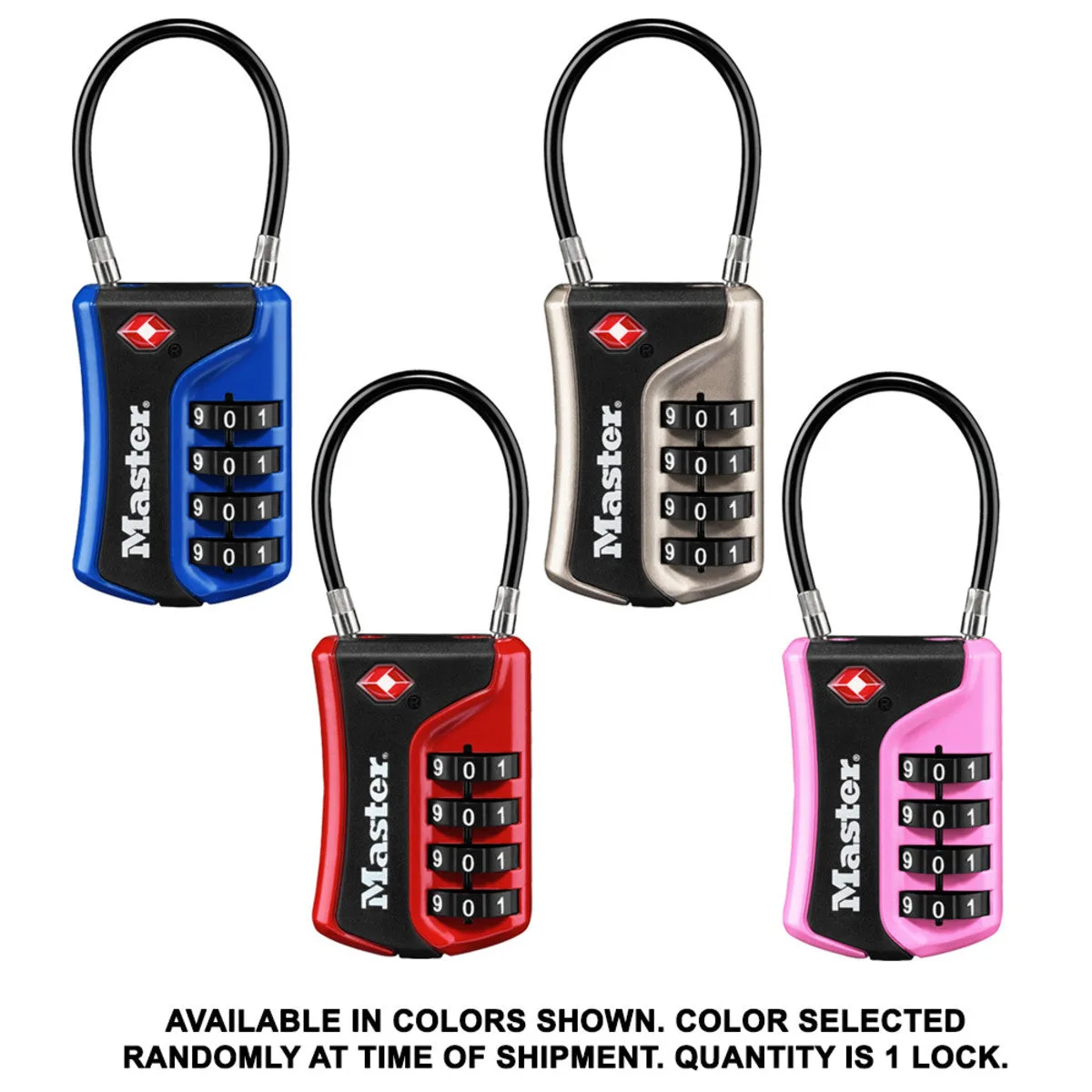
Photo: Master Lock
This is the same flexible-shackle idea as my top pick, dressed up in bright colors so your locked bag stands out. The metal body feels a step nicer than the basic silver lock, the shackle still bends through awkward or doubled zipper pulls, and the color makes a dark suitcase easier to pick out on a crowded belt. Master Lock lists it as TSA-accepted with a set-your-own combination.
The honest trade-offs. It costs nearly double the 4688D for the same core function, so you are paying for the finish and the color, not for more security. And the color ships at random, so you cannot actually choose which one arrives, which is a strange thing to pay extra for. Set your expectations there.
Buy it if you want a nicer-feeling flexible lock and a splash of color to spot your bag. Skip it if value is the point, because the 4688D does the same job for less.
| Lock | Best for | The honest catch |
|---|---|---|
| Master Lock 4688D | Cheap lock that fits any zipper | 3-digit code, single lock |
| Forge Open Alert 4-pack | Knowing an agent opened your bag | Alerts after the fact, rigid shackle |
| Forge OX Edge 2-pack | Checked bags and gear cases | Too thick for small zipper holes |
| Design Go Brass Key | People who hate combinations | A key to lose, easy to pick |
| Design Go Combi Strap | Bags with no place for a padlock | Does nothing against the zipper trick |
| Master Lock 4697D | A colorful flexible-shackle spare | Costs double, ships a random color |
The Master Lock 4688D is the one I recommend most, but it is wrong for three kinds of buyers, and pretending otherwise would waste your money.
Skip it if you want to know when your bag has been searched. The 4688D locks and shuts, and that is all. The Forge Open Alert set pops a little red flag when an agent uses the master key, which is the one genuinely handy feature in this whole category.
Skip it if you are locking a big checked case or a gear box that keeps chewing up thin locks. The Forge OX Edge is built heavier for exactly that, and a sturdier body earns its place against rough handling even though it does nothing extra against a thief.
Skip it if your bag has nowhere to clip a padlock at all. A strap like the Design Go is the right tool for a duffel or an overstuffed case, and a padlock simply will not help you there.
That is curation, not hedging. A pick is only useful when you also know when it is wrong.
Yes, for what they actually do and for a few dollars. TSA approved locks keep your zipper from creeping open, deter a casual opportunist, and let an agent inspect your bag without cutting the lock off. They are not real security. The master keys leaked years ago and circulate online, the TSA can open any approved lock, and a coil zipper can be popped with a pen regardless. Worth the small price for convenience and casual deterrence, and not worth a cent more.
Yes. Every approved lock carries the red Travel Sentry diamond, and agents hold master keys that open all of them, so they can inspect and relock your bag without damage. That also means the lock is not private from the people who handle your bag, and since copies of those keys are published online, not from anyone determined either. Treat it as a way to avoid a cut lock, not as a vault.
A TSA approved lock has a second keyway the master keys fit, marked by the red diamond, so security can open it and put it back. A regular padlock has no such access, so if your bag is flagged for a hand search, an agent can cut it off and you lose it. A regular lock is a touch harder for security to open but no harder for a thief. For checked bags, approved is the sensible choice.
Not really, and no honest guide should say otherwise. A TSA lock stops the accidental and the casual: a zipper that drifts open, a nosy hand, an opportunist after the easiest target. A determined thief has three easy paths around it: the published master keys, the pen-through-the-zipper trick, and bolt cutters on a soft shackle. If you are carrying something you truly cannot lose, do not check it, and keep it on you rather than trusting any luggage lock.
Find the best binoculars for Alaska cruise viewing. Compare 8x, 10x, and 15x options by shake, field of view, size, and low-light use.
Compare the best neck pillows for long flights by support, packability, adjustability, and comfort so you can choose the right one for your next travel day.
Find the best carry on backpacks for women with airline fit checks, comfort tests, capacity advice, and honest trade-offs for one-bag travel.