Best Packable Daypack: 5 Picks That Vanish Into Your Carry-On
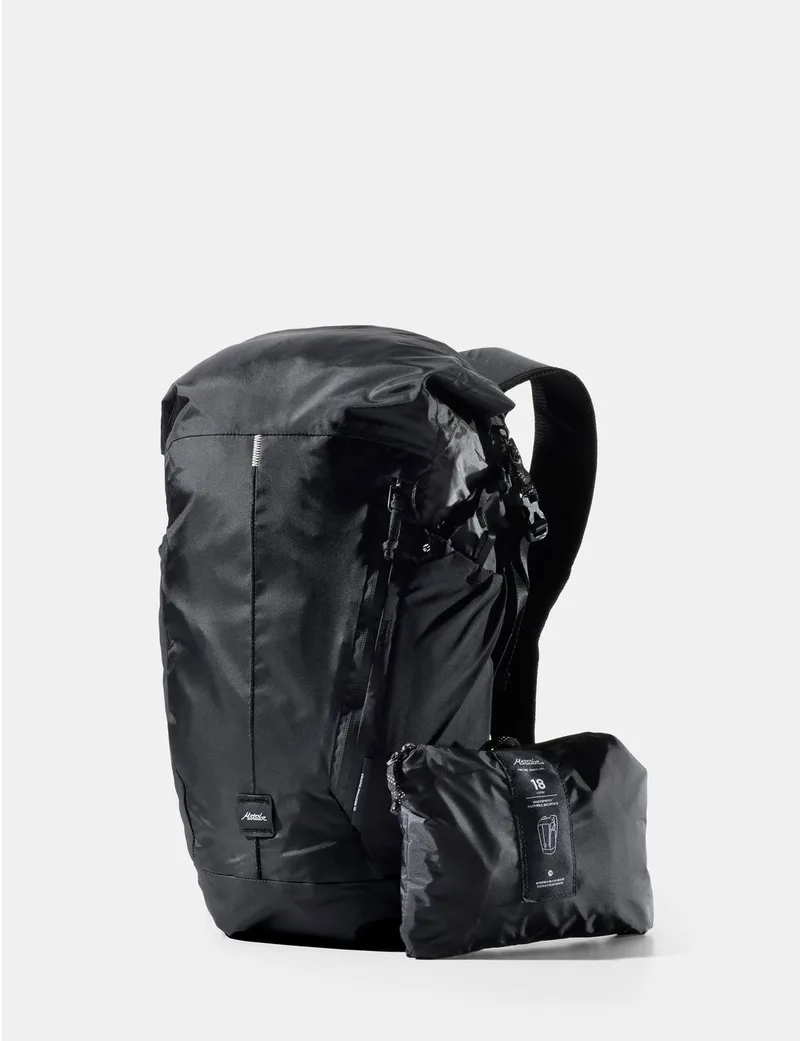
Verdict:The Matador 18L Packable Backpack ($75) is the best packable daypack for most travelers: 9 ounces, genuinely padded LiteCush straps, weatherproof fabric and sealing zippers, and it stuffs into its own pocket. The Sea to Summit Ultra-Sil Daypack ($49.95) is the lightest at 2.5 ounces; Eagle Creek's Packable Backpack ($59) splits the difference.
The packable daypack solves a problem every traveler recognizes at the hotel-room door: your carry-on is too big for a day of walking, and your jacket pockets are too small. The fix is a second bag that costs you almost nothing to bring — a few ounces, stuffed into its own fist-sized pouch — and unfolds into the bag you actually carry up the cathedral steps, to the beach, through the market, and onto the flight home swollen with souvenirs.
The category’s dirty secret is that “packable” has historically meant “miserable”: unpadded straps that saw into your shoulders by noon, crinkly fabric, zippers that pop under a water bottle and a camera. The current generation fixed most of that. The five below are the ones worth your money, and every price, weight, and measurement was verified on the brand’s own product page this week.
Some links in this review are affiliate links. Intastravel may earn a small commission at no extra cost to you. It does not change which products we pick.
What separates a daypack you’ll love from one you’ll abandon
Packed size and weight — but only to a point. Everything here disappears into a suitcase corner. Below about 3 ounces you’re trading comfort for grams you’ll never notice in your luggage but will absolutely notice on your shoulders.
Strap construction. The single biggest quality divide. Padded, contoured straps (Matador’s LiteCush) carry a day’s load; bare ripstop webbing is fine for two hours, punishing for eight.
Weather resistance. A daypack lives outdoors by definition. Coated fabric and decent zippers save your camera in a drizzle; sealed seams and a rolltop save it in a storm.
Personal-item math. An 16–20L packable doubles as your flight personal item, which is how one-baggers gain a whole extra bag of capacity on the return leg.
The short answer
The Matador 18L Packable Backpack ($75) is the pick for most travelers — the rare packable that carries like a real backpack, with weatherproof fabric and padded straps at 9 ounces. The Sea to Summit Ultra-Sil Daypack ($49.95) is the pick when weight is everything: 2.5 ounces, 20 liters, smaller than a soda can when packed. The Eagle Creek Packable Backpack ($59) is the balanced budget option, the Matador 18L Waterproof ($95) is the one for genuinely wet itineraries, and the Cotopaxi Batac 16L ($70) is the un-packable exception for people who want their “extra” bag to look like a first-choice bag.
The five options, compared
Matador 18L Packable
Sea to Summit Ultra-Sil
Eagle Creek Packable
Matador 18L Waterproof
Cotopaxi Batac 16L
Price
$75
$49.95
$59
$95
$70
Weight
9 oz (255 g)
2.5 oz (72 g)
5.7 oz (162 g)
10 oz (284 g)
12 oz
Capacity
18L
20L
16L
18L
16L
Packed size
Own pocket
2 × 4 × 7 in
6 × 4.5 × 2 in
Own pocket
Packs flat (no pouch)
Fabric
100D recycled nylon
30D Ultra-Sil CORDURA
70D ocean-recycled nylon
100D recycled nylon, sealed seams
Deadstock repurposed fabric
Straps
Padded LiteCush
Thin ripstop
Thin, mesh side pockets
Padded LiteCush
Ultralight mesh + sternum strap
Best for
Most travelers
Ultralight / backup bag
Budget balance
Wet trips
Daily-carry looks
Matador 18L Packable Backpack — best for most travelers
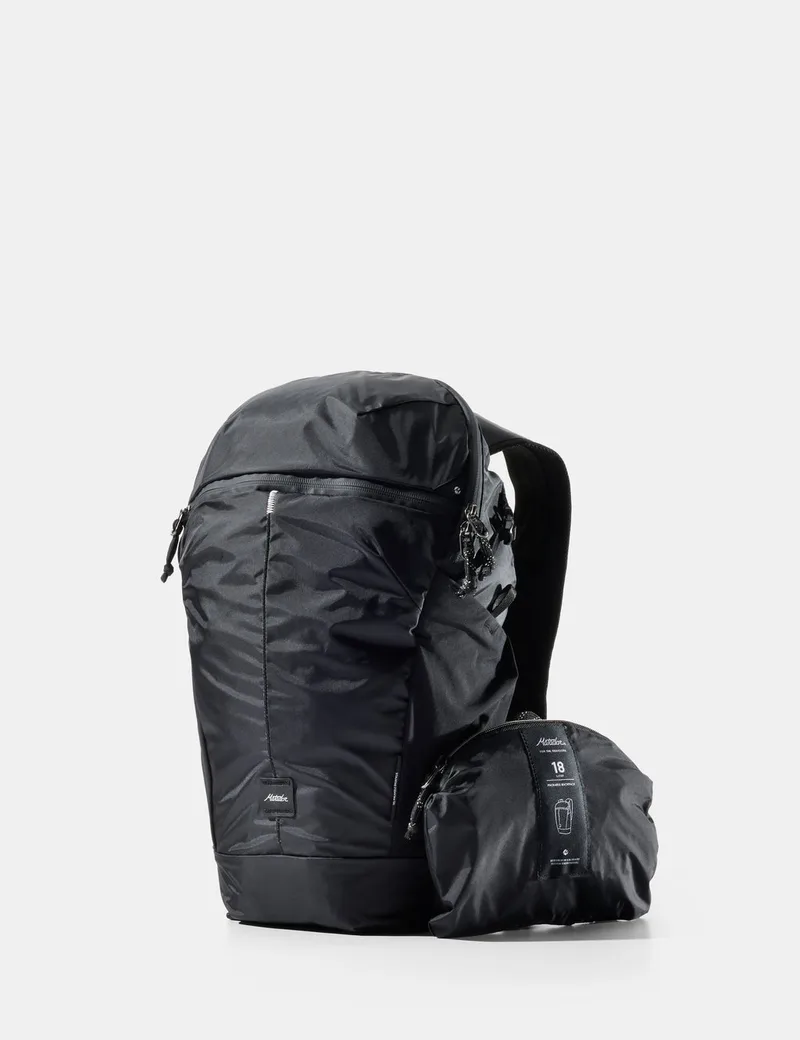
Matador’s whole catalog is packable gear, and the 18L Packable Backpack is the category’s benchmark because it refuses the usual trade. It stuffs into its own pocket for transit, yet unpacked (18 × 10 × 7.5 inches) it behaves like a bag you’d have bought on purpose: LiteCush padded shoulder straps that survive an eight-hour museum-and-miles day, a structured enough shape to sit as a personal item — Matador says it complies on roughly 80% of major airlines — and dual water bottle pockets that actually hold bottles.
The materials are the other half of the argument. The shell is 100-denier Bluesign-approved recycled nylon, PFAS-free and waterproof, with Matador’s DuraGlide sealing zippers keeping drizzle out of the main compartment. Thoughtful oddities accumulate: a high-visibility interior so black-hole rummaging ends, anti-theft security loops that let you lock the zipper pulls together in a crowd, reflective paracord details for night streets. It comes in Black, Juniper, and Garnet, with a two-year warranty.
The knock is relative: 9 ounces is heavyweight for this list, and $75 is real money for a second bag. It’s the one pick here you’ll end up using at home, too.
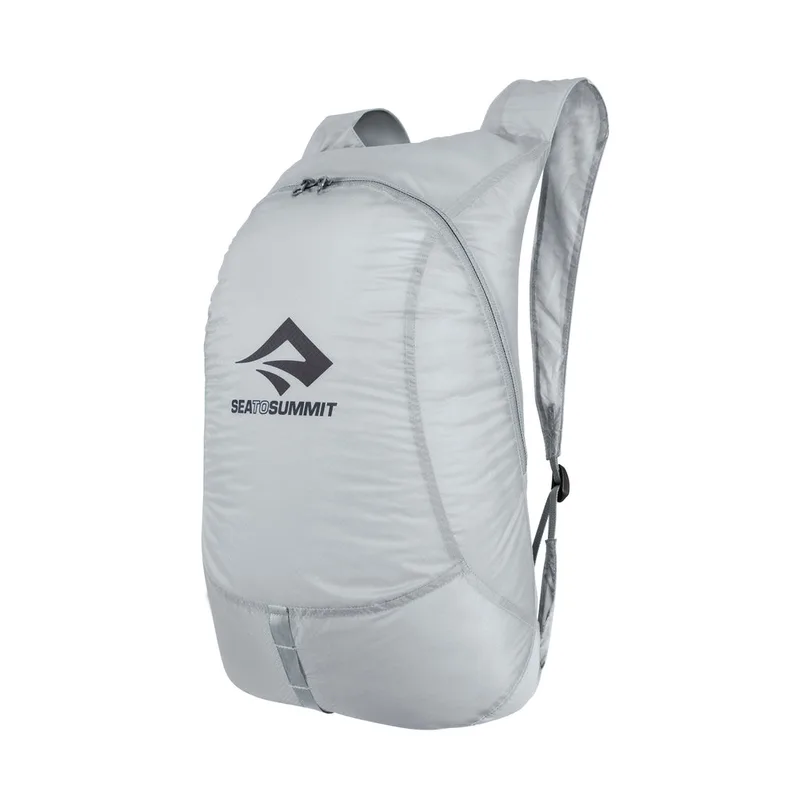
The Ultra-Sil is the physics experiment of the group: 20 liters of bag — the largest capacity here — from 2.5 ounces of fabric, packing down to a 2 × 4 × 7-inch sack with an aluminum carabiner to clip it anywhere. If packed weight and volume are your sorting criteria, nothing else on this list is close, and the contest has looked that way for years.
The trick is the fabric: 30-denier Ultra-Sil, a siliconized high-tenacity CORDURA nylon that is dramatically stronger than its tissue-paper hand suggests. Sea to Summit sells it as a hiking, travel, and everyday pack, and as a stuff-in-the-luggage insurance bag it’s perfect — deployed for groceries, laundry runs, beach days, and the flight home when your souvenirs outgrew your suitcase.
The trade-offs are exactly what the scale implies. The straps are thin siliconized fabric, not padding — fine under five pounds, penance under fifteen. There’s no structure, no pockets to speak of, and siliconized nylon sheds a shower but isn’t seam-sealed. It’s the best second bag here and the worst primary one.
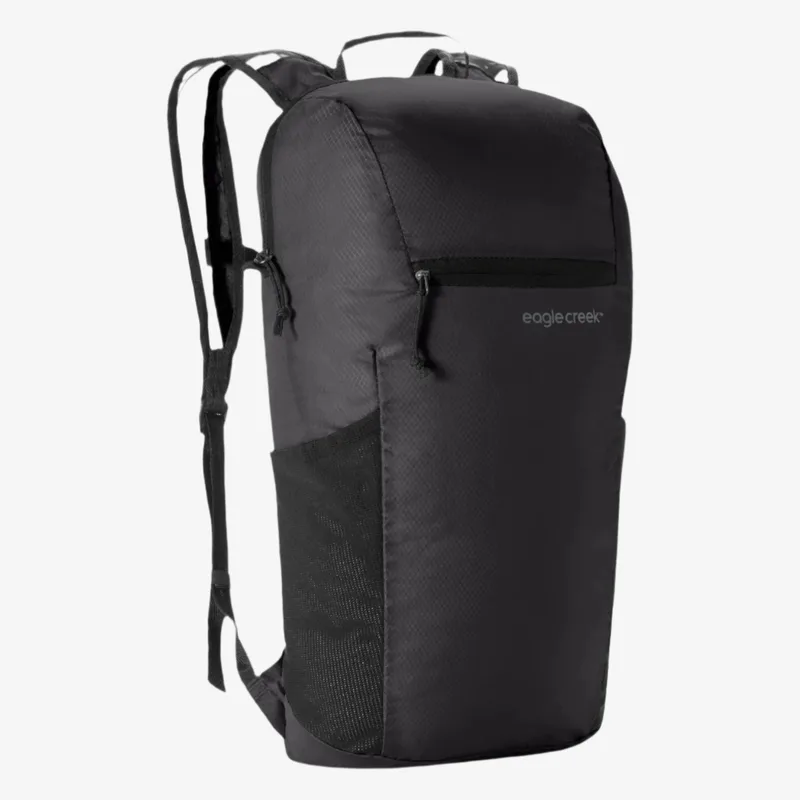
Eagle Creek’s Packable Backpack occupies the sensible middle the category needed: 5.7 ounces — less than half the Matador, more substantial than the Sea to Summit — opening from a 6 × 4.5 × 2-inch pouch into a 16-liter, 17 × 9 × 5-inch daypack with the amenities ultralight packs delete. You get a front zip pocket for the things you grab constantly, mesh side pockets for bottles, and a shape that hangs reasonably on the back instead of sagging like a sack.
The fabric is a quiet selling point: 70-denier PU-coated nylon that’s 100% ocean-recycled, made without intentional PFAS, and water-resistant enough for normal tourist weather. Eagle Creek has been making travel organizers longer than almost anyone, and the details — zipper quality, bartacking where straps meet body — read like it. Colors run Black, Blue Dawn, and Storm Grey.
What you give up against the Matador is strap padding and the weatherproof-zipper seal; against the Sea to Summit, three ounces and four liters. For a $59 bag that will spend 90% of its life as a lump in a suitcase and still not embarrass itself on an all-day walk, that’s a strong bargain.
“Water-resistant” dies on a boat deck. If the itinerary includes island-hopping ferries, waterfall hikes, kayaks, or a monsoon-season city, the distinction that matters is sealed seams — and that’s precisely what the Waterproof version of Matador’s 18L adds. Same 100D recycled nylon, same LiteCush padded straps and bottle pockets and packs-into-its-own-pocket trick, but the main compartment closes with a rolltop over welded seams, making genuinely waterproof storage rather than hopeful storage. Compression straps cinch the roll down when it’s half full.
The honest asterisks come straight from Matador’s own spec sheet: the secondary zippered pockets are weather-resistant, not waterproof — phones ride inside the main roll when it’s serious — and the rolltop costs you the quick top-zip access of the standard model. At 10 ounces it’s one ounce heavier than its sibling.
The decision between the two Matadors is just a weather forecast. Mostly-dry trips with occasional rain: standard, $75. Any trip where the bag might sit in bilge water or a downpour with your camera inside: this one, and the $20 stops mattering the first time it works.
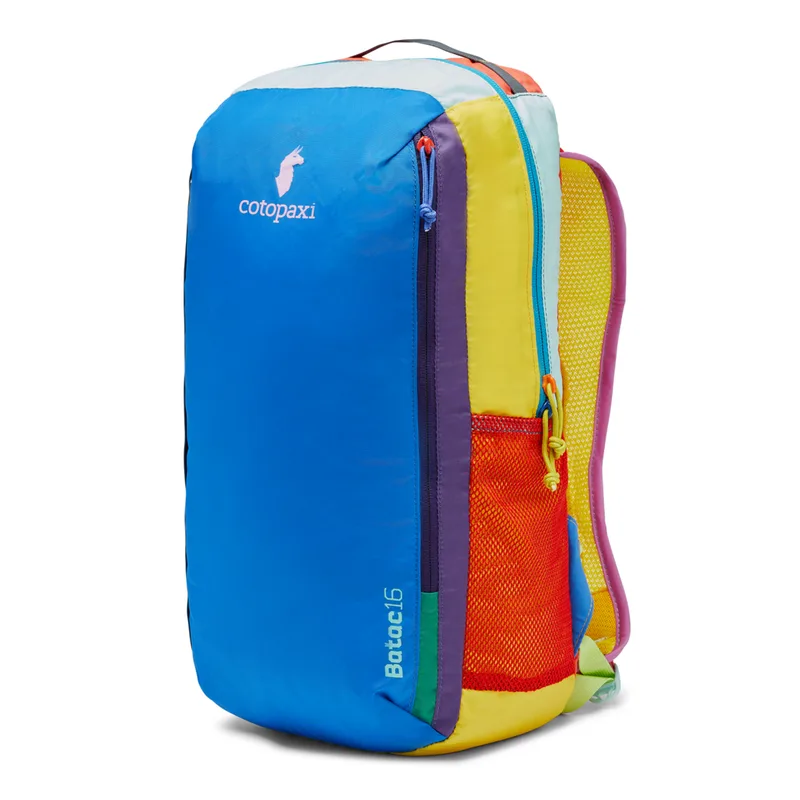
Full disclosure up front: the Batac doesn’t stuff into a pouch, so purists can skip ahead. It earns its slot because it’s unstructured and soft enough to flatten into a suitcase like a folded shirt, and because it fixes the thing every true packable suffers from — looking like a deflated grocery bag — by being a legitimately great everyday pack that happens to travel flat.
At 12 ounces and 19 × 11 × 4 inches, the 16-liter Batac deploys with real organization: a main compartment with an internal sleeve divider and hanging pocket, a vertical front zip pocket with a quick-access phone sleeve, dual mesh bottle pockets, and ultralight mesh straps with an adjustable sternum strap — the only sternum strap on this list, and the thing you miss most on the others by hour six. The Del Día program builds each pack from leftover deadstock fabric in one-of-one color combinations, so yours exists nowhere else.
The trade is the premise: it’s the heaviest pick here and occupies real (if flat) suitcase space. Buy it if the “spare” bag will actually be your daily carry at home and abroad; buy the Matador if it mostly lives in the suitcase.
The move that sells most people: fly out with the daypack stuffed in your carry-on, fly home with it deployed as your personal item, full of the things you acquired. That’s 16–20 liters of free return capacity, and it’s why the packed-size spec matters more than it looks — the bag has to earn its suitcase corner on the outbound leg.
A note on one familiar name: Osprey’s Ultralight Stuff Pack is a frequent recommendation in this category, but Osprey’s site blocked our verification pass this week, so we couldn’t confirm current specs and pricing against the brand’s own page — it’s omitted rather than guessed at.
FAQ
Can a packable daypack be a personal item on a plane?
Generally yes — bags in this 16–20L class sit comfortably under most seat-size limits, and Matador states its 18L complies as a personal item on about 80% of major airlines. Soft construction helps: a part-empty packable squishes to whatever the sizer demands.
Are packable daypacks comfortable enough for all-day use?
The padded-strap picks are. The Matador’s LiteCush straps handle a full tourist day with a camera, water, and layers; the Eagle Creek is good to moderate loads; the featherweight Sea to Summit is best kept under about five pounds. Packing weight low and against your back buys comfort on any of them.
Packable daypack or packable tote?
A daypack, for anything beyond an hour — two straps halve the load per shoulder and free your hands. Totes win only for quick markets and beach runs. Several brands here sell both; start with the backpack.
How durable is ultralight fabric, really?
Better than it feels. High-tenacity ripstop like Sea to Summit’s 30D CORDURA and Matador’s 100D nylon tolerates years of normal tourist duty — the killers are abrasion against concrete and overstuffing against the zipper. If you routinely haul sharp or heavy loads, the Cotopaxi’s conventional build is the safe pick.
The best earplugs for flying depend on your problem. Loop Quiet 2 for noise and sleep, Mack's Flightguard or Alpine FlyFit for ear pressure.
Verdict: Loop Quiet 2 ($24.95) is the best earplug for flying if cabin noise and sleep are your problem. Mack's Flightguard ($11.99) and Alpine FlyFit ($16.95) are the picks if your ears hurt on descent, because they are built with pressure-regulating filters.
The best travel blanket for most people is the 0.79 lb Rumpl Travel Puffy. Three picks compared on weight, price, and warmth, plus a scarf trick.
Verdict: The Rumpl Travel Puffy ($89.95, 0.79 lb, packs to 4 by 10 inches, 3-year warranty) is the best travel blanket for most people. Cocoon's COOLMAX blanket ($49.95) is the cheaper, lighter-feeling pick, and Cocoon's merino and silk blanket ($149.95) is the one for the coldest cabins.
The best luggage scale for most travelers is the $10.99 Etekcity EL11. Five scales compared on capacity, price, battery, and who should skip each.
Verdict: The Etekcity EL11 ($10.99, 110 lb capacity, 4.8 oz, 2-year warranty) is the best luggage scale for most travelers. Freetoo is the lighter runner-up, Samsonite is the pick if you want a built-in tape measure, and the battery-free Travelon is for people who never want to replace a battery.